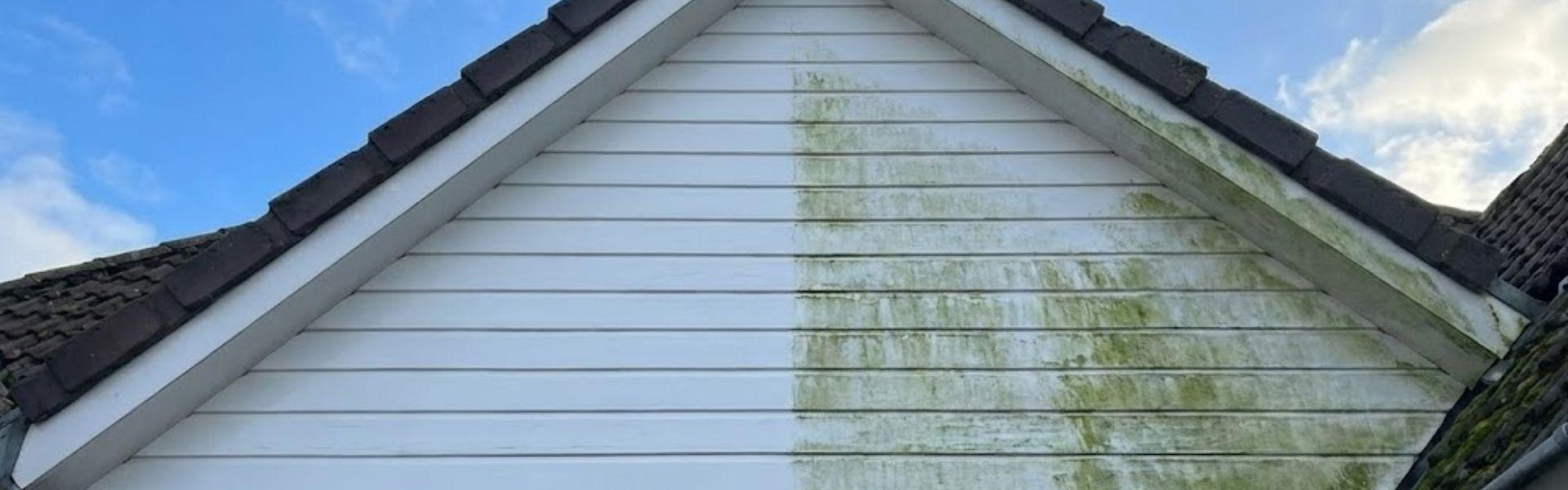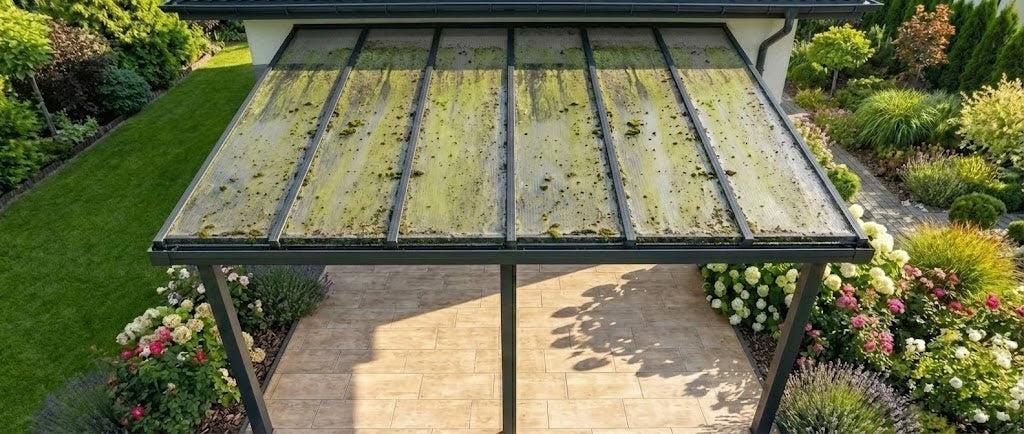
To clean a conservatory roof, stay on the ground and use a water-fed pole with a soft brush, plenty of water and a mild cleaner. On polycarbonate, avoid abrasives, harsh chemicals and pressure washers. The two cleans that matter most are in autumn, after the leaves fall, and in spring.
A conservatory, veranda or rooflight is there to let the light in. After a few seasons, though, a grey film builds up: dust, pollen, bird droppings, green algae and, in autumn, a layer of leaves. The roof turns dull, the gutter fills up and from inside you mostly see marks.
Below: how to tell glass from polycarbonate and treat each one, why you should never climb onto the roof, which brush and angle adapter to use, and which season gives the best result. For the basics of veranda cleaning, see conservatory and veranda roof cleaning.
Glass or polycarbonate: what’s on your roof?
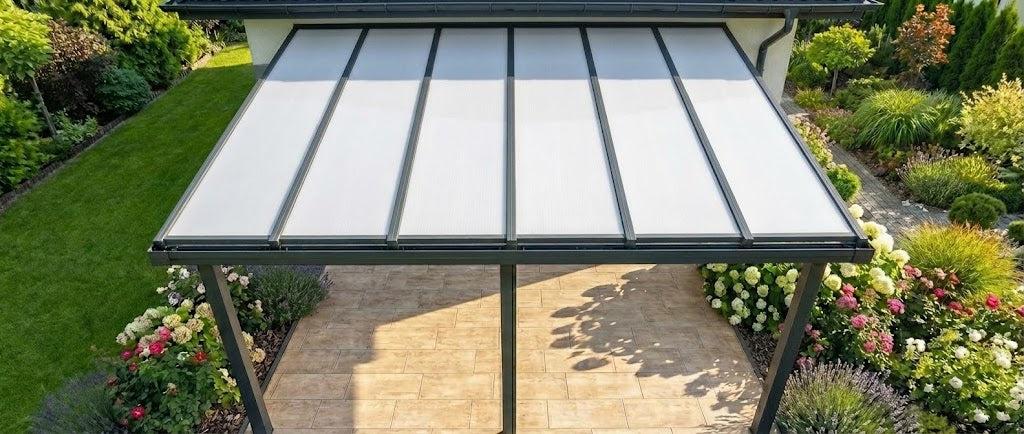
Most conservatory roofs, verandas and rooflights are either glass or polycarbonate. Polycarbonate usually comes as multiwall sheets: panels with hollow channels inside that you can see clearly from the side or from below. Glass is heavier, feels cold and hard, and is perfectly smooth. Not sure? Look at the edge of a panel by the gutter — the channels are often visible straight away.
| Property | Glass | Polycarbonate (multiwall sheets) |
|---|---|---|
| Scratch risk | Low, but grit under a dry brush can still scratch | High: the surface is soft and scratches easily |
| Cleaner | Mild cleaner or glass cleaner | Mild cleaner only; no abrasives, solvents or harsh chemicals |
| Pressure washer | Not recommended: forces water under seals and joints | Don’t: it damages the surface coating and the seals |
| Typical problem | Limescale marks and streaks once dry | Green algae in the joints, sometimes inside the channels |
| Final rinse | Soft water, or the drops show up again | Thorough, so no cleaner is left in the glazing bars |
Swipe sideways to see the whole table →
The rule of thumb is simple: treat every roof as if it were polycarbonate. A soft brush, lots of water and a mild cleaner work just as well on glass, and you won’t accidentally damage a plastic rooflight or a veranda with mixed panels.
Never climb on the roof: work from the ground
With a telescopic pole there’s no need. You stand on the patio or in the garden and reach the roof from the side and the front. For a typical veranda, an Aluminum Supreme pole of 3.5 or 5.5 m (11.5 or 18 ft) — working length 3.1 or 5.1 m — usually gets you a long way. For a deep veranda or a conservatory against a tall wall, the 7.5 m (24.6 ft) pole, with a working length of 7.1 m, is easier. Not sure which length suits your home? Try the pole finder.
Work up from the gutter where you can, and don’t extend the pole further than you need. A shorter pole flexes less, so you can feel what the brush is doing. Before you extend it, look up and check for lights, awnings and overhead power lines.
The right brush and angle adapter
A stiff broom or scouring pad has no place on a roof that lets light through. You want a soft, water-fed brush: the water forms a gliding layer, so grit is rinsed away instead of being dragged across the surface.
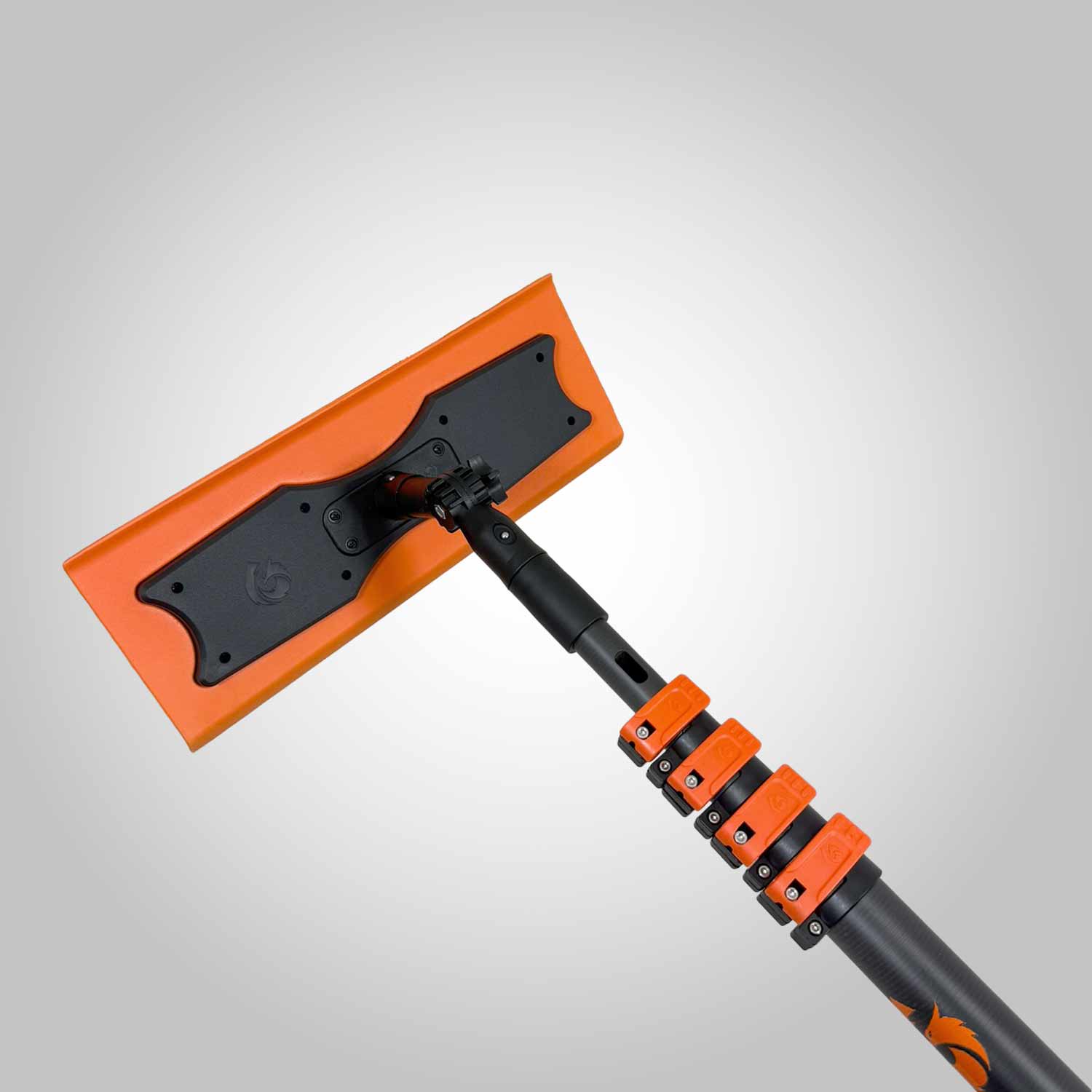
- Soft 4-Jet Wash Brush 35 cm wide, with four jets and soft nylon bristles with memory that spring back into shape and don’t scratch. Made for windows, solar panels and plastic — which makes it the obvious choice for both glass and polycarbonate.
- SoftWash wash brush Even softer, with split-tip bristles. Designed for the paintwork, plastic and gelcoat of cars, motorhomes and boats, so it suits delicate or older polycarbonate sheets well. See the SoftWash wash brush.
- 5-Sided Wash Brush Has bristles on the sides as well. Useful along the aluminium glazing bars and where panel meets frame, without hard edges knocking against the frame.
How these brushes differ, and when to use which, is covered in our wash brush guide.
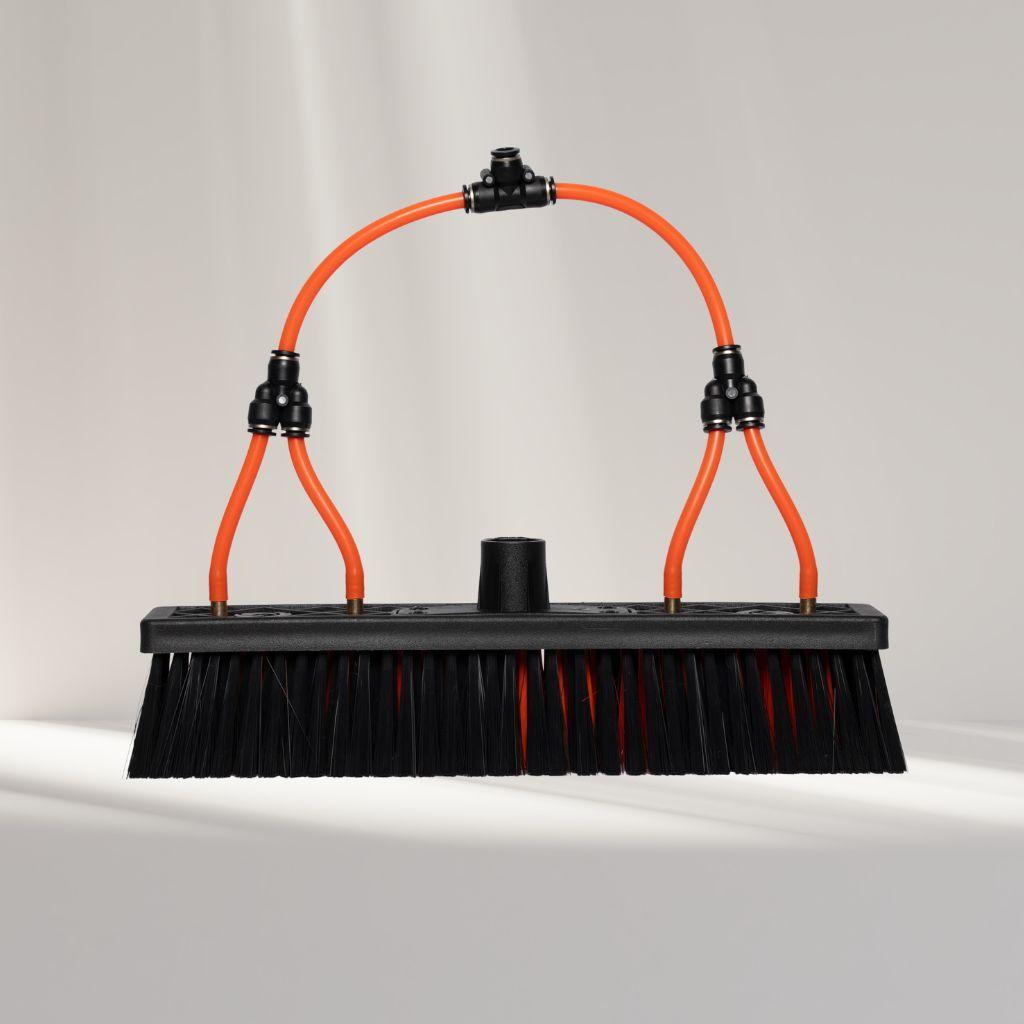
Soft 4-Jet Wash Brush 35 cm
Four jets for even water flow and soft nylon bristles with memory that don’t scratch. Ideal for glass and plastic panels. Clicks onto any Eagle Extend® pole with HexaLock®.
Without an angle adapter, you’re cleaning with the edge
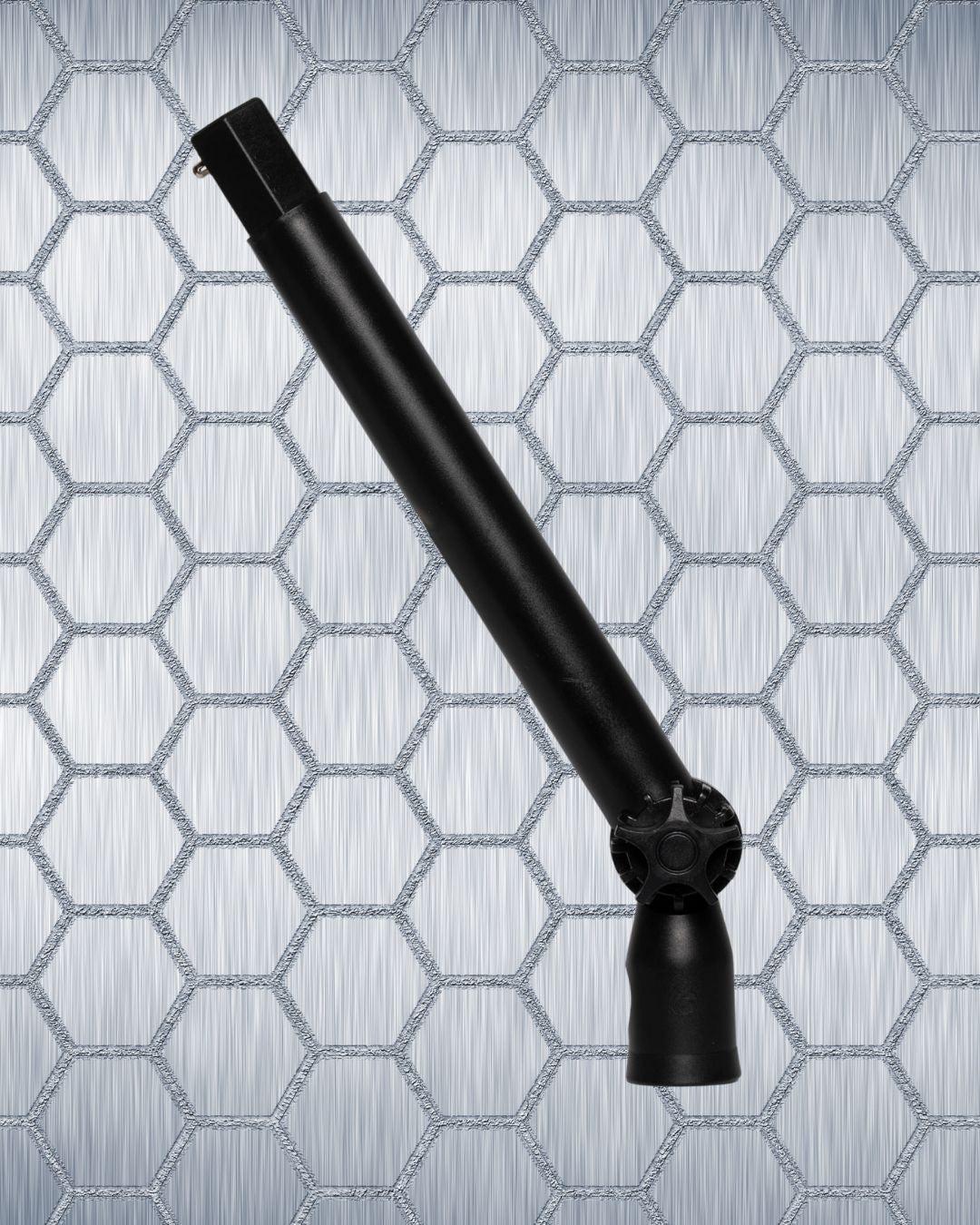
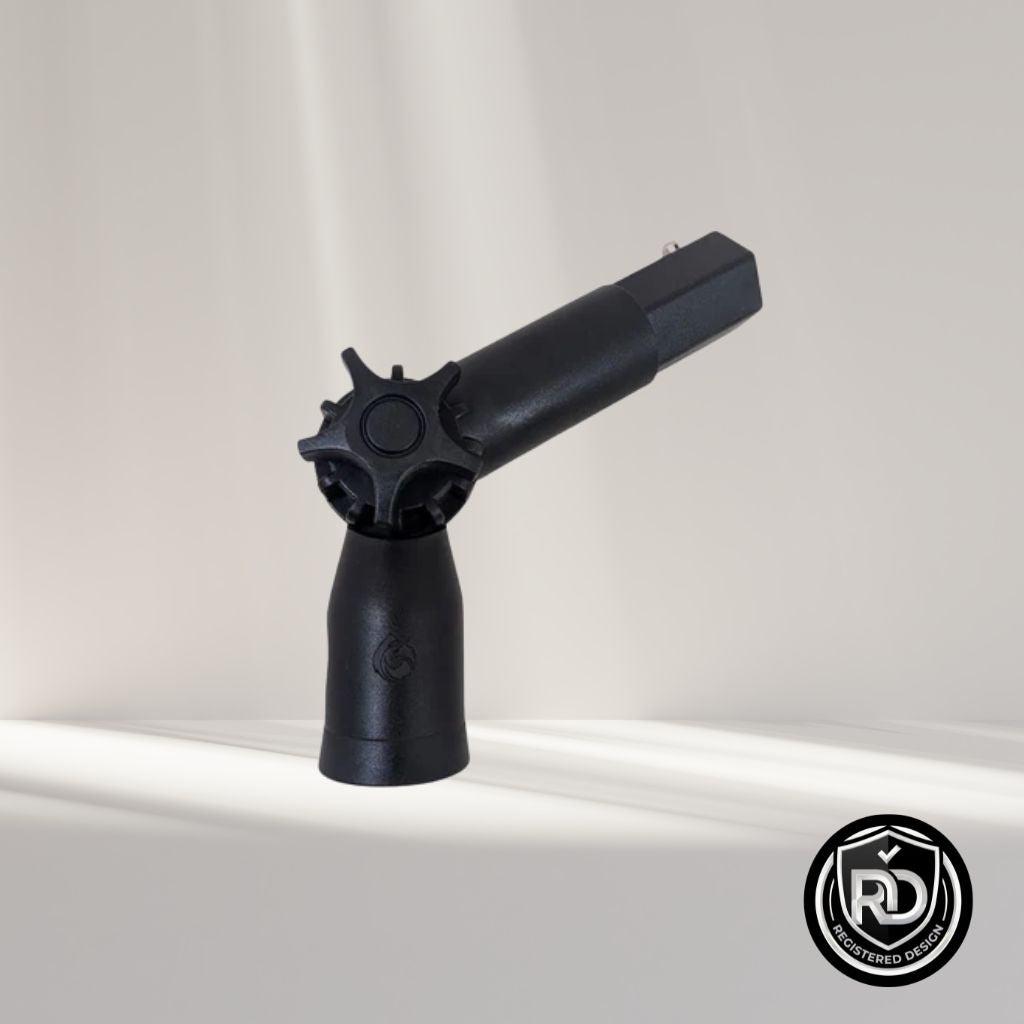
A roof slopes, and you’re standing beside or below it. Without an angle, only the front edge of the brush touches the glass and you end up pressing with the rim — exactly how scratches and streaks happen. The adjustable HexaLock® angle adapter lets the brush sit flat on the panel while you stay on the ground. It comes with every pole. Poles from 9 m also include the XXL angle adapter: it adds extra distance between pole and surface, so a flexing pole doesn’t touch the roof. Please note: the XXL only fits the Soft 4-Jet Wash Brush.
Step by step: cleaning a conservatory or veranda roof
Here’s how
- 1Pick a dry, overcast day
In full sun, cleaner and water dry on the glass before you can rinse, leaving marks. A cloudy day without frost is ideal.
- 2Clear the gutter first
Remove leaves, pine needles and twigs from the veranda gutter. Otherwise you’ll wash all the dirt straight into it, and it will overflow or the downpipe will block.
- 3Remove loose debris dry
Gently brush leaves and loose dirt off the panels with a soft brush. Grit under a wet brush acts like sandpaper.
- 4Wet the whole roof
Rinse the entire roof through the water-fed pole at normal mains pressure. This softens stuck-on dirt and puts a gliding layer on the surface before the brush touches it.
- 5Soak green algae
If there’s green algae, use a mild cleaner that won’t harm plastic, such as our Allround Cleaner through the SoapFlow soap dispenser. Leave it for a few minutes, but don’t let it dry. For more on algae, read how to remove green algae.
- 6Brush from the house wall to the gutter
Work in strips along the direction of the channels, from the wall down to the gutter. Don’t press: the weight of the brush and the water do the work. Clean the aluminium glazing bars and the edges along the frames as you go.
- 7Rinse with soft water
Rinse thoroughly, including joints and glazing bars. On glass, dried limescale drops are obvious from inside; with the PureFlow in-line water softener between tap and pole, the roof dries without spots.
- 8Check the gutter once more
Flush the gutter, make sure the downpipe is clear, and check that the seals and joints still fit well.
Gutters, channels and the inside
The veranda gutter
The gutter on a veranda or conservatory is often narrow and sits just below the roof. Leaves and pine needles easily get caught in it and, together with pollen, form a damp layer where algae and moss grow quickly. A blocked gutter pushes water back against the panels and seals. So clear it first every time you clean, and flush it at the end.
Green algae inside multiwall sheets
If you see green streaks inside the channels of a multiwall sheet, the tape or seal at the panel ends is usually leaking and letting moisture in. No brush will reach that: the panels have to come out to be flushed through or replaced. Keeping the outside and the gutter clean, and checking the seals regularly, helps prevent it.
The underside and inside
Under an open veranda, cobwebs often hang between the glazing bars. Remove them dry; you don’t want water dripping onto furniture or the floor below. In a closed conservatory, clean the inside of the glass with a damp washer and squeegee it dry, using only a little water. Work from top to bottom indoors too, so drips only run over parts you haven’t cleaned yet.
When to clean: autumn, spring and snow
- Autumn, after the leaves fall The most important clean. Clear leaves and needles from the roof and gutter before they rot, so algae have little chance in the wet months and water can drain freely through winter.
- Spring After winter, remove green algae, pollen and bird droppings so the roof stays clear all summer. If you cleaned in autumn, this one is much quicker.
- In between Don’t leave bird droppings or tree sap for months. A quick rinse and a gentle brush usually keep on top of it.
- Not in frost In freezing weather, water turns to ice on the panels and in the gutter. Wait until it’s a few degrees above zero before you clean with water.
Snow on a conservatory or veranda roof
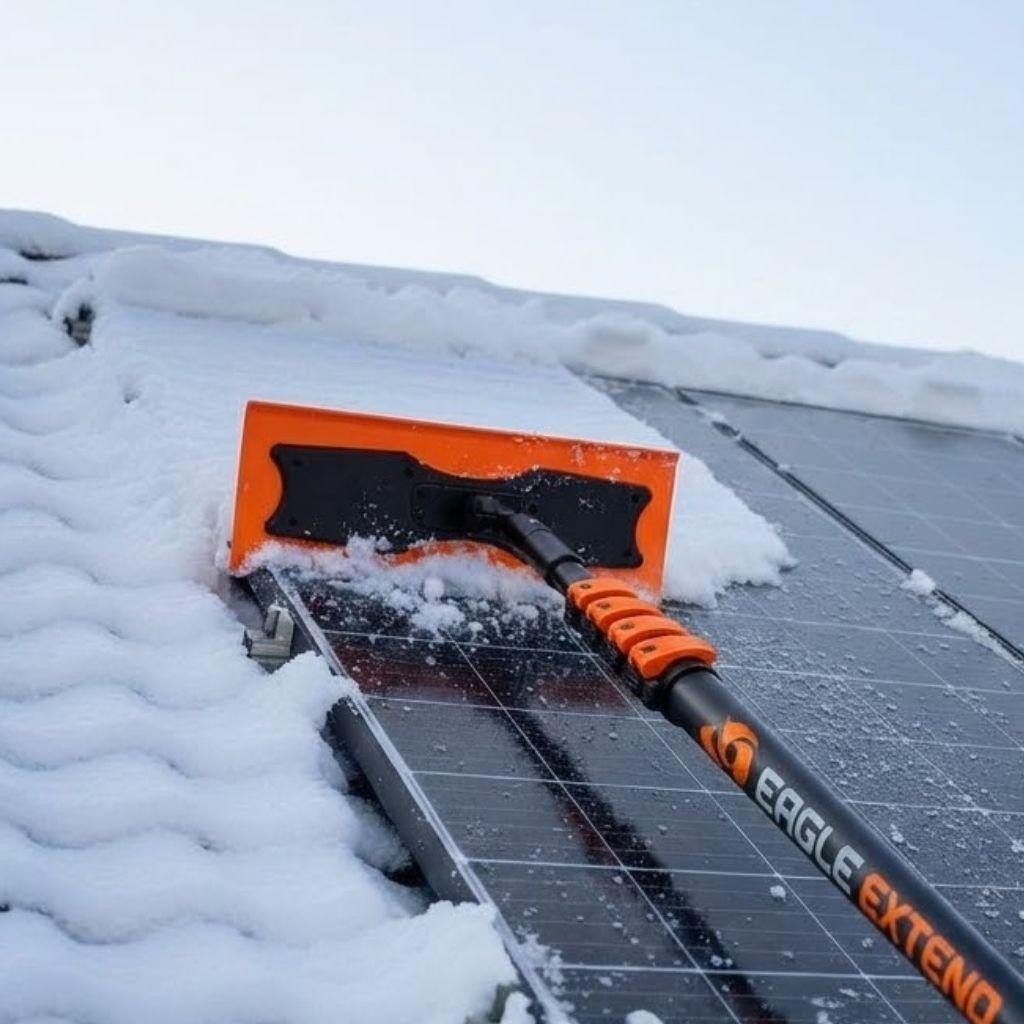
A heavy layer of snow on a veranda or conservatory roof is best not left there. Don’t use a shovel or a broom with a hard edge — both scratch the panels. The SolarClear Snow Remover was designed as a snow rake for solar panels, but it also works on verandas: the soft foam head won’t scratch, and you can pull the snow towards you or push it away. For the safe technique, read how to remove snow from solar panels — it works the same way on a roof like this.
HexaLock® Angle Adapter
Adjustable working angle, so the brush lies flat on a sloping roof while you stay on the ground. Included with every pole and available separately as a spare or second adapter.
Conservatory, veranda and patio cover roof cleaning
Let the light back through your glass or polycarbonate roof — without climbing onto it.