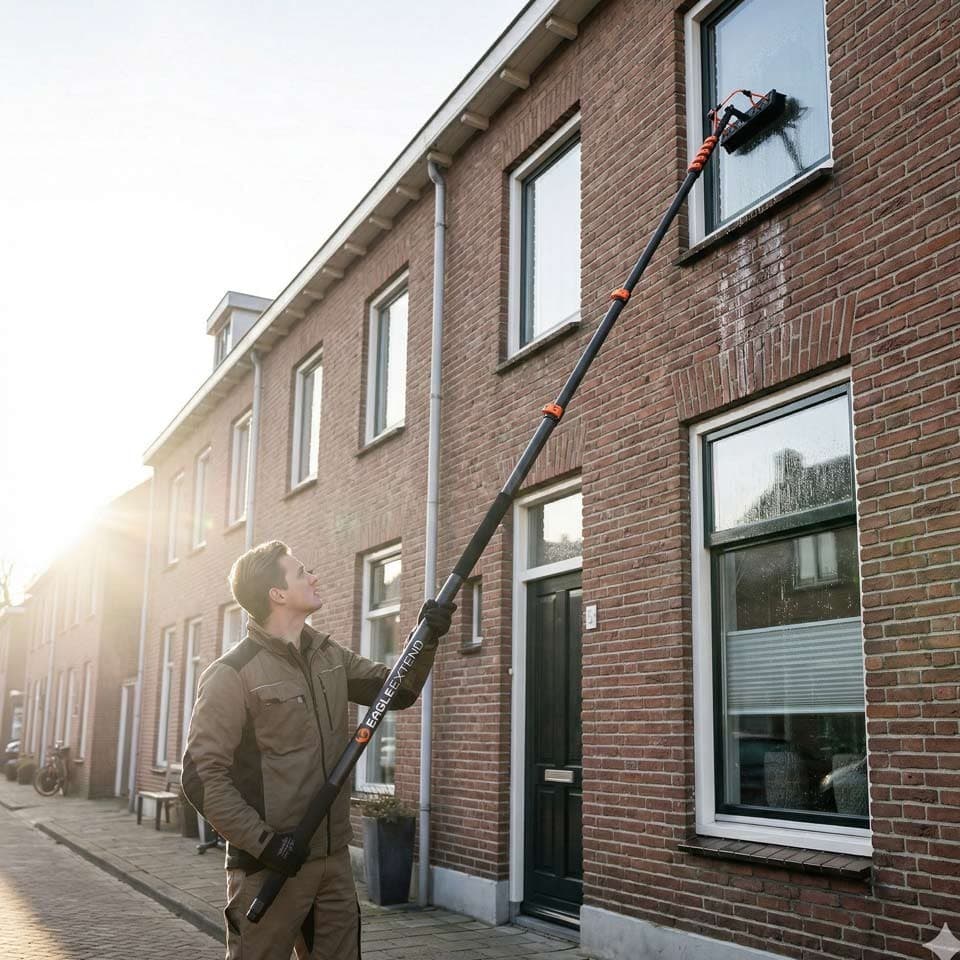
The short answer: wet the surface, apply a mild, biodegradable cleaner as foam, let it soak briefly and brush the algae off with a soft water-fed brush — working from the top down and rinsing thoroughly. That works on render, brick, fascias and window frames alike, and you don’t need a pressure washer, bleach or a ladder.
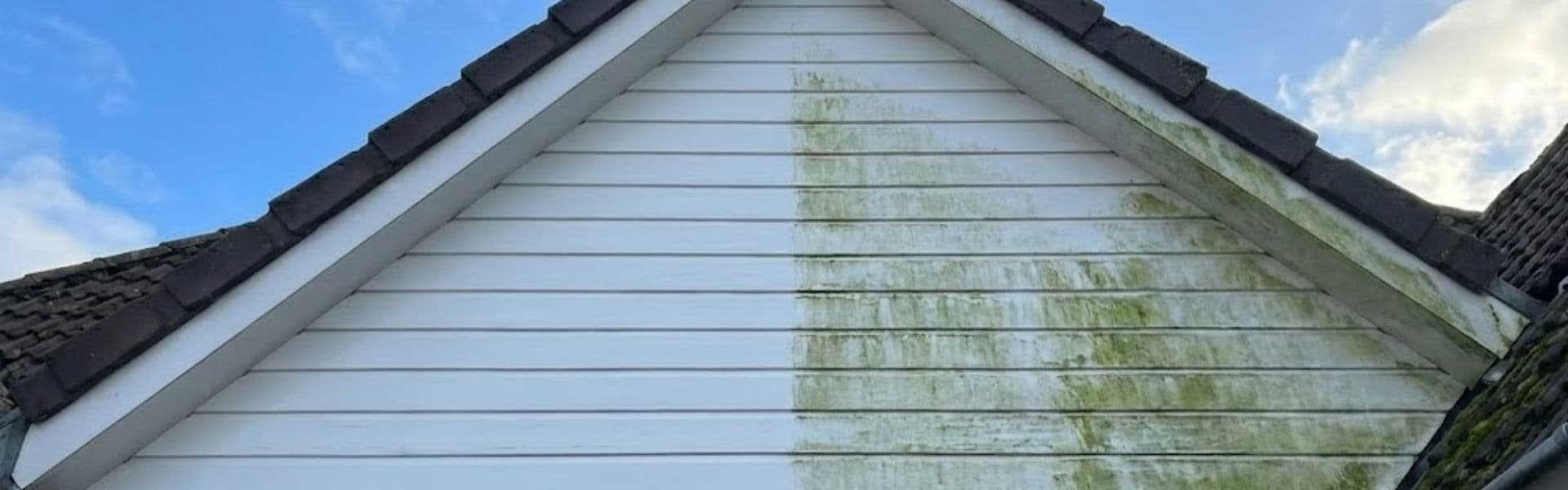
Green algae isn’t a layer of dust you can simply hose off. It’s a living layer that clings to the surface and holds on to moisture. As soon as spring gets going you’ll spot it: a grey-green film on the fascias, streaks on the north-facing wall and roller shutters that look dirty even though you hardly use them. With a telescopic pole, the right brush and a mild cleaner, you can do the whole outside of your house from the ground. Below: which tool suits which surface, the order to work in and how to make it less of a job next year.
What green algae actually is
Green algae is a catch-all term for the algae and mosses that settle on a surface. They need only two things: moisture and little light. That’s why you almost always find them where there’s least sun — on north- and east-facing walls, under soffits and behind plants.
- Shade: north-facing walls, side walls between two houses, anything under a soffit or dormer.
- Moisture that lingers: rain splashing up at the base of the wall, a gutter that overflows, a wall the wind never reaches.
- A rough or weathered surface: porous render, weathered paint and scratched plastic panels give algae more grip than a smooth finish.
It’s not just about looks. Algae and moss hold moisture, and over time that affects the joints and the structure of your walls. On timber the risk is greater: a permanently damp layer on your fascias is the shortest route to wood rot. Leave it too long and the algae works its way into the paint, or into the surface of uPVC cladding and HPL panels such as Trespa — and then cleaning won’t shift it.
Where it always shows up first
Walk once around your house and you’ll know what you’re dealing with. These are the usual suspects:
- Fascias and soffits: timber or uPVC, they’re high up, in the shade and rarely touched — and the cobwebs hang under the soffit too. See fascia and soffit cleaning.
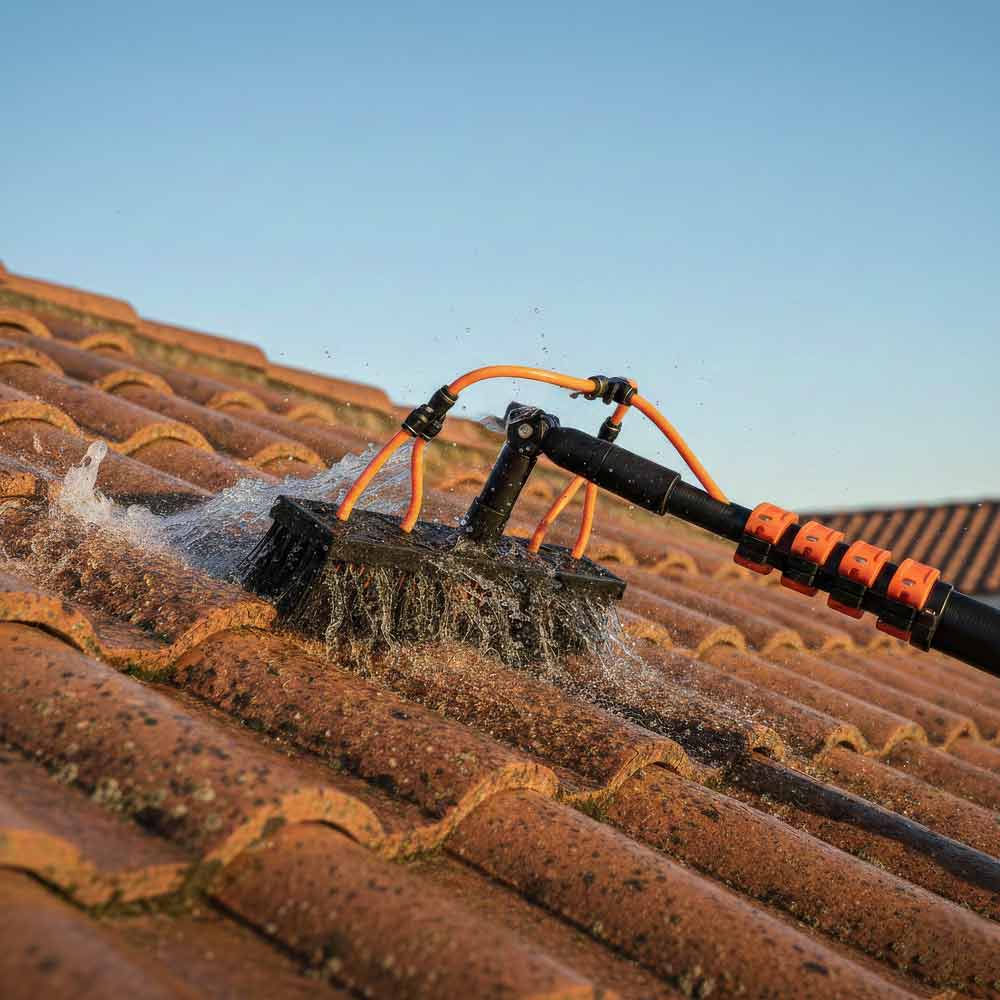
- Gutter and roof edge: a gutter full of leaves lets water run over the edge — exactly the green streak you see on the outside. See cleaning gutters and roof tiles.
- Cladding (siding in the US), in uPVC or HPL: low-maintenance, but not maintenance-free. The horizontal edges of the profiles catch moisture and dirt.
- uPVC window frames and sills: water sits in the corners. Do them while you’re cleaning the walls anyway — otherwise dirt from the frames soon runs back onto your clean glass.
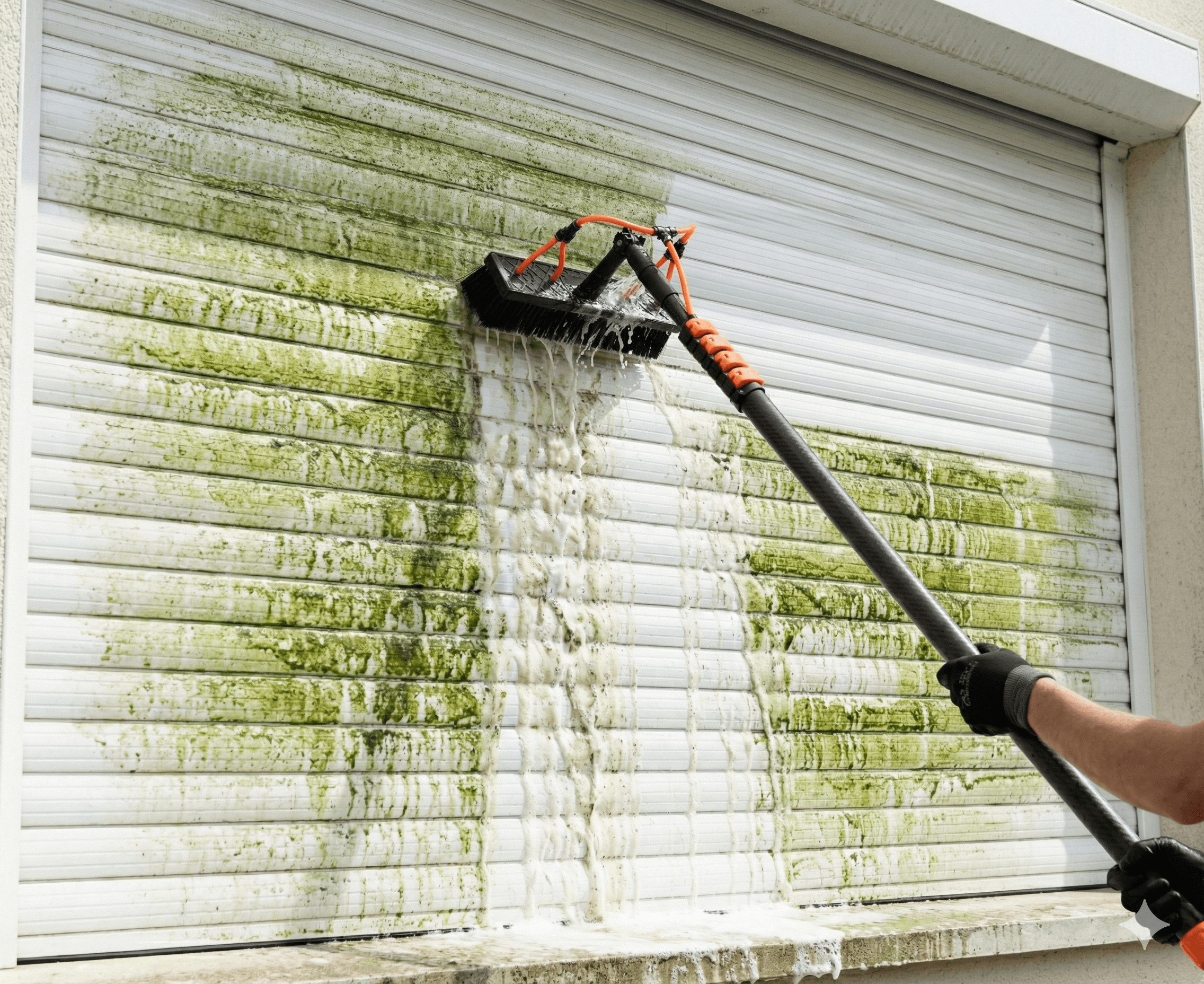
- Roller shutter boxes and slats: the box sticks out and stays wet. Lower the shutter and brush it at the same time; see roller shutter cleaning.
Which brush for which surface
This is where most damage happens: a stiff yard broom or a scouring pad on a surface that can’t take it. Always use a wash brush with a water feed — the water forms a gliding layer that carries grains of sand away instead of dragging them across your paintwork. Choose the bristles to suit the surface:
| Surface | Brush | Watch out for |
|---|---|---|
| Fascias, window frames, painted timber | 5-Sided Wash Brush (Medium, 28 cm) | Bristles all round: corners and profiles without knocking a hard block against your paintwork |
| uPVC cladding, Trespa and other HPL panels | 5-Sided or Soft 4-Jet | Scratch-free matters more than scrubbing power here: dirt sticks faster to a damaged surface |
| Brick, render, stone, patio slabs | Hard 4-Jet Wash Brush (35 cm) | Hard-wearing, stiff bristles and four water jets for rough, stony surfaces |
| Glass, uPVC frames, cladding | Soft 4-Jet Wash Brush (35 cm) | The standard brush; soft nylon with memory, safe on paintwork |
| Motorhome, caravan, paintwork and gelcoat | SoftWash Brush | Extra-soft split-tip bristles, scratch-free |
Swipe sideways to see the whole table →
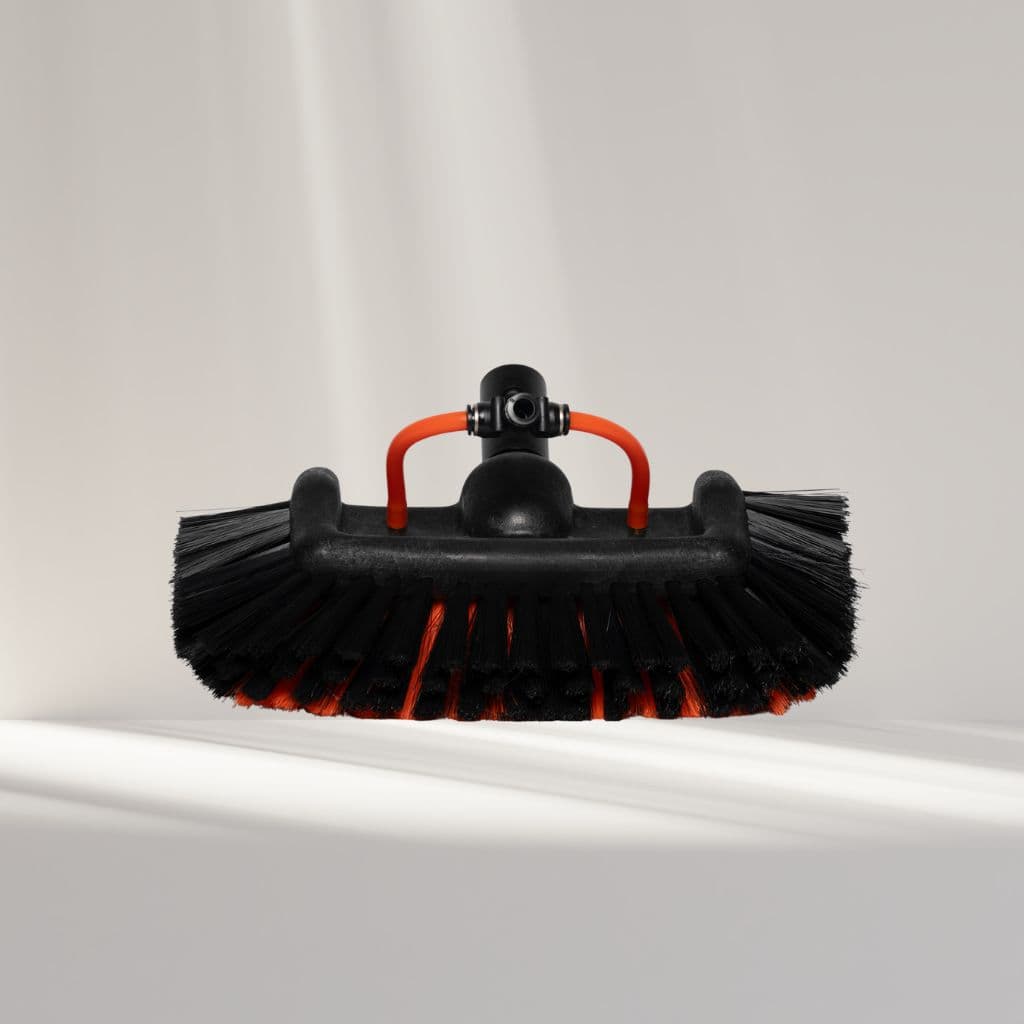
5-Sided Wash Brush — the algae specialist
Five fully bristled brushing zones and two recessed jets: reach the underside of a soffit, the side of a profile and the corner of a window frame without stressing your paint. Clicks onto any Eagle Extend® pole in a second with HexaLock®. Not sure? Read which brush you need.
For rough work on brick or slabs, use the Hard 4-Jet Wash Brush; for painted timber and frames, stick to soft or medium. Because every attachment has HexaLock®, you can change brush halfway through without retracting the pole — and because the connection doesn’t twist, the brush stays where you put it, even under a soffit.
Which cleaner — and what to avoid
Water alone is rarely enough for green algae: fascias and walls are also greasy with soot and fine dust, and that film protects the algae. You want a non-aggressive, biodegradable cleaner that tackles both atmospheric dirt (soot, fine dust) and organic growth (algae) without attacking your paint or the surface of plastic cladding. Apply it as foam through a soap dispenser between the tap and the pole — that way your garden hose doesn’t fill up with soap.
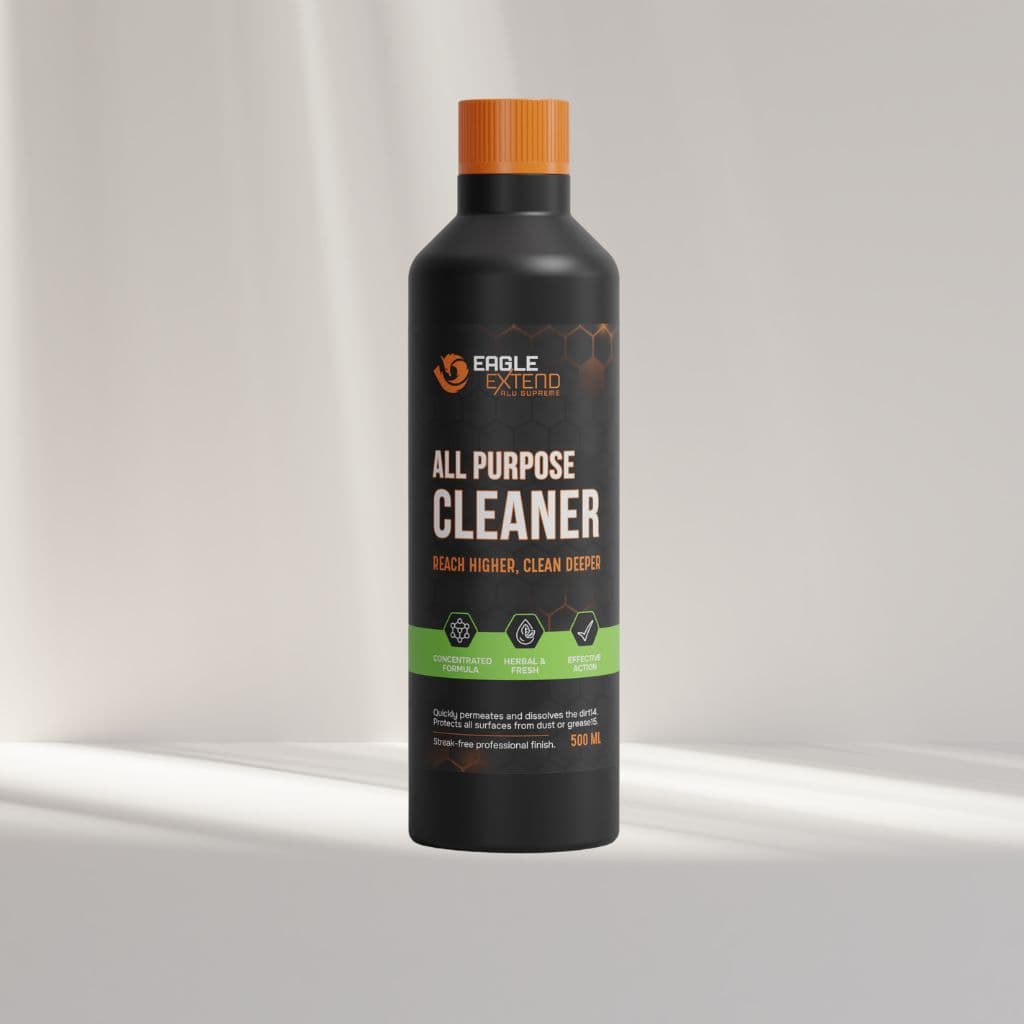
Allround Cleaner — safe on paint, Trespa and uPVC cladding
Concentrated all-purpose cleaner (500 ml) that loosens soot, fine dust and green algae on almost any outdoor surface. Use it through the SoapFlow soap dispenser: you dose it with a single valve and rinse straight away with the same brush.
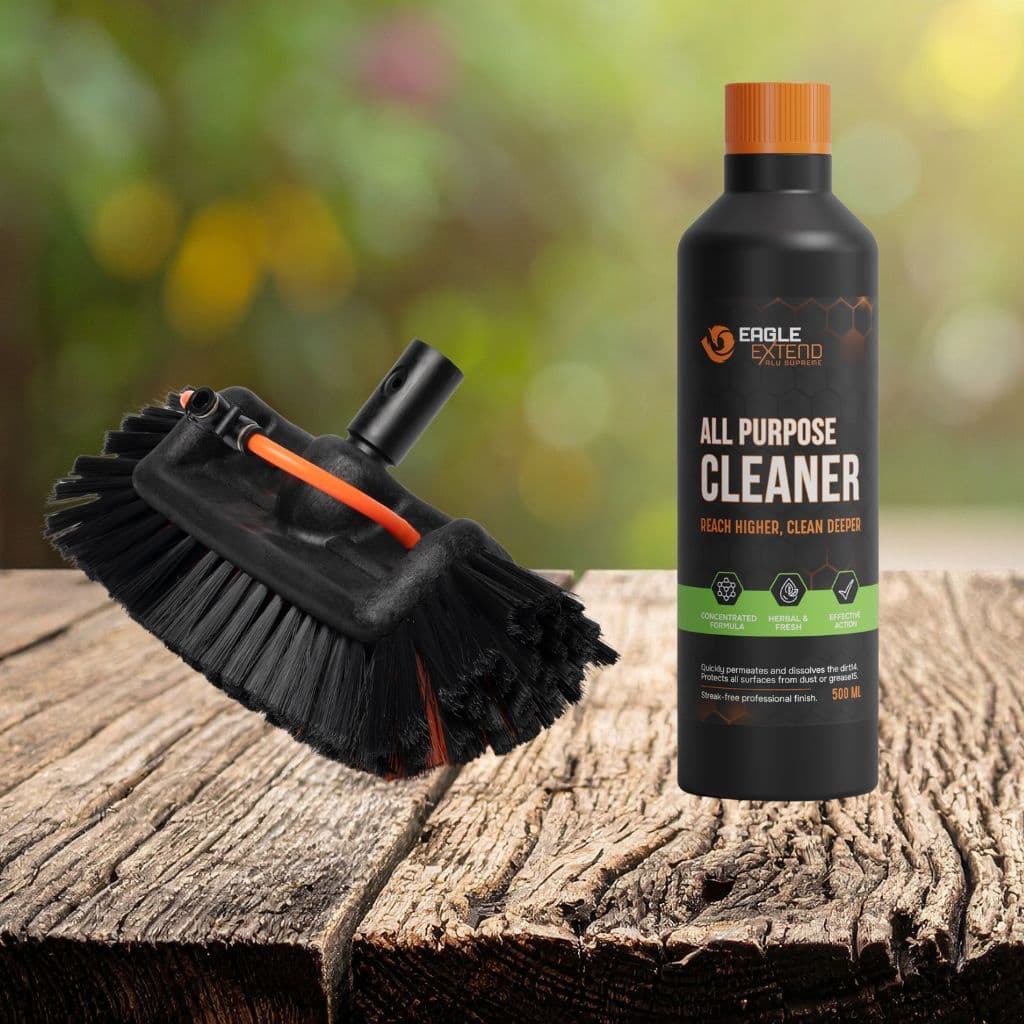
Step by step: work from the top down
Remove green algae in five steps
- 1Start at the top and clear the gutter
Take the leaves and moss out of the gutter first; leave it until later and you’ll wash all the debris over your freshly cleaned wall. Then work from top to bottom: roof edge and fascias, then walls and window frames, then roller shutters, and the patio last.
- 2Wet the surface and apply foam
Wet the surface with clean water first. Then fit the soap dispenser between the tap and the pole and apply an even layer of foam to an area of a few square metres — not the whole wall at once.
- 3Let it soak briefly
Leave the foam for a moment so the algae lets go, but never let it dry. So work on a cloudy day or on the shady side. If it does dry, rinse straight away and apply foam again.
- 4Brush with the water running
Open the tap and scrub the area with calm, overlapping strokes. Because water runs through the brush, the loosened algae is rinsed away at once instead of being smeared around. Don’t forget the underside of the soffit — that’s where you’ll find most algae and most cobwebs.
- 5Rinse thoroughly
Switch off the soap and rinse the area from top to bottom until no more foam runs off. Soap residue that dries leaves streaks and attracts new dirt. If you’re doing the windows too, finish them with softened water.
The best time and how often
For fascias and walls we recommend at least two cleans a year: one in spring to wash off the winter’s algae and one in autumn, before months of wet weather. Keep to that rhythm and the algae won’t get into the paint or the surface of uPVC or HPL cladding — and your paintwork will last considerably longer.
- Spring (March–May): the most important clean. The winter’s algae is still loose, and it isn’t yet warm enough for foam to dry on.
- Autumn (September–October): just after the leaves have fallen and the gutter has been emptied. That way you go into the wet months clean.
- Not in frost: water in the hose or brush can expand and cause damage. Let the pole drain after every use and store it frost-free.
Less work next year
Algae always comes back — that’s down to the conditions, not your cleaning. But you can change the conditions:
- Keep the gutter clear: an overflowing gutter is the number one cause of green streaks on walls and fascias.
- Cut back plants growing against the house: a hedge or branch right against the wall keeps it permanently damp and dark. Leave a hand’s width of air between plants and wall.
- Repair damaged paintwork: an intact, smooth finish gives algae much less grip than weathered paint or scratched plastic.
- Deal with it every year, not only when it’s obvious: fresh algae comes off easily with a little foam; algae that has soaked in needs scrubbing or even repainting.
- Don’t use ditch water: untreated surface water (ditch or pond water) contains sand and algae that clog your hose, jets and filters — you’d literally be applying new algae.
What you need is straightforward: a pole that’s long enough, a soft brush for paint and plastic, perhaps a stiff one for stone, and a mild cleaner. The Pole Finder suggests the right combination in two minutes, and on why Eagle Extend® you can read what SureLock™, AlignTrack™ and HexaLock® do for you in practice.
Fascia and soffit cleaning without a ladder
Make timber, uPVC or HPL fascias and soffits look like new again — safely from the ground.