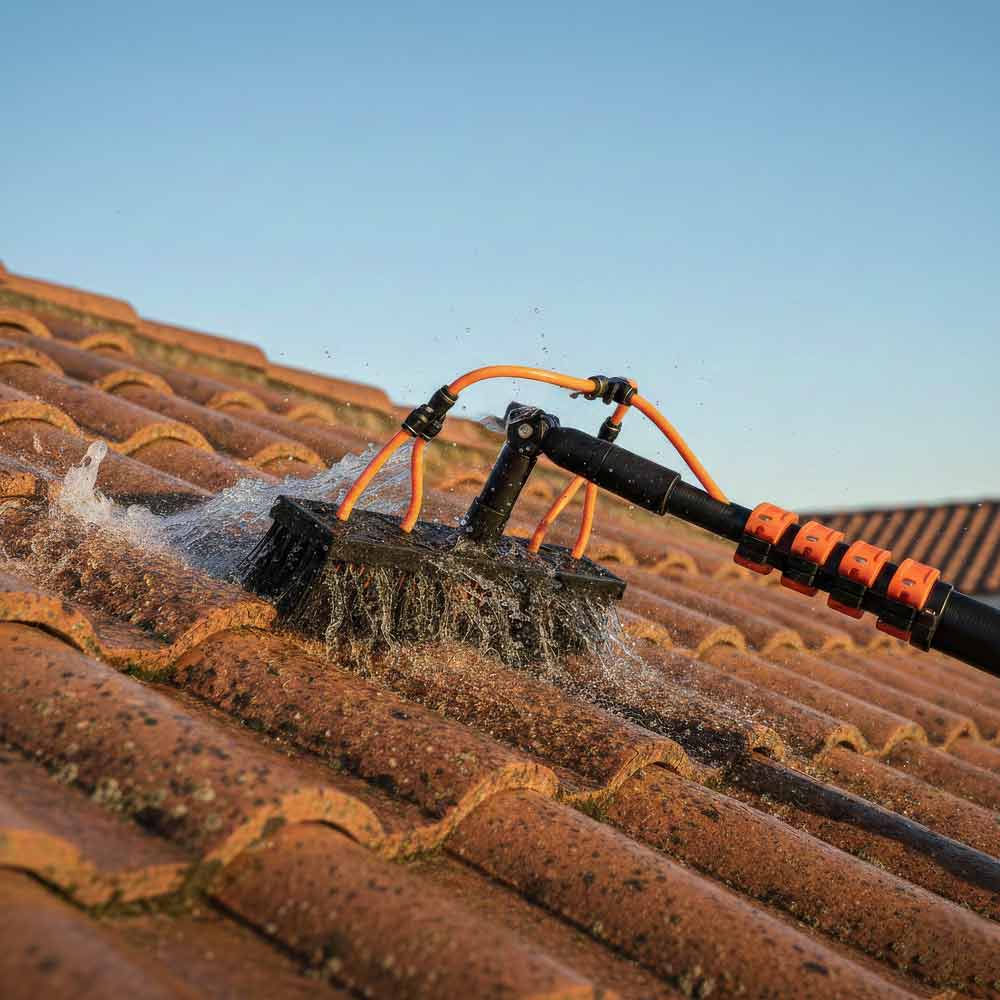
You can clean roof tiles, the roof edge and the outside of your gutter from the ground with a water-fed pole that’s long enough, an angle adapter and a soft brush: clear the gutter first, apply a cleaner, brush from the ridge down and rinse. No ladder, and no climbing on the roof.
A roof needs little attention — until the gutter overflows down the wall or green streaks creep across the tiles. Moss and algae cling to the surface of the tile and hold moisture. When it freezes, that moisture expands and hairline cracks appear: frost damage. Meanwhile, moss that slides down ends up in your gutter and blocks the outlet. Below you’ll find how far each telescopic pole reaches, which brush does what, the order to work in and the best time to do it.
Why moss and leaves can’t wait
Cleaning roof tiles is about more than looks. Moss roots into the surface of the tile, holds water and gets in the way of rainwater draining off — and that water can then be driven under the tiles. Our roof tile cleaning page lists the consequences:
- Porous roof tiles caused by moss roots.
- Leaks caused by water building up behind debris.
- Blocked gutters from moss sliding down.
- A drop in the value of your home because it looks neglected.
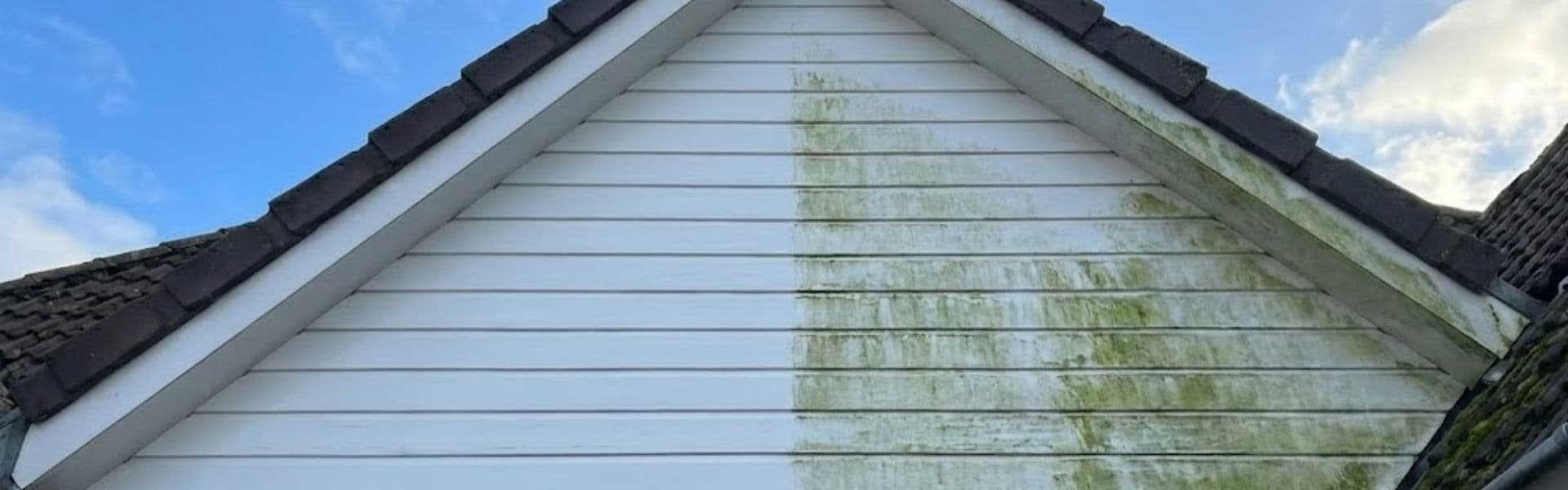
The same grime usually covers the roof edge and the fascias below it too. Green algae grows mainly where there’s little sun, and if you leave it, it works its way into the paint or into the surface of plastic cladding such as uPVC, or HPL panels like Trespa. That’s why we recommend cleaning fascias at least twice a year: in spring to wash off the winter’s algae, and again in autumn. So do the edges in the same session as the roof.
How high can you reach from the ground?
On a pitched roof you cover quite a distance: from the gutter to the ridge. The rule of thumb on the roof tile cleaning page is simple — add about 2 metres to the height of your gutter, because you also need to work a fair way up the roof. Go by the working length, not the model name: the working length is what you actually have to work with. The models below run from 3.5 to 12.05 m (11.5–39.5 ft).
| Model | Working length | Retracted length |
|---|---|---|
| Aluminum Supreme 3.5 m | 3.1 m | 1.08 m |
| Aluminum Supreme 5.5 m | 5.1 m | 1.56 m |
| Aluminum Supreme 7.5 m | 7.1 m | 1.73 m |
| Aluminum Supreme 9 m | 8.5 m | 2.02 m |
| Aluminum Supreme 10.2 m | 9.8 m | 2.26 m |
| Carbon Fiber Supreme 12.05 m | 11.5 m | 2.26 m |
Swipe sideways to see the whole table →
Weight starts to matter once you’re working above your head for a long time. The aluminium poles weigh 1.7 kg (3.5 m) to 3.9 kg (10.2 m) and go up to 10.2 metres; you can work with them comfortably up to a working height of about 7 metres. If you want to go higher or keep going for longer, carbon fibre is lighter and stiffer — and you notice it: a stiff pole doesn’t bend when you put pressure on stubborn moss. At 1.6 to 2.3 kg, the 3K Full Carbon poles are the lightest and are made for the heavy work right up to the ridge.
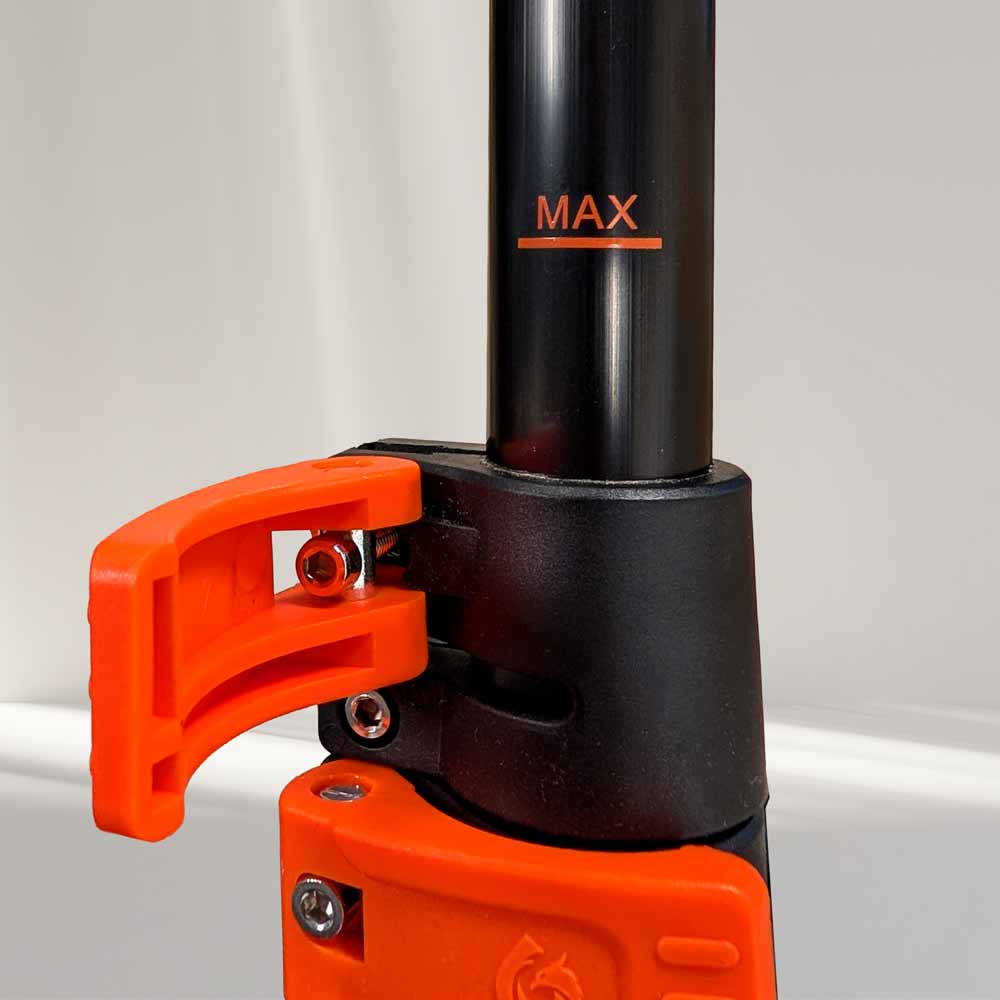
To get over the roof edge you need an angle adapter. It sets the brush at the right angle on the sloping roof and creates distance between the pole and the surface, so the pole — which bends slightly — doesn’t touch the roof. Every telescopic pole comes with a HexaLock® angle adapter as standard; from 9 metres you automatically get the extended Angle Adapter XXL, which is exactly what you need at those lengths.
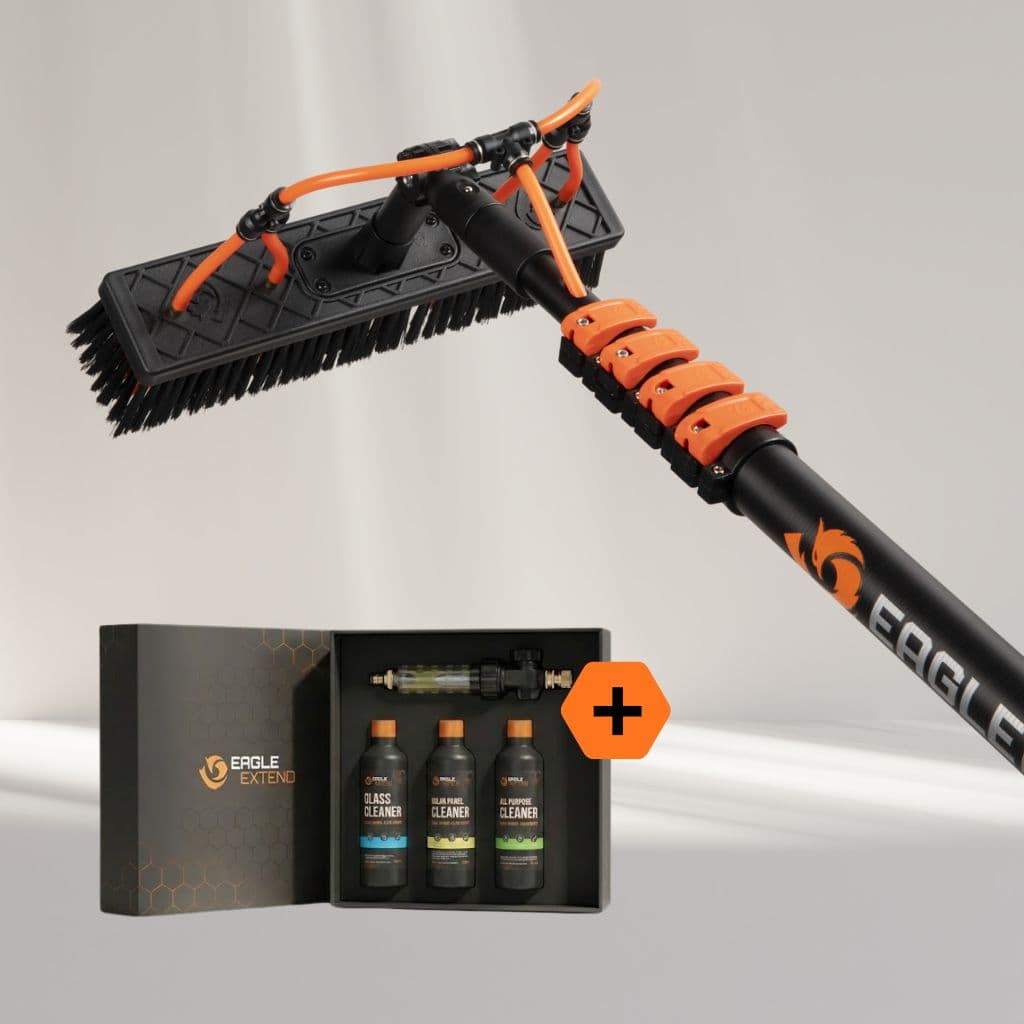
Aluminum Supreme water-fed pole
Five lengths from 3.5 to 10.2 metres, 25 mm tubes, SureLock™ clamps and the AlignTrack™ V-groove to stop the sections twisting. Includes a HexaLock® wash brush and a 5-year guarantee.
Which brush for roof tiles, gutter and fascias
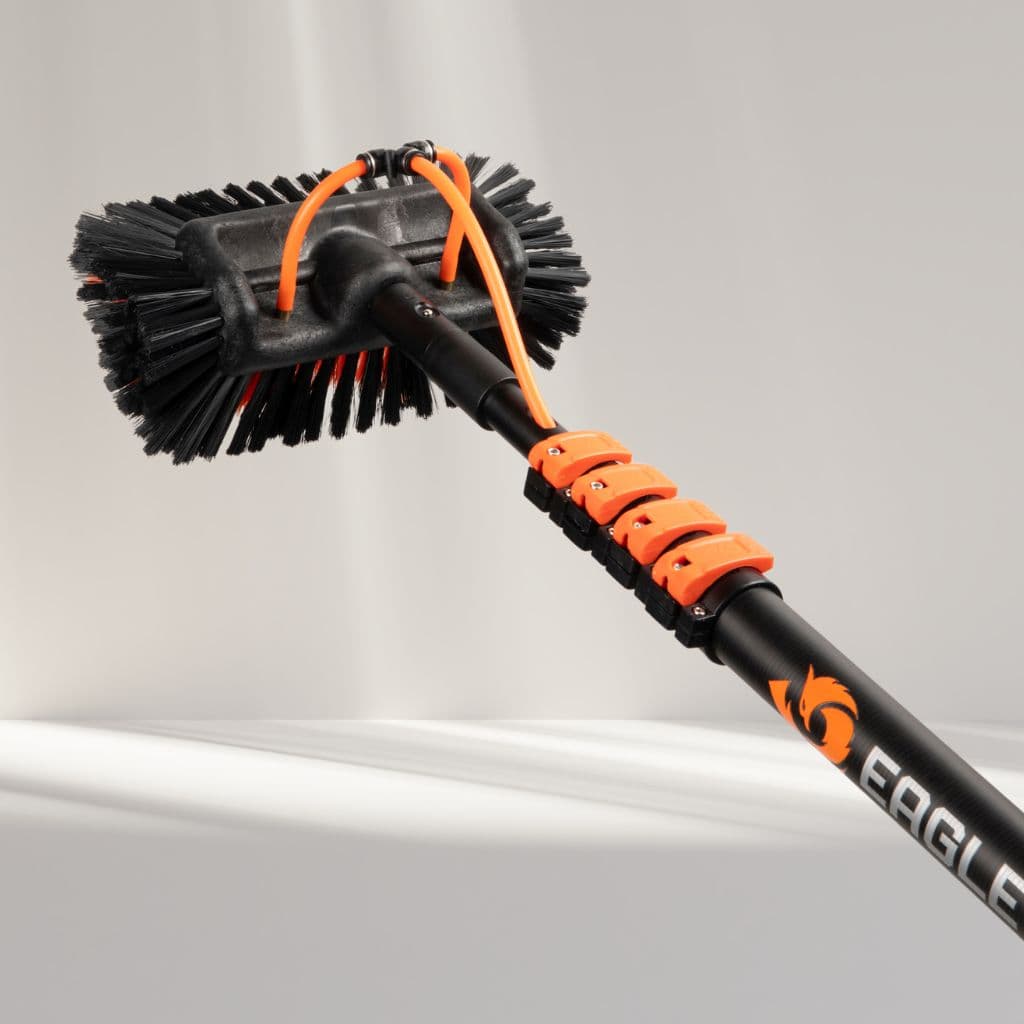
With HexaLock® you click a different attachment onto the same pole in under a second. For a roof clean you usually need two — a wide brush for the roof surface and a brush with bristles all round for the edges. The full range is under brushes and attachments.
- Roof tiles and roof edges: the Soft 4-Jet Wash Brush is often used here — the brush that comes with every telescopic pole. Thanks to the bristles and four water jets, you pre-clean and brush in a single movement.
- Stubborn, stony dirt: the Hard 4-Jet Wash Brush 35 cm has stiff, hard-wearing bristles for maximum scrubbing power and is made for tough surfaces such as patio slabs and facing bricks.
- Gutter, fascia boards and timber: the 5-Sided Wash Brush (Medium) has five fully bristled faces, a width of 28 cm and two recessed jets, so it reaches edges and undersides. Please note: don’t use this brush on solar panels.
- Cobwebs under the eaves: for webs and dust a cobweb brush works better than a wet brush — see cobweb and dust removal.
Torn between soft and stiff? Read which brush you need. You don’t need to use force, by the way: let the brush and the water do the work. Pushing hard isn’t necessary and only tires you out.
Stay off the roof — and off the veranda
Walking on the roof can be life-threatening and is bad for your tiles. A ladder is hardly better: ladders are a well-known cause of accidents in and around the home, and constantly moving a heavy ladder along the whole roof edge is hard work and slow. On the ground you stand firmly, and you simply walk on to the next section.
We advise just as strongly against a pressure washer. The hard jet damages the protective coating — so moss comes back faster and deeper — can harm the UV coating of polycarbonate and forces water under sealing rubbers, which leads to leaks. A water-fed brush at normal mains pressure is safe and effective.
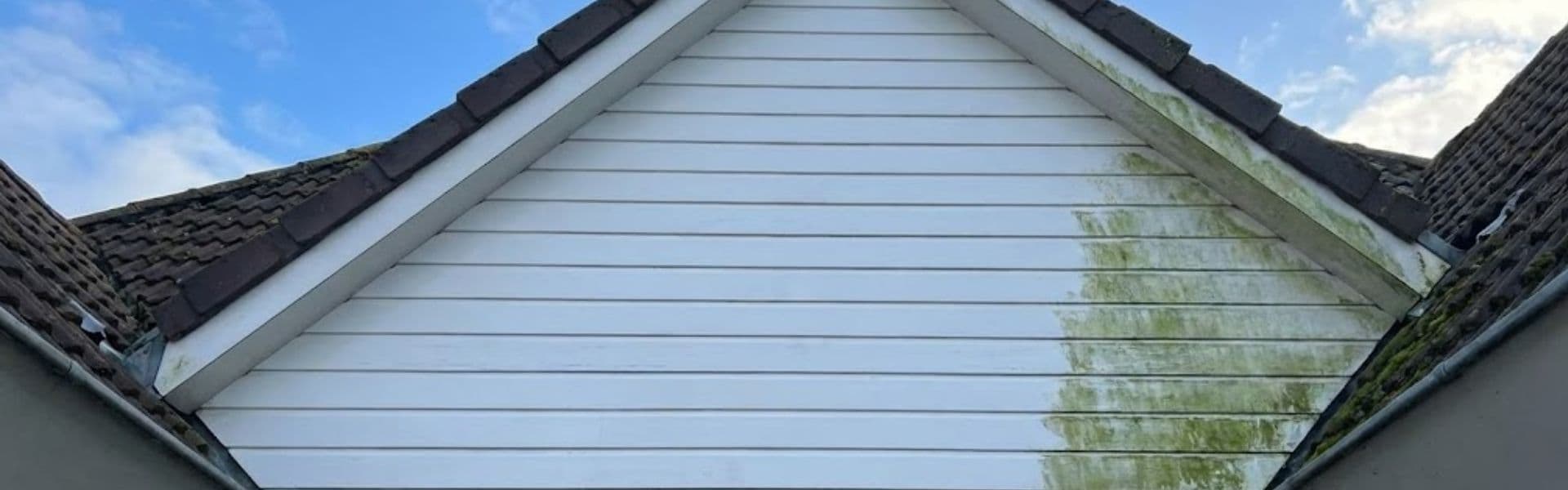
Order of work: empty the gutter, then from ridge to gutter
One thing first, because it’s what many people search for: clearing leaves out of the inside of a gutter (an eaves trough in the US) is a different job from cleaning the roof. Our brushes are made for scrubbing surfaces, not for scooping out leaves. Remove the loose leaves and twigs before you start; if the gutter is badly blocked, use a dedicated gutter scoop or tool, or call in a gutter specialist. The steps below focus on what you can do well from the ground: roof tiles, the roof edge, the outside of the gutter and the fascias.
How to tackle a roof clean
- 1Empty the gutter first
Remove large twigs and leaves from the gutter so the outlet is clear and the dirt you brush loose can drain away. Do it the other way round and you’ll only fill a full gutter even further.
- 2Apply cleaner and let it soak
Apply foam to the roof with the SoapFlow soap dispenser filled with CleanStart. A short soak loosens the algae, so there’s much less scrubbing afterwards.
- 3Brush from the ridge down to the gutter
Click the angle adapter and brush onto the pole, extend it and work from top to bottom. That way loosened moss doesn’t fall on tiles you’ve just cleaned.
- 4Rinse thoroughly
Rinse the roof with clean water through the pole. The loosened dirt washes into the gutter — which is the idea, because you’ll take it out again in a moment.
- 5Empty the gutter again and do the edges
Empty the gutter once more afterwards to remove the moss you’ve rinsed off, and do the roof edge, the fascias and the upstairs windows or dormer in the same session. Dirt left there will simply run back down onto your windows later.
The right time: after leaf fall, before the frost
Autumn is the logical time. Wait until the trees are bare — otherwise you’ll be back out two weeks later — but do it before the first frost, because that’s when the moisture held in moss does its damage. If you have time for a second clean in the year, do it in spring to wash off the winter’s algae; that’s also the rhythm we recommend for fascias.
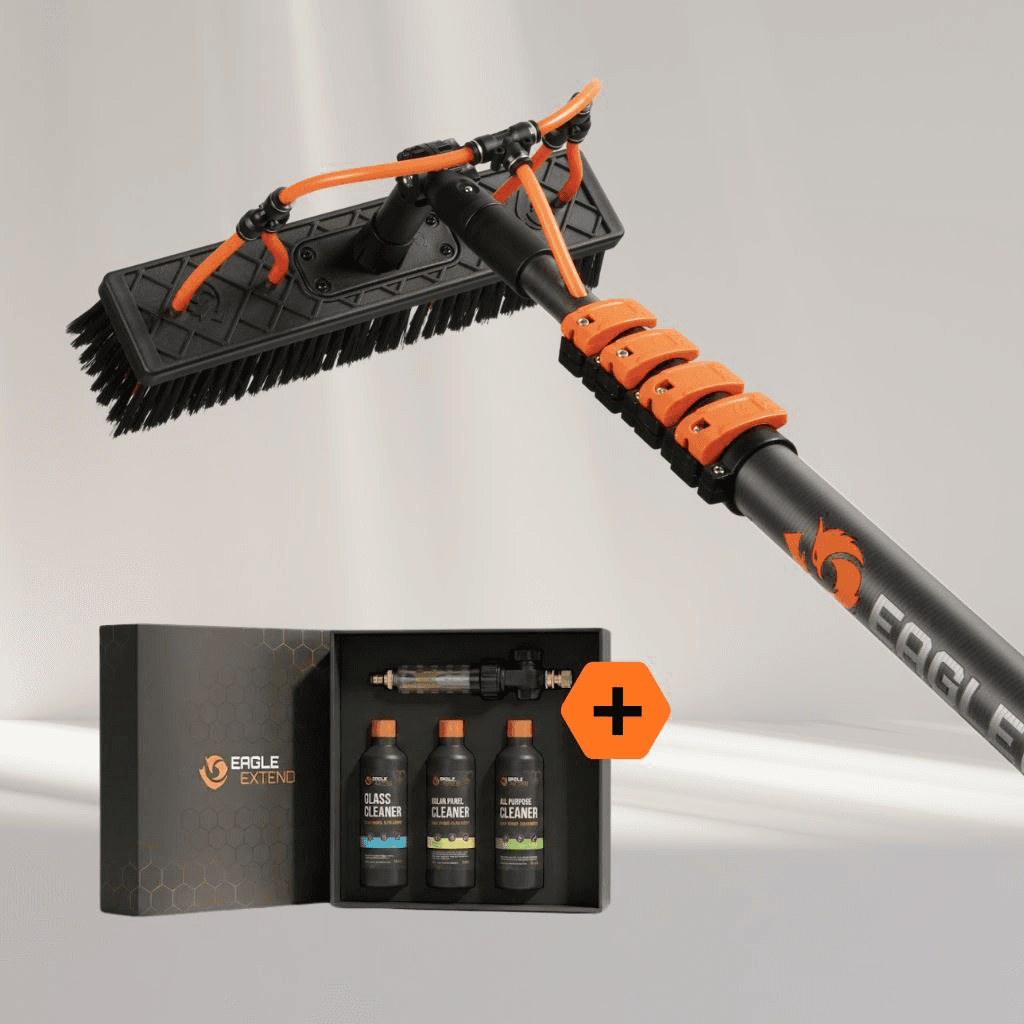
Carbon Fiber Supreme water-fed pole
For roofs where 9 metres isn’t enough: working lengths from 8.5 to 11.5 metres. Lighter and stiffer than an aluminium pole, so you can still scrub with control at height.
Clean roof tiles and remove moss from the ground
Remove moss and algae from your roof tiles from the ground — and prevent frost damage and blocked gutters.