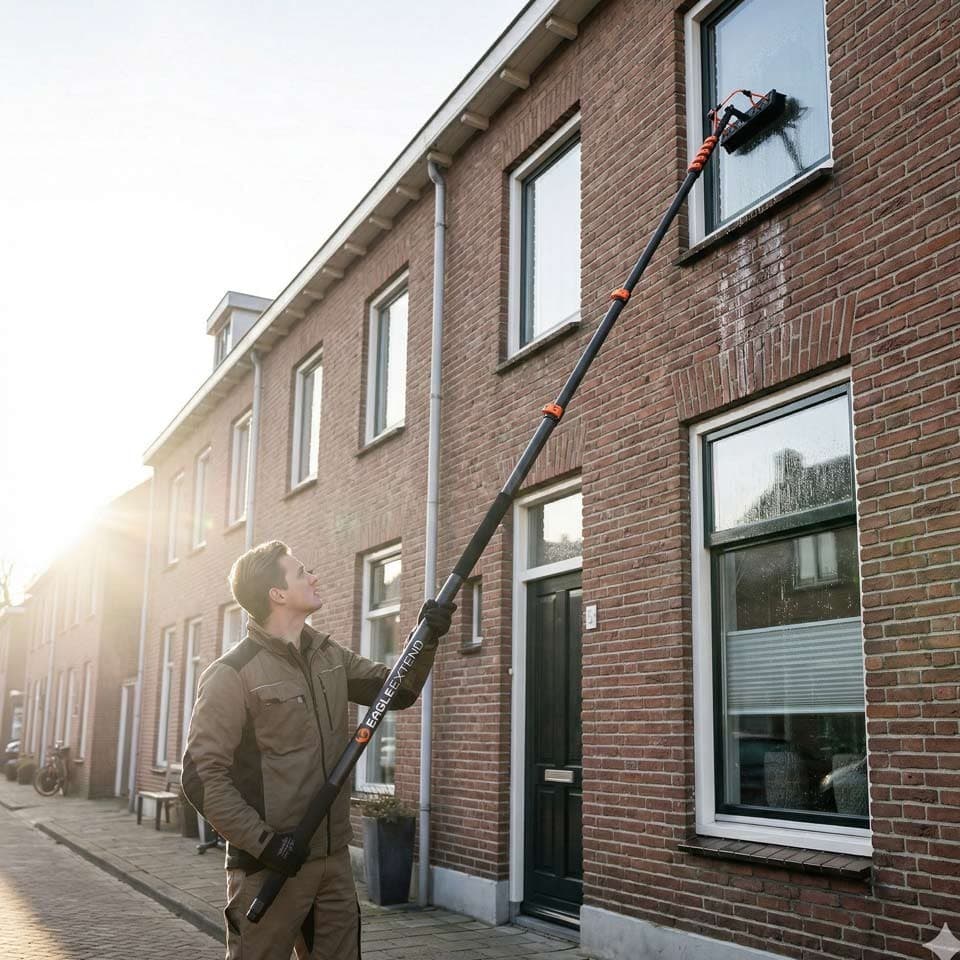
To clean upstairs windows without a ladder, work from the ground with a water-fed pole. A 5.5 or 7.5 m (18 or 24.6 ft) pole reaches the windows one and two floors up on most houses. You then either wash and squeegee, or scrub and rinse with a water-fed brush.
Ground-floor windows get done. The ones upstairs, on the dormer or above the conservatory are often left for years — exactly where the light comes in. The reason is nearly always the same: you’d need a ladder, and you’d rather not.
Fair enough. Window cleaning is the job a ladder is least suited to. Below: why that is, what you can really reach from the ground with a telescopic pole, which techniques work at height, and when it’s better to call a professional.
Why ladders and window cleaning don’t mix
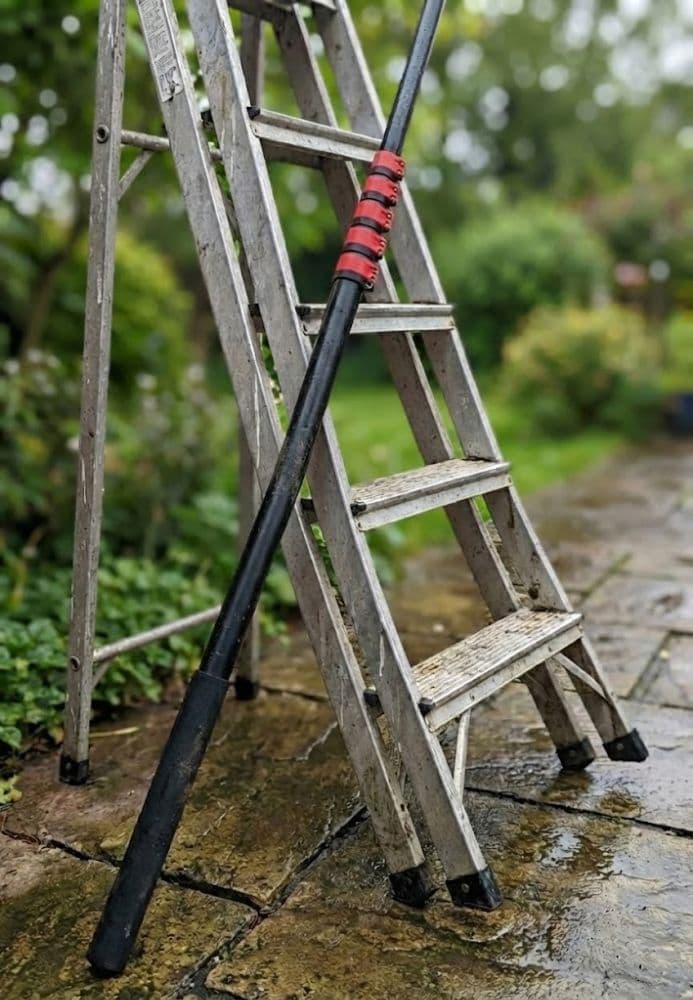
A ladder is fine for a quick job: changing a bulb or checking a gutter. Cleaning windows is different. You’re up there for minutes at a time, applying force and working with water. That combination exposes every weak point of a ladder.
- You reach sideways. A window is wider than a ladder. To get to the corner of the frame, you either move the ladder — or stretch. As soon as your shoulders go beyond the stiles, your centre of gravity shifts sideways and the ladder tips with it. It happens gradually, so you only notice when it’s too late.
- The ground is rarely level. Around a house, a ladder stands on gravel, grass or the edge of a flower bed. If one foot sinks a centimetre, the top moves a lot — and under windows you often end up standing in the flower bed, because there’s no paving.
- Soap and water make everything slippery. Soapy water running down the glass ends up on the rungs and the soles of your shoes. When you clean windows, you wet the very surface you’re climbing on — no other job does that so consistently.
- You only have one hand free. With a bucket on the ladder hook and a washer in your hand, you’re not holding on to anything — and holding on is exactly what keeps you safe on a ladder.
- Moving it is the real work. For a whole upper floor you reposition the ladder five, six, seven times: physically hard, slow, and each move is another moment when things can go wrong. With a pole, you just walk on to the next window.
How high can you reach from the ground?
The question isn’t whether it’s safer — it is — but whether you can actually reach. The working lengths below are the usable lengths of the Aluminum Supreme range, not the nominal size. Add your own reach on top: you hold the pole at chest height, not at ground level.
| Model | Working length | Weight | What you can reach |
|---|---|---|---|
| Aluminum Supreme 3.5 m | 3.1 m | 1.7 kg | Ground floor, conservatory, garden room, low extension |
| Aluminum Supreme 5.5 m | 5.1 m | 2.2 kg | Windows one floor up on most houses |
| Aluminum Supreme 7.5 m | 7.1 m | 2.6 kg | Windows one and two floors up, dormer, fascias |
| Aluminum Supreme 9 m | 8.5 m | 3.1 kg | Tall walls; above about 7 m, carbon fibre is lighter on the arms |
| Aluminum Supreme 10.2 m | 9.8 m | 3.9 kg | Tall walls and gable windows; consider carbon fibre here |
Swipe sideways to see the whole table →
For most homes, a 5.5 or 7.5 m aluminium pole is more than enough: in most situations it reaches the upstairs windows one and two floors up (second- and third-story windows, in US terms) from the ground. You can do a dormer completely — glass, cheeks and fascia — without going onto the roof. Not sure which set you need? Try the Pole Finder.
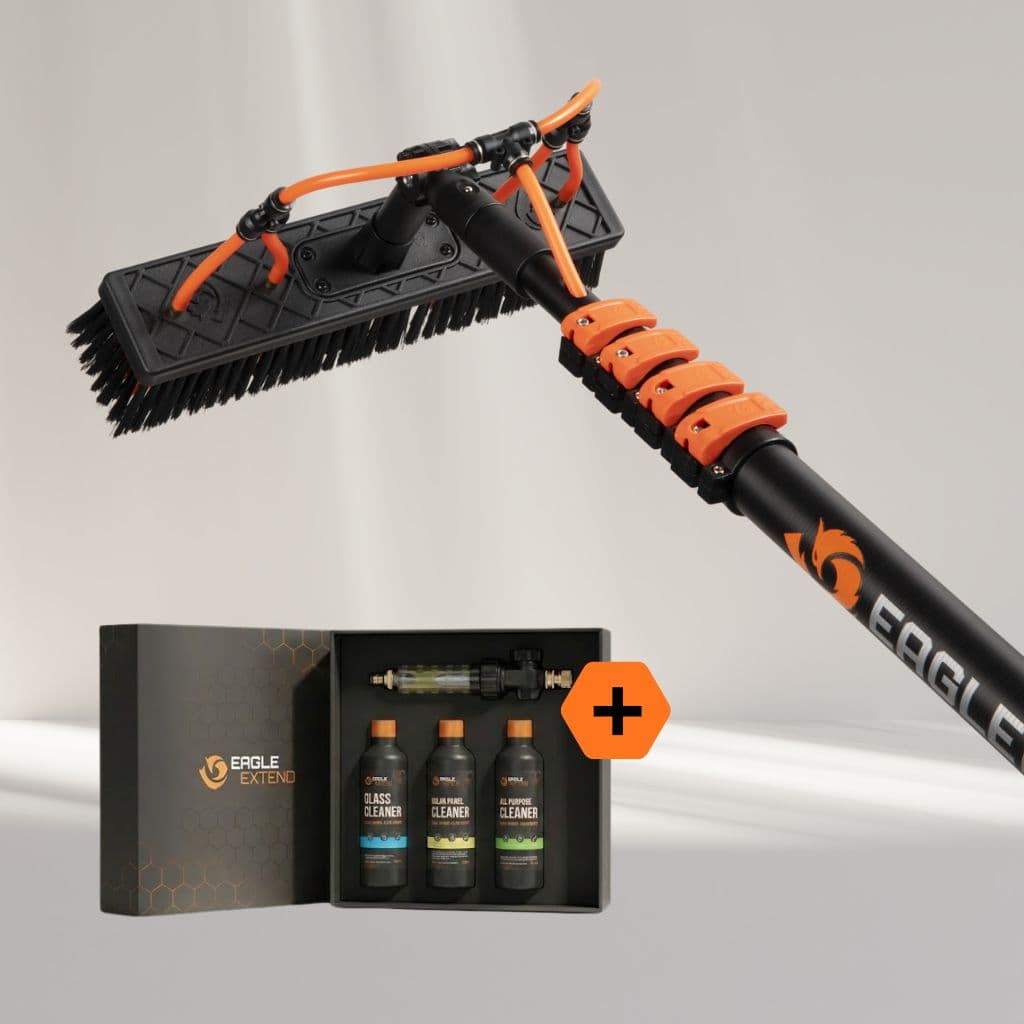
Aluminum Supreme water-fed pole
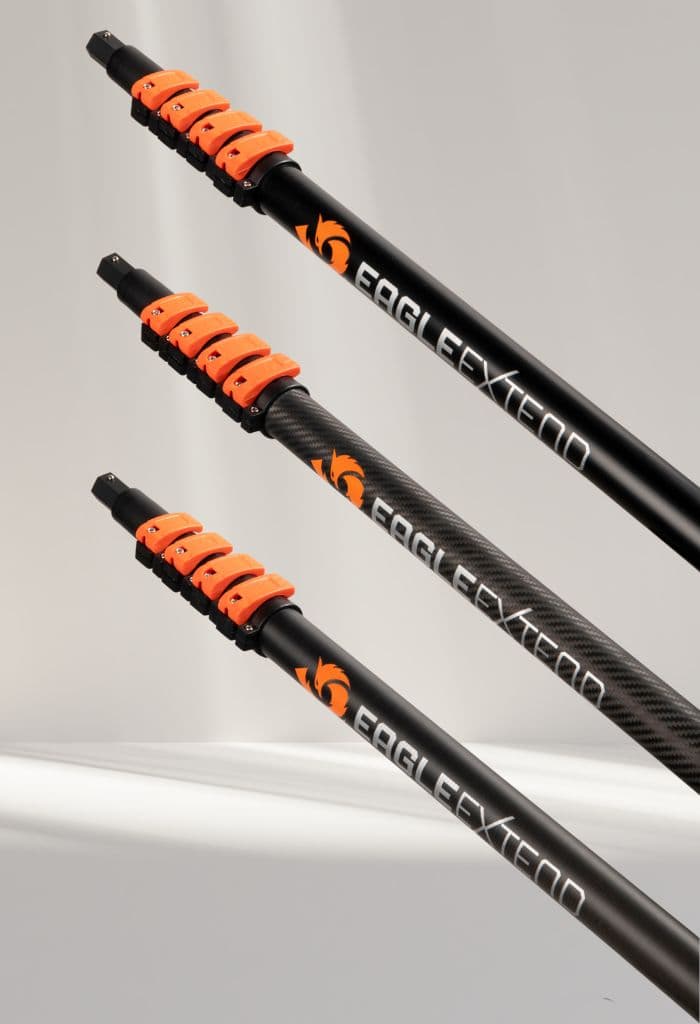
Five lengths from 3.5 to 10.2 m, with the HexaLock® end adapter, SureLock™ clamps and the AlignTrack™ V-groove to stop rotation. Includes the 4-Jet wash brush and angle adapter, plus a 5-year guarantee.
Two techniques that work at height
From the ground, there are two ways to work; the difference is what you do with the water.
1. The traditional method: washer and squeegee
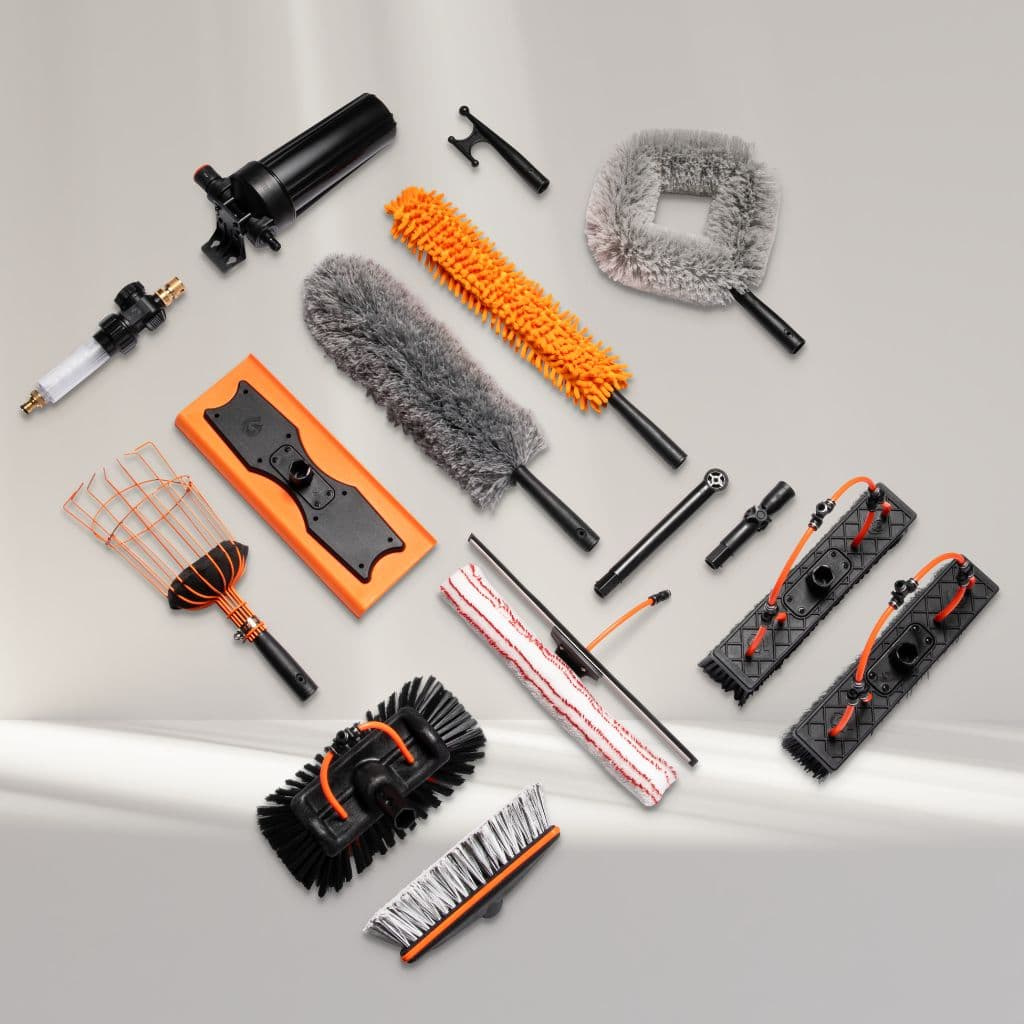
A washer is the white, fluffy sleeve window cleaners use. It holds plenty of soapy water to wet the window and loosen stubborn dirt. Then you squeegee it dry. The Window Washer & Squeegee Set Pro has both on one tool: you wash, turn the pole half a turn in your hands and squeegee straight away. Avoid streaks by wiping the rubber on a cloth after every stroke.
2. The water-fed method: 4-Jet brush
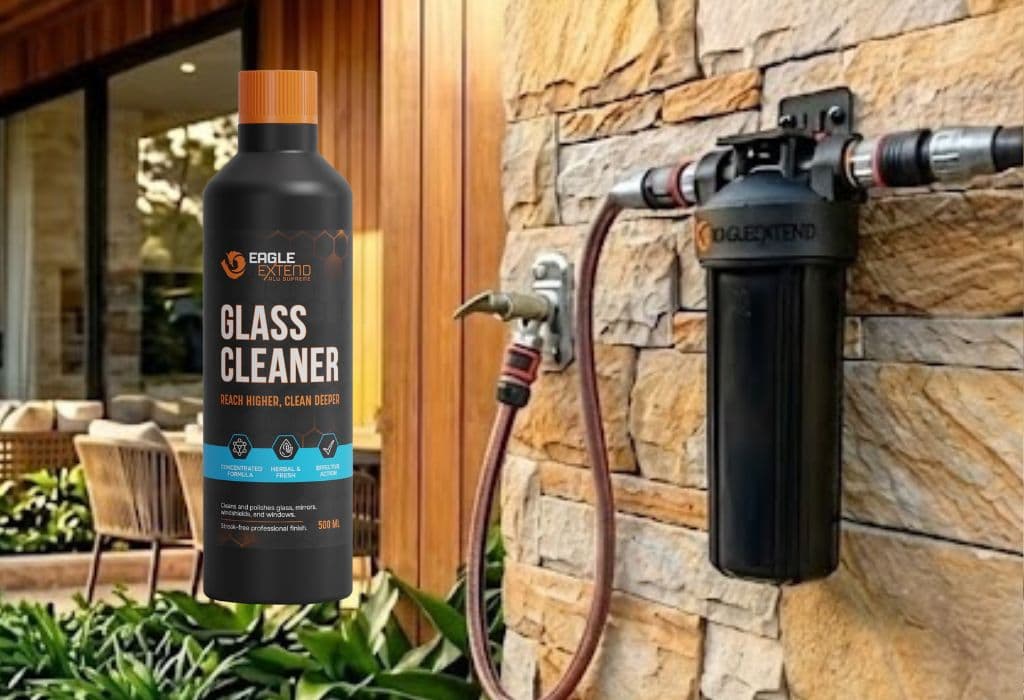
Here the hose runs through the pole to the brush, so you scrub and rinse at the same time. You don’t squeegee — you let the water dry. With ordinary tap water, the limescale it contains is exactly what leaves those white rings as the drops dry. That’s why you fit the PureFlow water softener between the tap and the pole: softened water leaves far fewer limescale marks. How it works is explained in streak-free windows: why your water matters.
Which you choose mainly depends on height. To be honest, squeegeeing at 12 m takes practice, because you’re far from the window and the right angle is harder to find. A stiff carbon fibre pole and the HexaLock® adapter — which stops the squeegee from turning — help a lot. If it still doesn’t go well, switch to rinsing with softened water using the same pole.
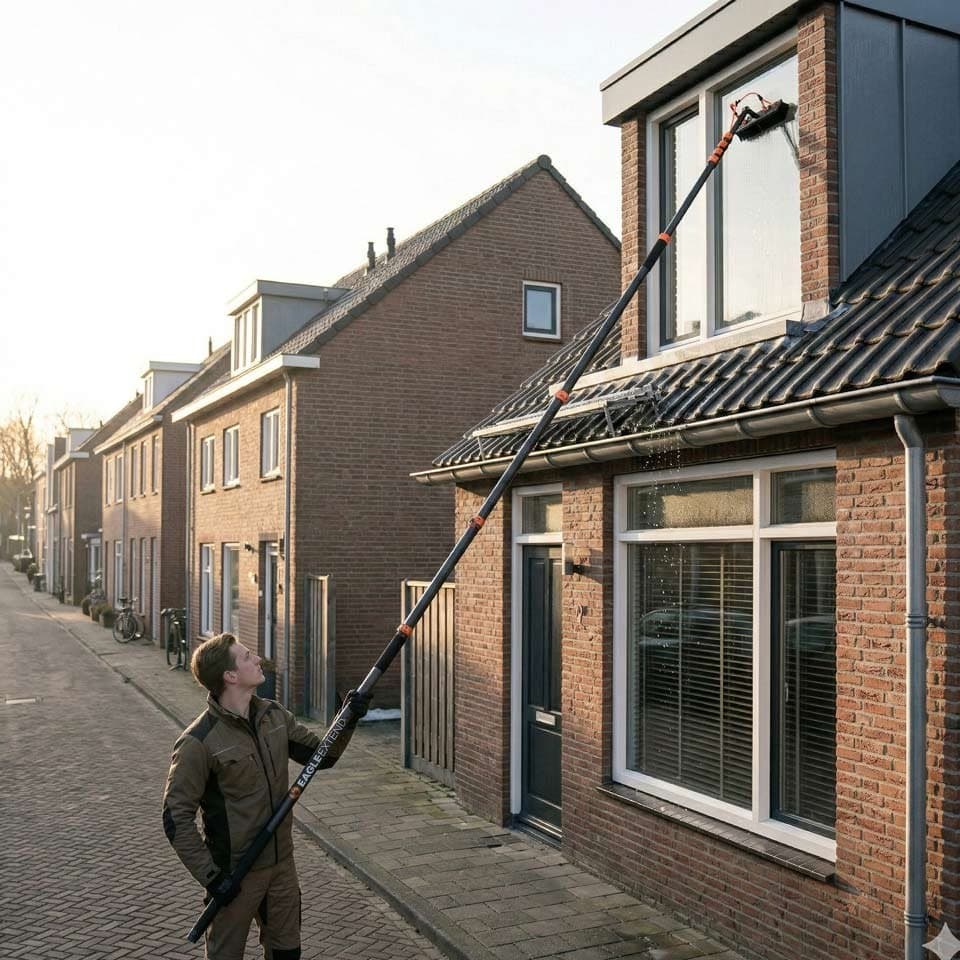
Step by step: cleaning an upstairs window
How to do it
- 1Choose where to stand and look up
Stand as straight below the window as you can, with space behind you. Check where the pole will end up: hanging baskets, awnings and above all overhead power lines need to be in view before you extend it.
- 2Remove dry dirt first
Clear cobwebs and loose dirt around the frame while it’s dry, for example with a cobweb brush — otherwise you’ll drag it across the wet glass. See removing cobwebs and dust.
- 3Extend up to the MAX marking
Hold the pole upright and extend it section by section. Close each SureLock™ clamp firmly and never go beyond the red MAX marking on a section: that limit determines stability. Then click the brush and angle adapter onto the HexaLock® connection.
- 4Rinse the frame first
Start with the frame and window sill: that’s where sand and dust sit, which would otherwise rain down on your clean glass later. The soft bristles — nylon with memory — are safe on paintwork and uPVC; see also cleaning window frames.
- 5Wash the glass from top to bottom
Work in overlapping strokes from the top edge down, so dirty water always runs over glass that’s still dirty. Don’t press harder than you need to: as long as there’s water on the glass, sand slides away instead of scratching.
- 6Squeegee or rinse
Traditional: squeegee stroke by stroke, wiping the rubber each time. With the 4-Jet brush: lift the brush slightly off the glass and rinse generously from top to bottom. With softened water, the glass dries with far fewer limescale marks, so you can usually just leave it to dry.
- 7Retract and rinse the pole
Retract the pole, give it a quick rinse and let it dry before you put it away. That keeps the clamps and section guides running smoothly.
Posture, weight and when carbon fibre pays off
Working with a pole above your head takes some getting used to. Keep it close to your body, let your lower hand carry the weight and steer with your upper hand. Move your feet rather than your arms: working sideways with outstretched arms turns every 100 grams at the top into many times the effort. The MultiHold soft-grip zones give you a fixed place to change grip without looking.
Up to about 6 or 7 m, aluminium is perfectly manageable. Go higher and flex starts to matter: a long aluminium pole bends as soon as you press with the washer, and you correct that with your arms. Carbon fibre is lighter and stiffer and stays straight, so you need noticeably less effort. So choose carbon fibre for working heights above 7 m, or if you want to work for long stretches — the differences between the materials are explained in detail in our six innovations.
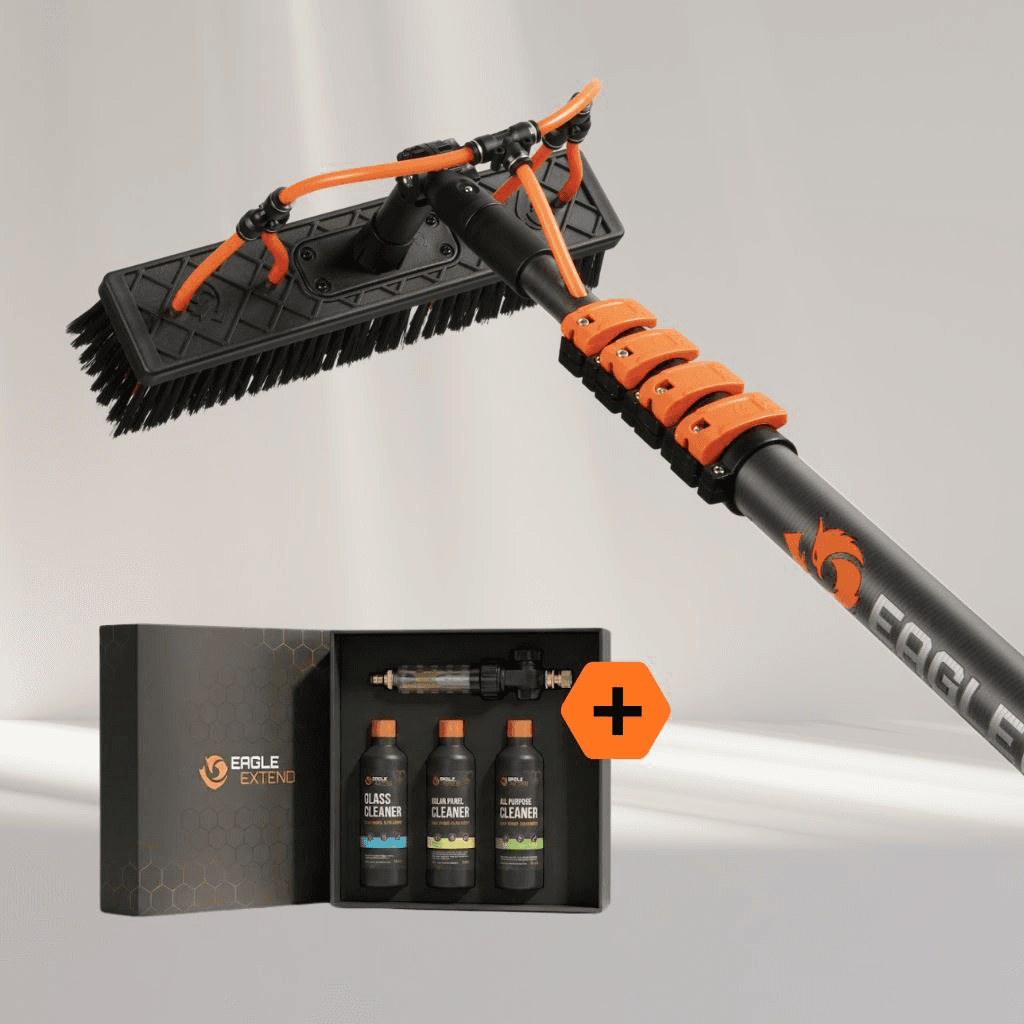
Carbon Fiber Supreme water-fed pole
9, 10.2 and 12.05 m, with a working length of up to 11.5 m. Lighter and stiffer than our aluminium poles: less flex and less effort at height. HexaLock® end adapter, 5-year guarantee.
When to call a professional instead
Working from the ground has limits, and they’re easy to identify. If you can’t stand below the window — above an extension, behind a deep bay window or with an outbuilding in the way — you’ll never get the right angle. High interior windows, and walls where you’d have to work across water or a slope, aren’t DIY jobs either.
Then there’s simple maths. Having a window cleaner come for the high, hard-to-reach windows costs money every visit. Your own set pays for itself after a handful of cleans, and after that you clean whenever it suits you. For commercial buildings with lots of glass it’s a different story: see commercial facade cleaning.
To see which set suits your house, have a look at high window cleaning.
Clean high and upstairs windows from the ground
Get upstairs and dormer windows streak-free — without a window cleaner or a ladder.