Short answer: clearing snow from solar panels is worth it when there's a thin to moderate layer of soft, loose snow and the sun is about to come out. Leave heavy snow, frozen snow and ice where they are. And never climb onto the roof in winter.
It's a question that comes back every winter. The sky clears, the low sun shines brightly over the roof, yet your inverter app still reads zero. Whether it's worth clearing depends on how much snow there is, what kind of snow it is, how steep the roof is and what the weather will do over the next few days.
Below: when to clear, when to leave it, and how to do it safely from the ground. The full step-by-step method with the SolarClear is on removing snow from solar panels; this article is about the decision before you start.
Clear it or leave it? A quick guide
Use this table to decide quickly. As a rule of thumb: soft snow and sunshine on the way mean clear it; ice, deep snow and grey skies mean leave it.
| Situation | Advice | Why |
|---|---|---|
| Thin layer of loose snow, sun forecast | Clear it | Even a thin layer blocks almost all sunlight. A few minutes' work gets the panels generating again that same day. |
| Soft, loose snow up to about 10 cm | Clear it, calmly and in strips | This is exactly what the SolarClear is made for: moving snow without touching the glass with anything hard. |
| Heavy snow (more than 10 cm) | Leave it | Too heavy to move safely from the ground. If you're worried about the weight on the roof, call your installer. |
| Frozen snow, freezing rain or a layer of ice | Leave it | Ice won't come off without scraping, and scraping causes scratches. Wait for a thaw. |
| Overcast, or more snow forecast | Leave it | Without sun a clear panel produces very little, and the next day there may be a fresh layer. |
| Steep roof, thaw or sunshine on the way | Wait and see | On smooth, angled glass, snow often slides off by itself once the panel warms up slightly. |
Swipe sideways to see the whole table →
Why a little snow makes such a difference
Many people assume solar panels produce nothing in winter. In fact, solar cells work efficiently at low temperatures; what they need is light. That's the catch: even a thin layer of snow blocks almost 100% of the sunlight, so the inverter switches off. It doesn't matter how bright it is outside.
Winter days are short and sunny ones are rare, so every clear day after a snowfall counts. If it's going to stay overcast for days, the effort may not be worth it. If the sun is shining, snow-covered panels mean output you lose straight away.
Leave it: when nature does the work
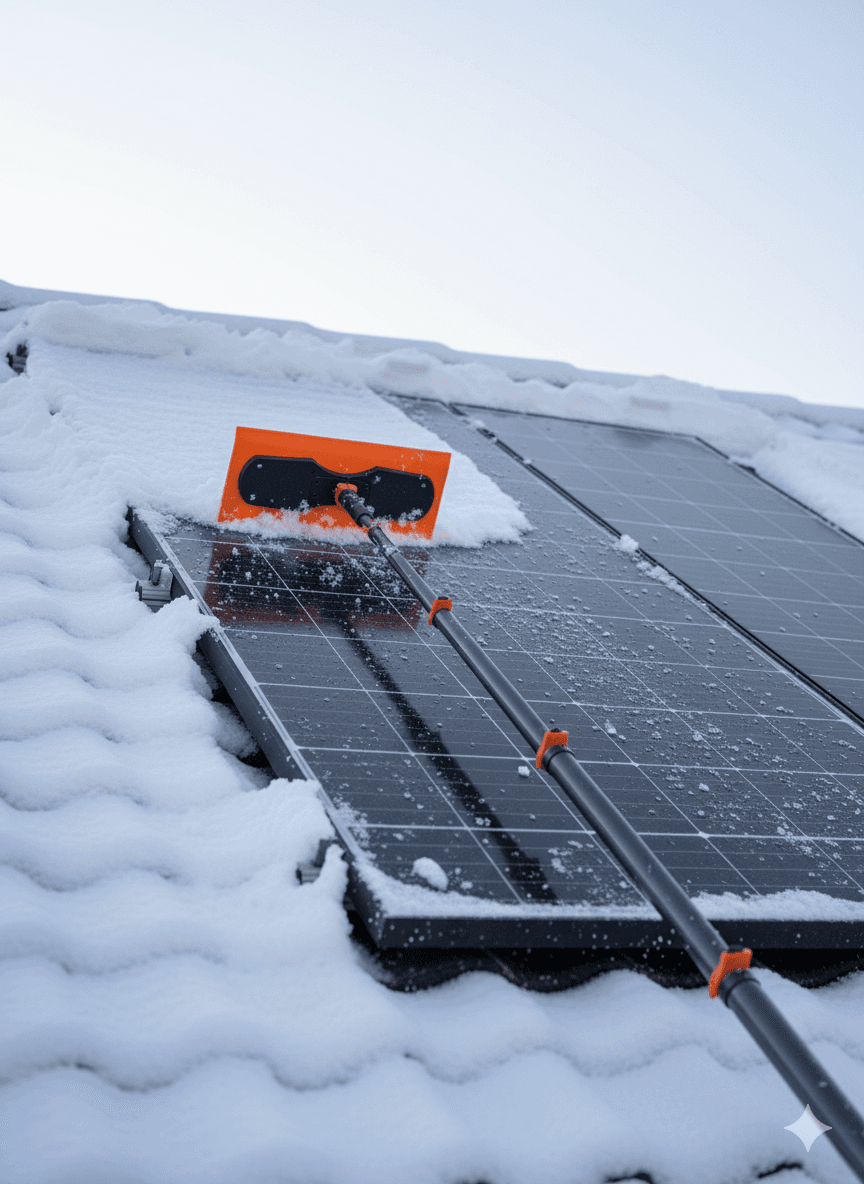
Solar panels have a smooth glass surface and, on a pitched roof, usually sit at a fair angle. As soon as some light gets through the snow or the temperature rises above freezing, the panel warms up and the snow slides off in one go. On a steep roof with a clear day ahead, waiting is often the sensible choice.
A flat roof is different. Panels there are often set at around 15 degrees, so snow stays longer and builds up along the bottom edge. Clearing pays off sooner, provided you can reach safely. And you don't need to remove every bit: once most of it has gone and the black panel shows through, the sun does the rest.
The risks: where it goes wrong
- Scratches from grit and ice Under the snow there's often dust, grit or a thin crust of ice. Push something hard over it and you drag those particles across the anti-reflective coating. That's why you use a soft foam head and leave frozen patches alone.
- No shovel or hard-edged broom A snow shovel, yard broom or ice scraper is made for paving and car windscreens, not solar panels. A hard edge can damage the glass and coating, and easily catches on the clamps.
- No hot or warm water A bucket of warm water seems like a quick fix, but a large temperature difference can crack the glass. And water that doesn't drain away simply freezes into a layer of ice. Always work dry.
- Stay off the roof A snowy roof is extremely slippery, and walking on a roof is dangerous at the best of times and bad for the tiles. Never lean on the panels either. Do everything from the ground.
- Watch out for sliding snow Loosened snow can slide off the roof all at once. Don't stand directly below the roof edge: work at an angle from the side and make sure nobody is walking underneath.
How to clear snow safely from the ground
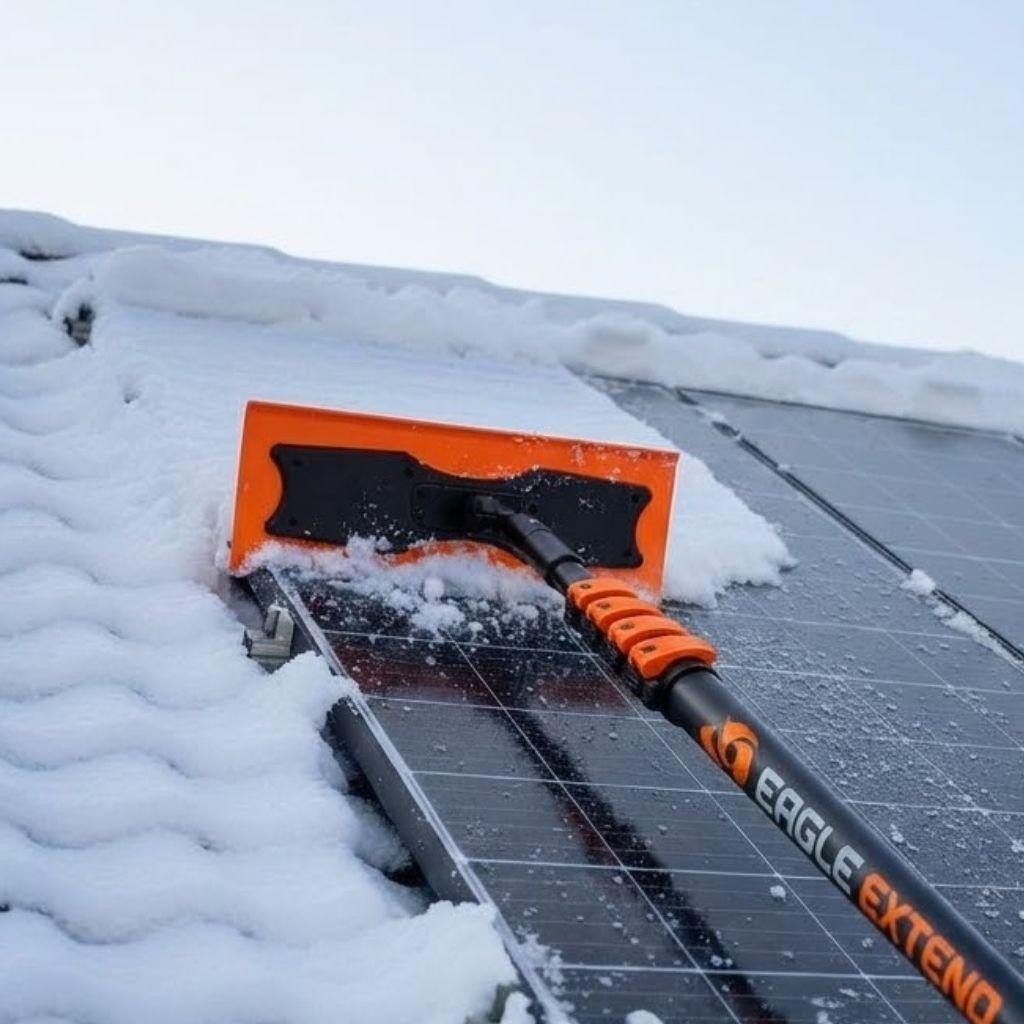
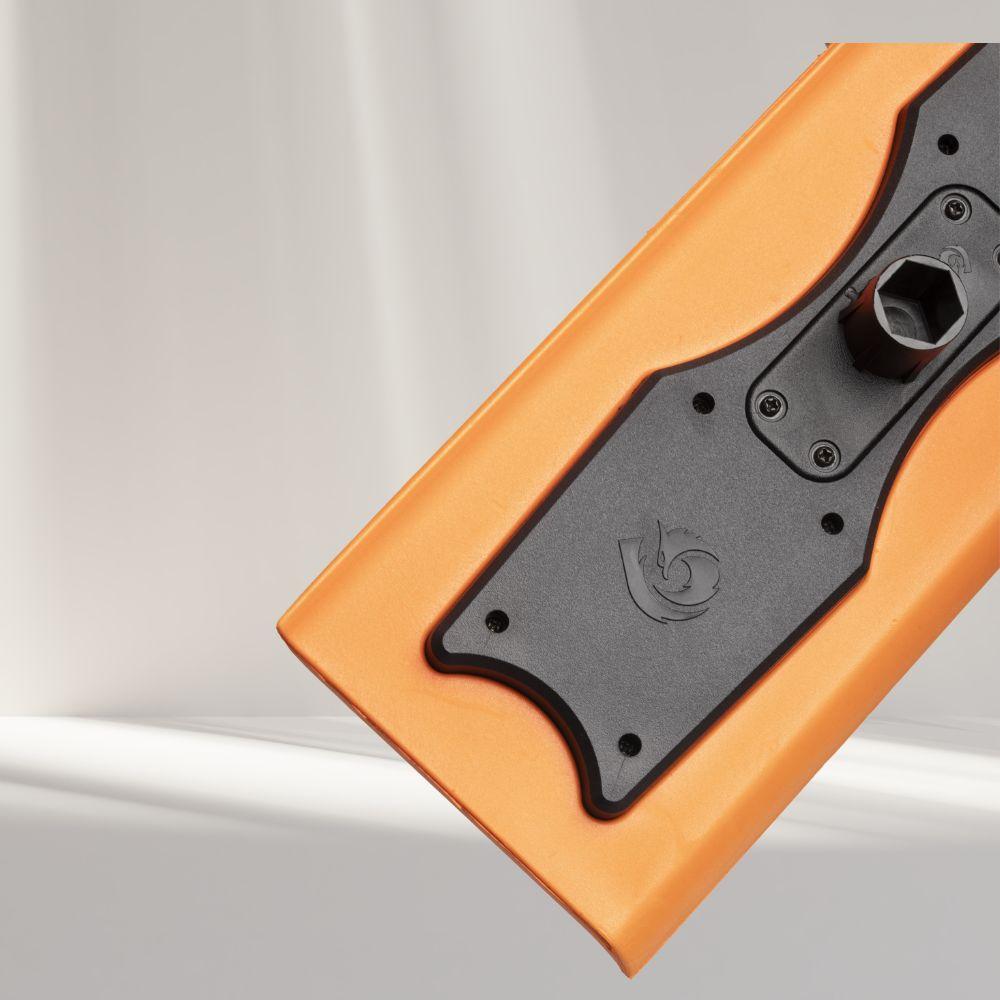
Decided it's worth clearing? Use the SolarClear Snow Remover, a snow rake for solar panels, on a telescopic pole. The head is 40 cm wide and made of soft EVA foam: firm enough to move snow, gentle enough for glass. It clicks directly onto the end adapter of your pole with HexaLock®, without an angle adapter.
Step by step: clear snow from your panels in five steps
- 1Check the snow
Press the pole gently into the bottom edge. If the snow is soft and loose, go ahead. If it feels like a hard crust or you can see ice on the glass, stop and wait for a thaw.
- 2Work dry
Don't connect a hose. You want to remove the snow dry; water freezes on a cold panel straight away into a slippery sheet of ice.
- 3Extend the pole and click on the SolarClear
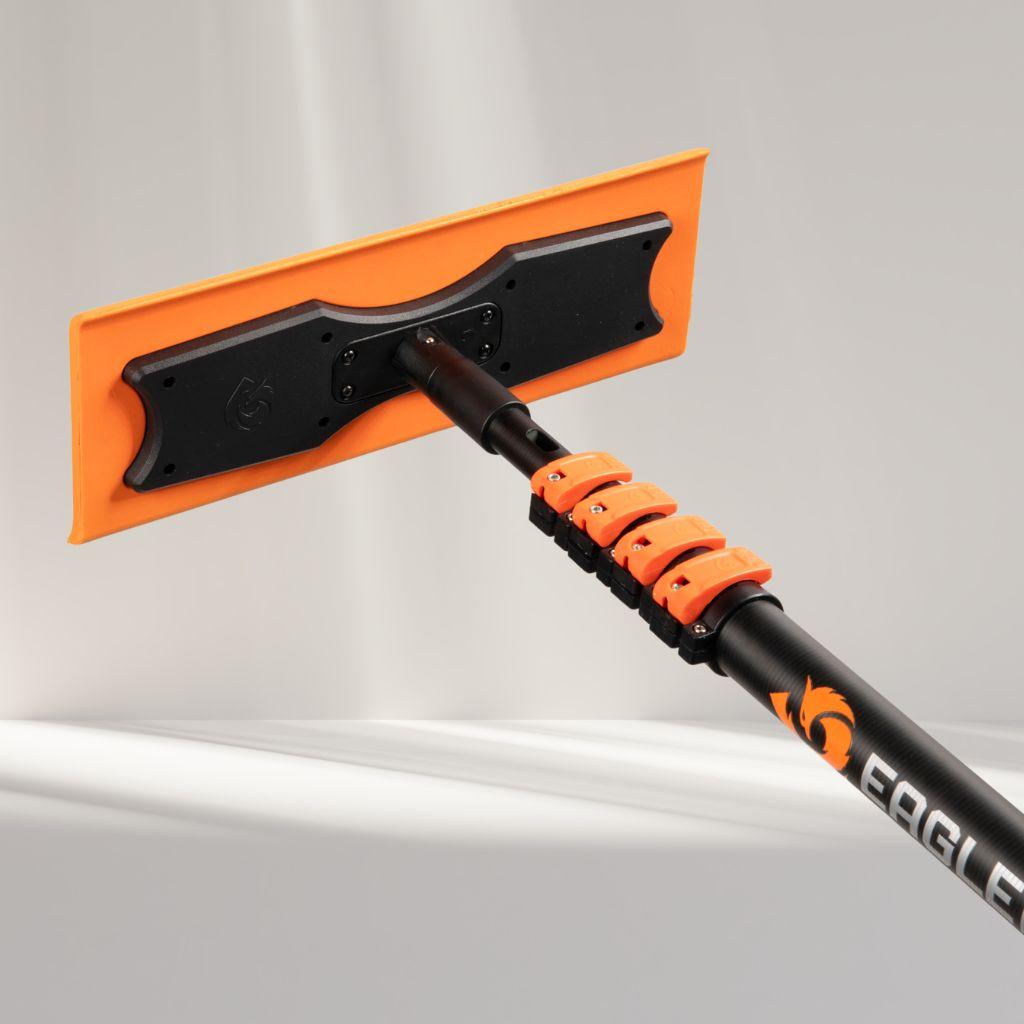
Stand the pole upright and extend it until you can reach the top row of panels. The SureLock™ clamps and AlignTrack™ V-groove keep the sections in line, so the head doesn't twist. Click the SolarClear onto the end adapter with HexaLock®.
- 4Pull the snow down in strips
Place the head at the top of the panel, or as high as you can reach, and pull the snow towards you. Pulling takes less effort than pushing. To push away a leftover strip, turn the pole half a turn: the SolarClear works in both directions.
- 5Don't overdo it
Don't try to remove every flake or frozen edge. Once the black panel shows through, it warms up in the sun and the rest disappears by itself. Take extra care around the clamps and frame edges.
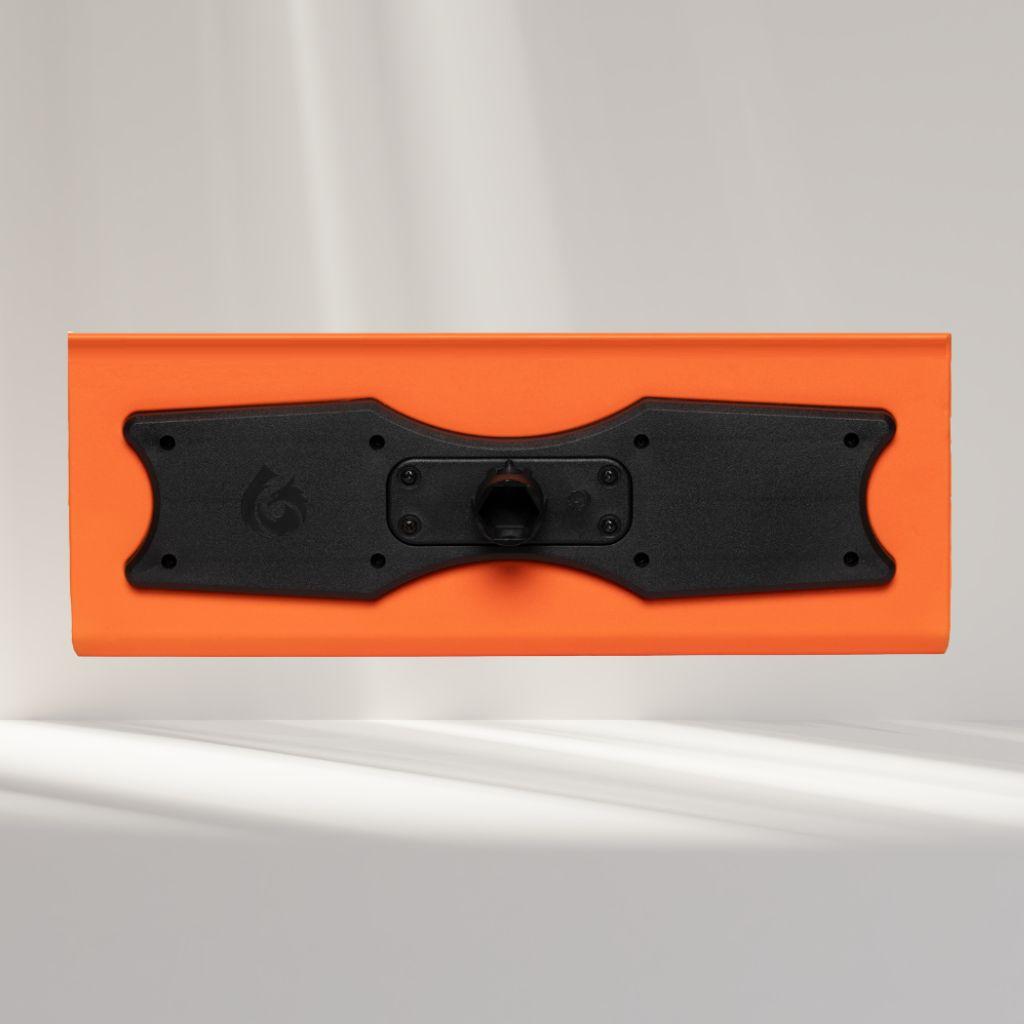
SolarClear Snow Remover
Soft 40 cm foam head that pulls and pushes snow off your solar panels without scratching. Lightweight, with HexaLock® one-click fitting, and compatible with every Eagle Extend® telescopic pole. Also suitable for veranda roofs.
Which pole do you need?
When you clear snow, the pole is fully extended and your arms are often raised, so every gram counts. A Carbon Fiber telescopic pole is stiff and light, letting you guide the head across the panels without the pole whipping about. The Carbon Fiber Supreme has a working length of 8.5, 9.8 or 11.5 m; the 3K Full Carbon reaches the same lengths from 1.6 kg. Not sure about length? Read which pole length you need.
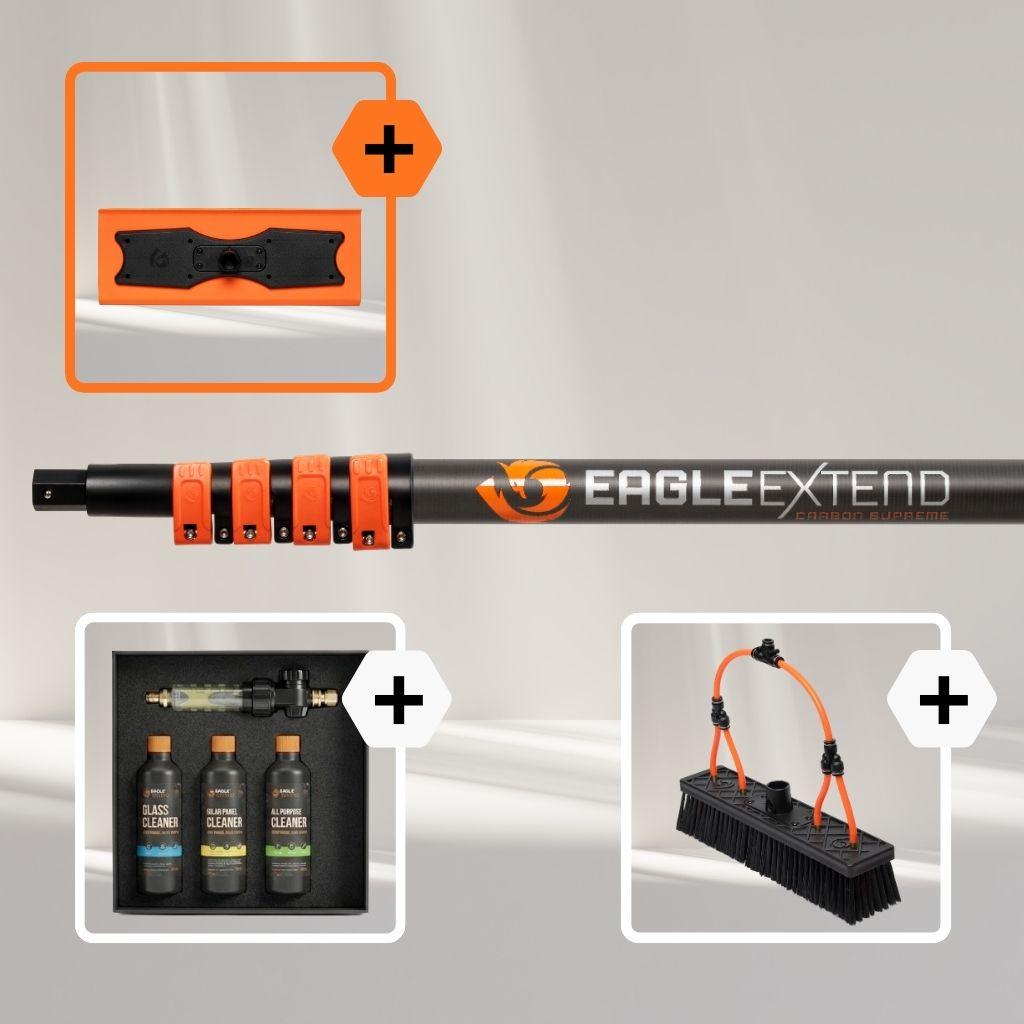
Carbon Fiber Supreme Water-Fed Pole Solar Panel Kit
Carbon Supreme pole with the 4-Jet wash brush for cleaning and the SolarClear Snow Remover for winter. One pole for your solar panels all year round, with a 5-year guarantee.
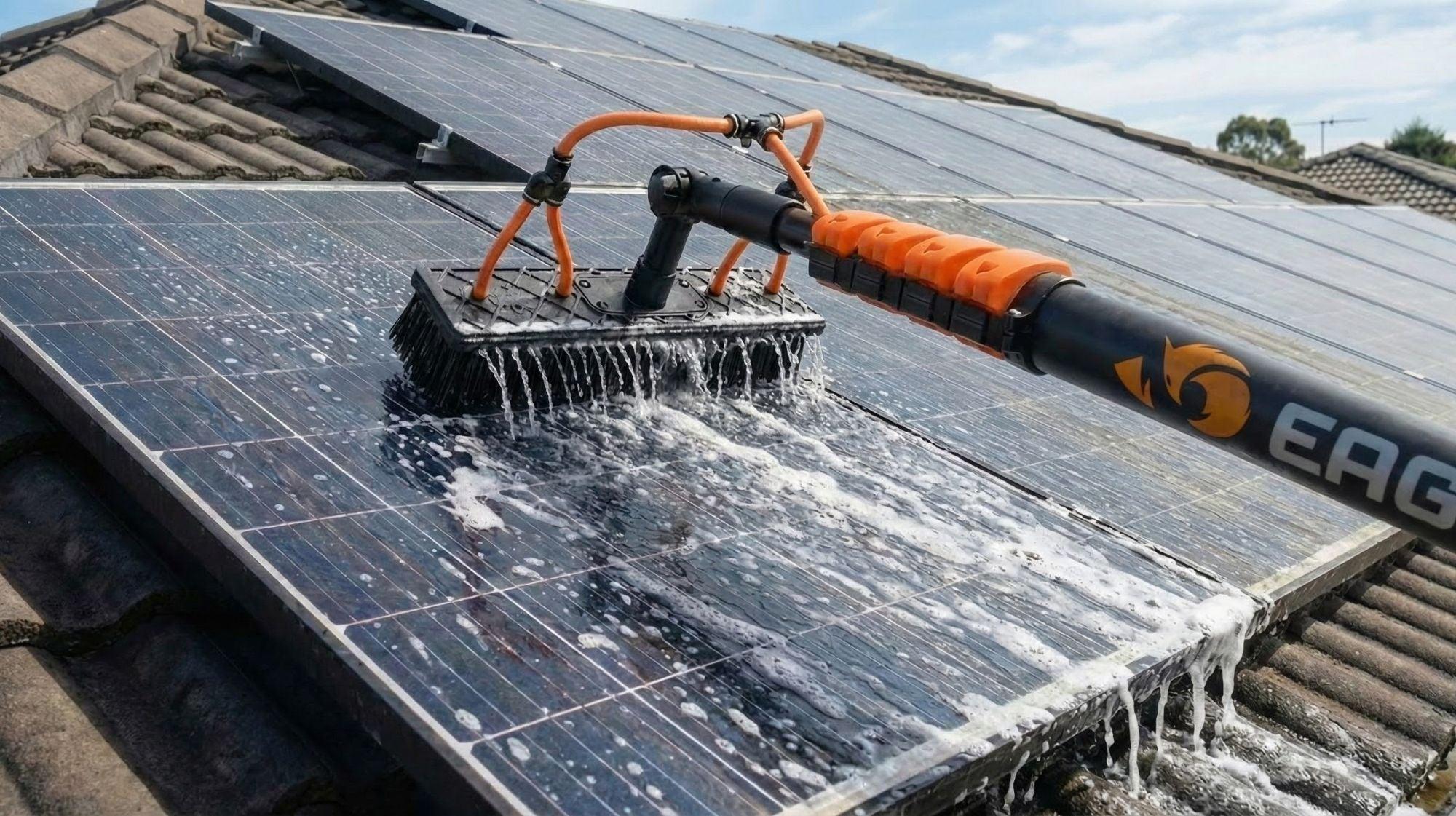
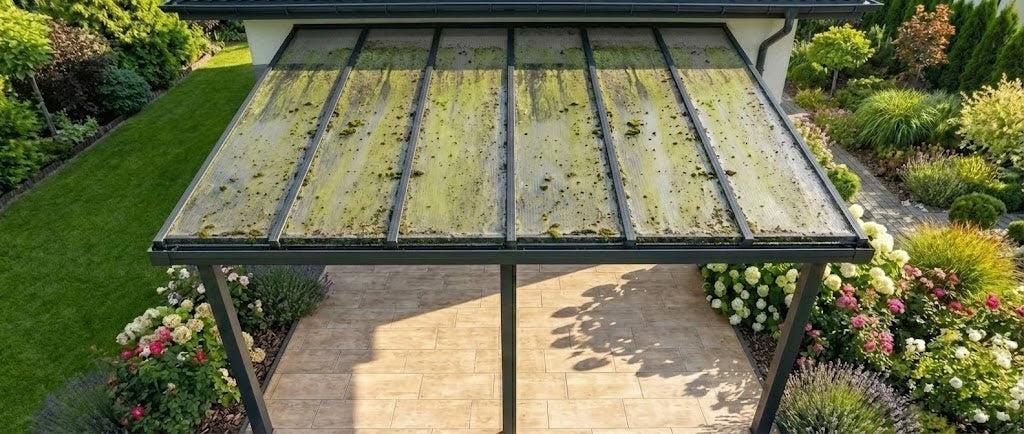
In spring you use the same system to wash off the winter grime: click off the SolarClear and click on the wash brush. How often that's needed is covered in how often to clean solar panels, and which tools and cleaner to use in what to clean solar panels with.
Also for veranda and conservatory roofs
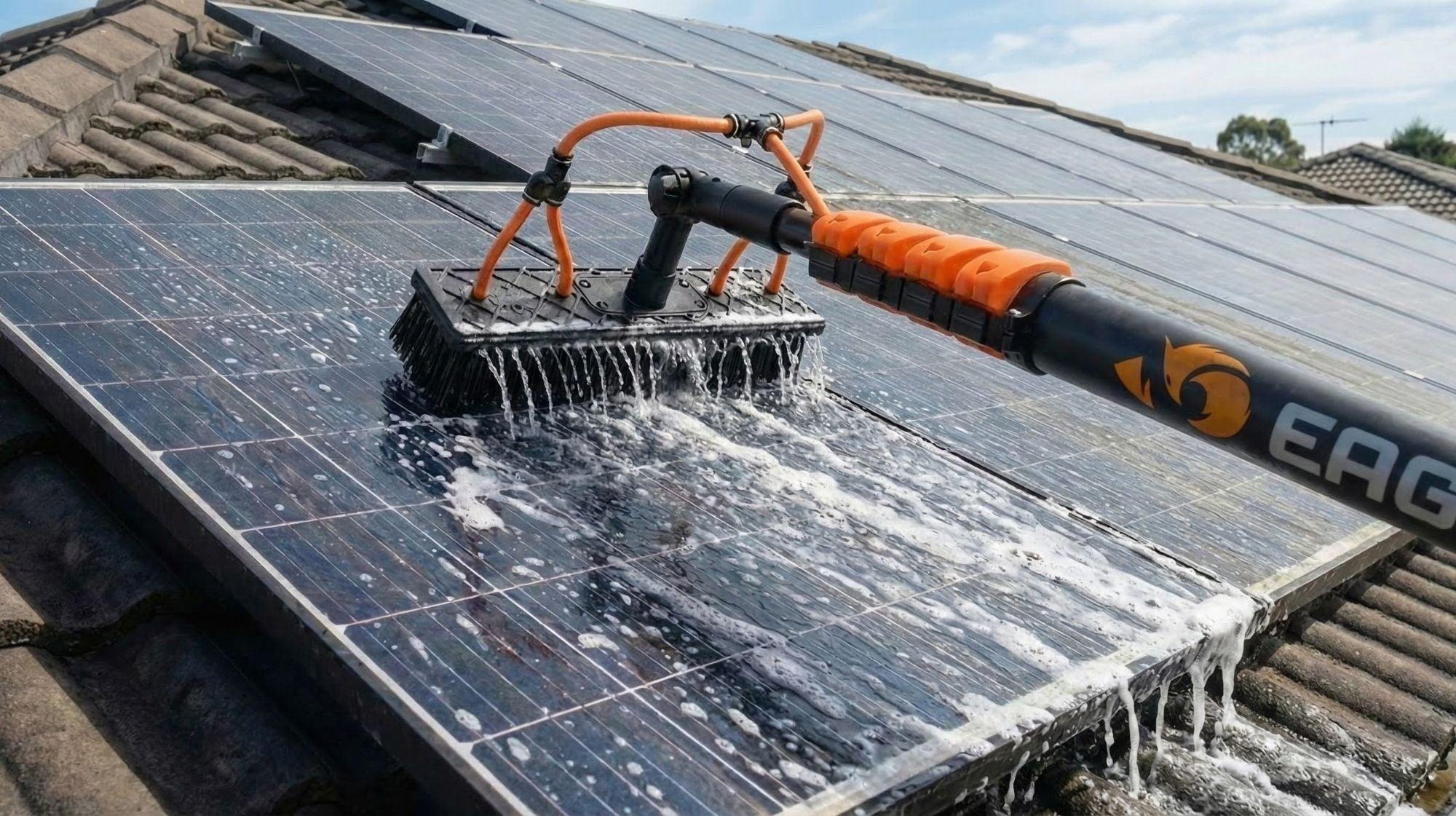
The SolarClear is also suitable for veranda roofs and patio covers. You can clear snow from a glass roof or polycarbonate sheets in the same way, from the ground or from the side, so light gets back into your conservatory or veranda. Never stand on a polycarbonate roof: the sheets flex and can break or pop out of their profiles.
What not to do
- Don't scrape off ice Leave frozen snow and freezing rain alone. Anything you force off can also leave scratches.
- No road salt or de-icer spray Products meant for paths and car windscreens don't belong on solar panels and leave residue on the glass.
- No water, warm or cold Warm water can crack the glass and cold water freezes. Always remove snow dry.
- No ladder against a snowy gutter The ground is slippery, the gutter is wet and the snow can slide. With a telescopic pole you keep both feet on the ground.
- No angle adapter under the SolarClear Click the snow rake straight onto the end adapter. That's where it sits most securely and gives you the most control.
- Don't bash the clamps Solar panels often have sharp clamps and edges. Work carefully along them; wear on the foam from those edges counts as normal wear and tear.
In short: a thin layer of soft snow and sun on the way? Pull it off, from the ground and dry. Heavy snow, ice or grey skies? Leave it and let nature do the work. Not sure which pole suits your roof? The buying guide recommends the right kit in two steps.
Remove snow from solar panels safely
Clear snow off your panels without scratching them using the SolarClear Snow Remover — and make the most of the winter sun.