Cleaning your solar panels for the first time usually starts with a question in the shed: what do I actually use? A squirt of washing-up liquid? Vinegar for the limescale? The pressure washer is right there, after all. Online, every method has someone swearing by it.
The catch is that solar panels have a glass surface with an anti-reflective coating, rubber seals and an aluminium frame. What works on your patio can leave damage or a film behind on a panel. Below we go through the options one by one: what’s fine, what isn’t, and why. For how often to clean, see how often should you clean solar panels; the full step-by-step method is on solar panel cleaning.
At a glance: what can go on your panels?
Here’s the short answer for each option. The reasoning and how to put it into practice follow below.
| Product or tool | Yes / no | Why |
|---|---|---|
| Tap water | Yes | Fine for DIY cleaning as long as you rinse well. Can leave limescale spots if it dries in the sun. |
| Softened (limescale-free) water | Yes, best | Dries without white marks; pure water cleans better than soap. |
| Rainwater | Yes | Naturally free of limescale. Cleaning during a shower gives a spot-free finish. |
| Washing-up liquid or all-purpose cleaner | No | Often leaves a greasy film that reduces output and attracts fresh dirt. |
| Vinegar or methylated spirits | Best avoided | Not meant for the coating or rubber seals; the long-term effect is unknown. |
| Dedicated solar panel cleaner | Yes | Made for panels: loosens dirt without damage and rinses away fully. |
| Pressure washer | No | Can permanently damage the rubber seals and the glass. |
| Scouring pad, steel wool, stiff brush | No | Scrubbing the anti-reflective coating causes scratches that block light. |
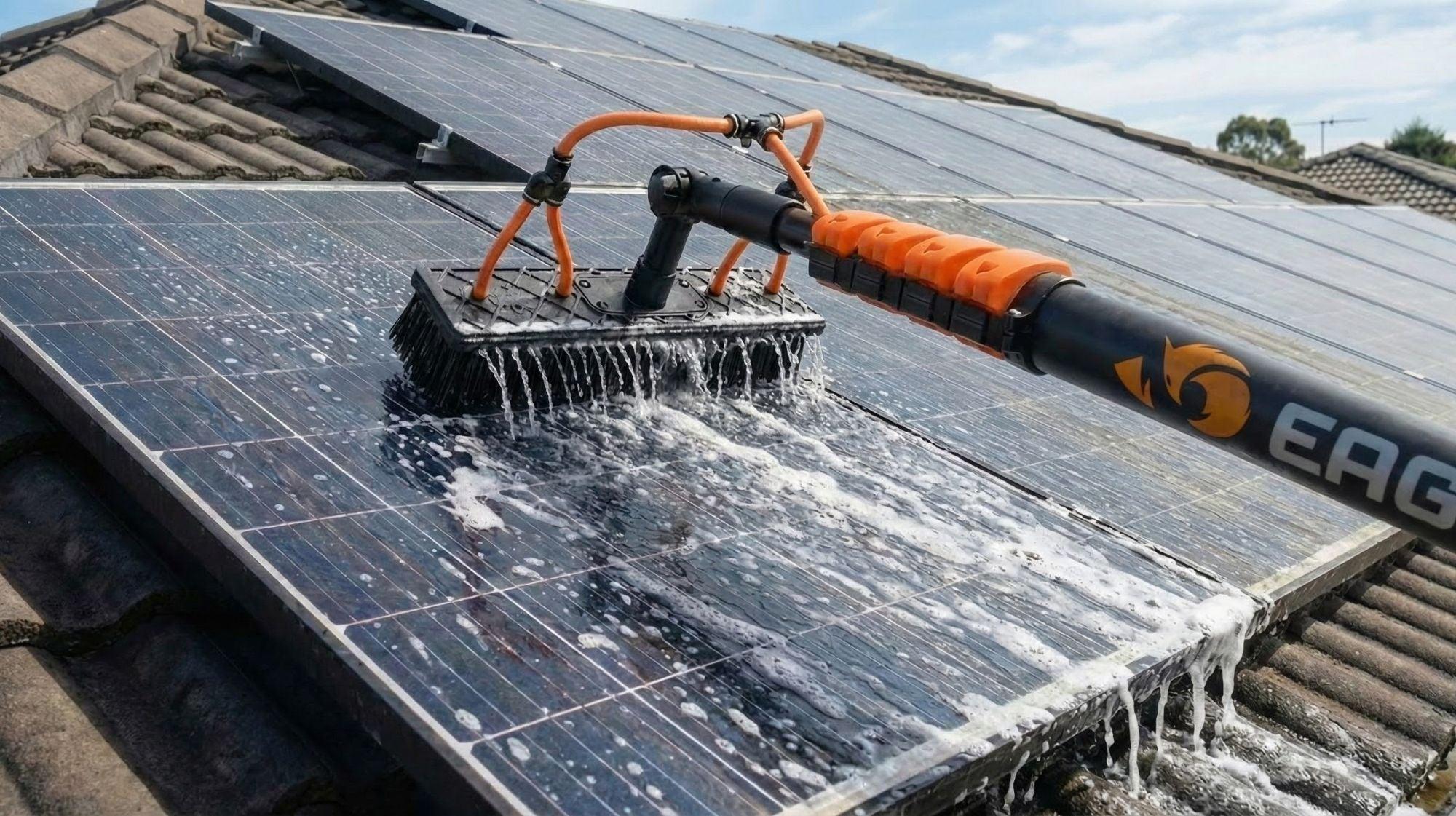
| Soft brush with plenty of water | Yes | The water forms a gliding layer that carries grit away; soft bristles don’t scratch. |
| Squeegee or cloth to dry | No | Grit catches behind the rubber and drags scratches. Let the panels air-dry. |
Swipe sideways to see the whole table →
Water: tap, softened or rain?
Water is your main cleaning agent. The good news if you simply turn on the outside tap: ordinary tap water is perfectly suitable for DIY cleaning. The tiny limescale residue has no measurable effect on your energy output, provided you rinse the panels thoroughly.
Where tap water does show is when it dries in the sun, leaving minerals behind as white rings. That’s why softened water gives the best finish: a PureFlow in-line water softener between the tap and the pole removes limescale and minerals, so the panels dry streak-free. Weighing up a softener against reverse osmosis? Read water softener or reverse osmosis.
Soap: washing-up liquid or a solar panel cleaner?
It’s an understandable instinct: if it gets your dishes clean, it’ll get your panels clean. Even so, we strongly advise against household products such as washing-up liquid or all-purpose cleaner. They often leave a greasy residue on the glass. That thin film traps light and dust, so a few weeks later your panels get dirty faster than before you cleaned them. They also aren’t made for the coating on the glass or the seals around the frame.
For most dirt you don’t need soap at all: pure, limescale-free water with a soft brush is the most effective clean. Only stubborn or greasy grime — a film of fine dust near a busy road, pollen, baked-on bird droppings — calls for a cleaner. When it does, choose one developed specifically for solar panels that rinses away completely.
Dosing without a bucket
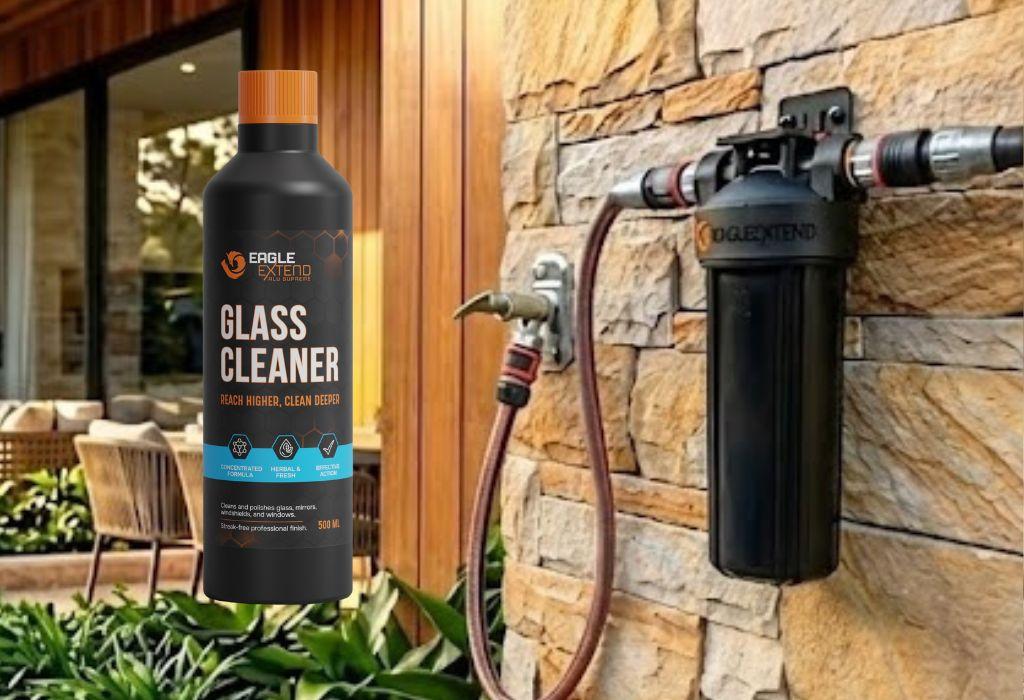
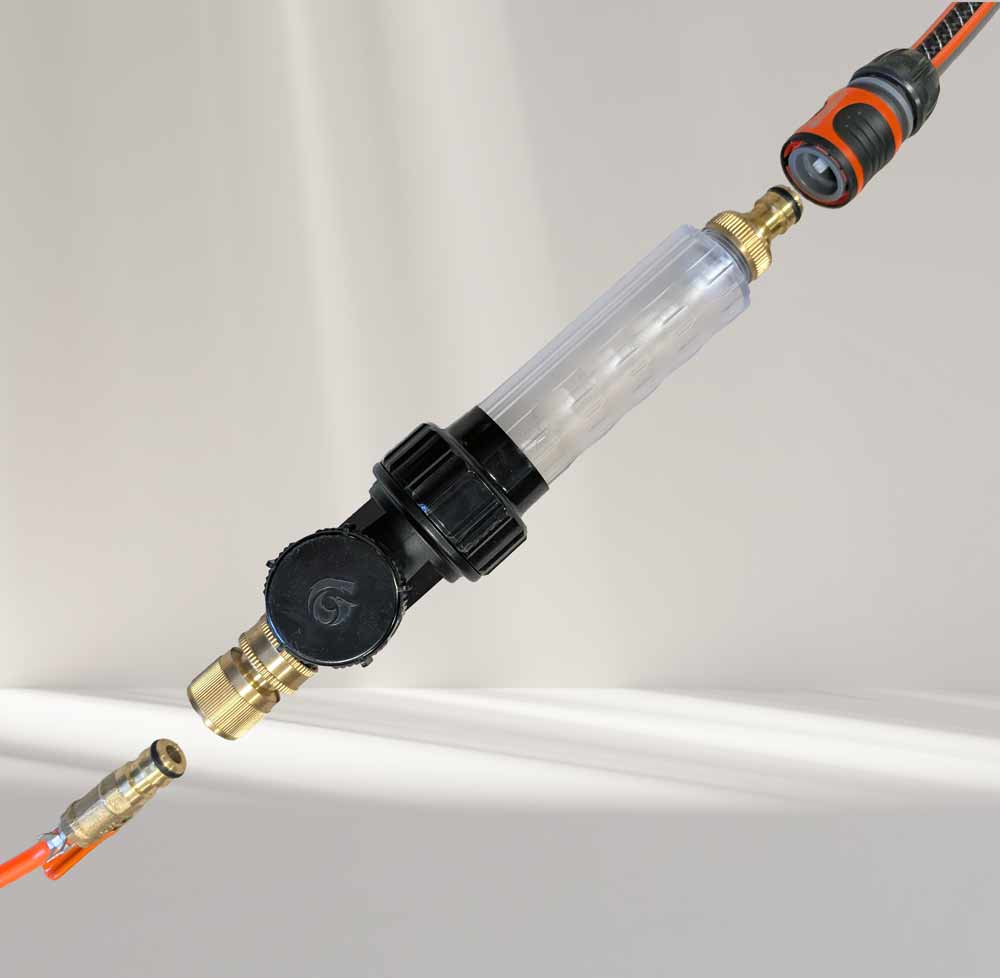
You can’t get a bucket of suds onto the roof from the ground. Instead, fit the SoapFlow soap dispenser between your garden hose and the pole’s hose. Fill it with Solar Cleaner and set it to SOAP: the cleaner flows with the water to the brush. Switch to WATER and you rinse with the same hose. Because the dispenser sits right by the pole, your whole garden hose doesn’t fill up with soap.
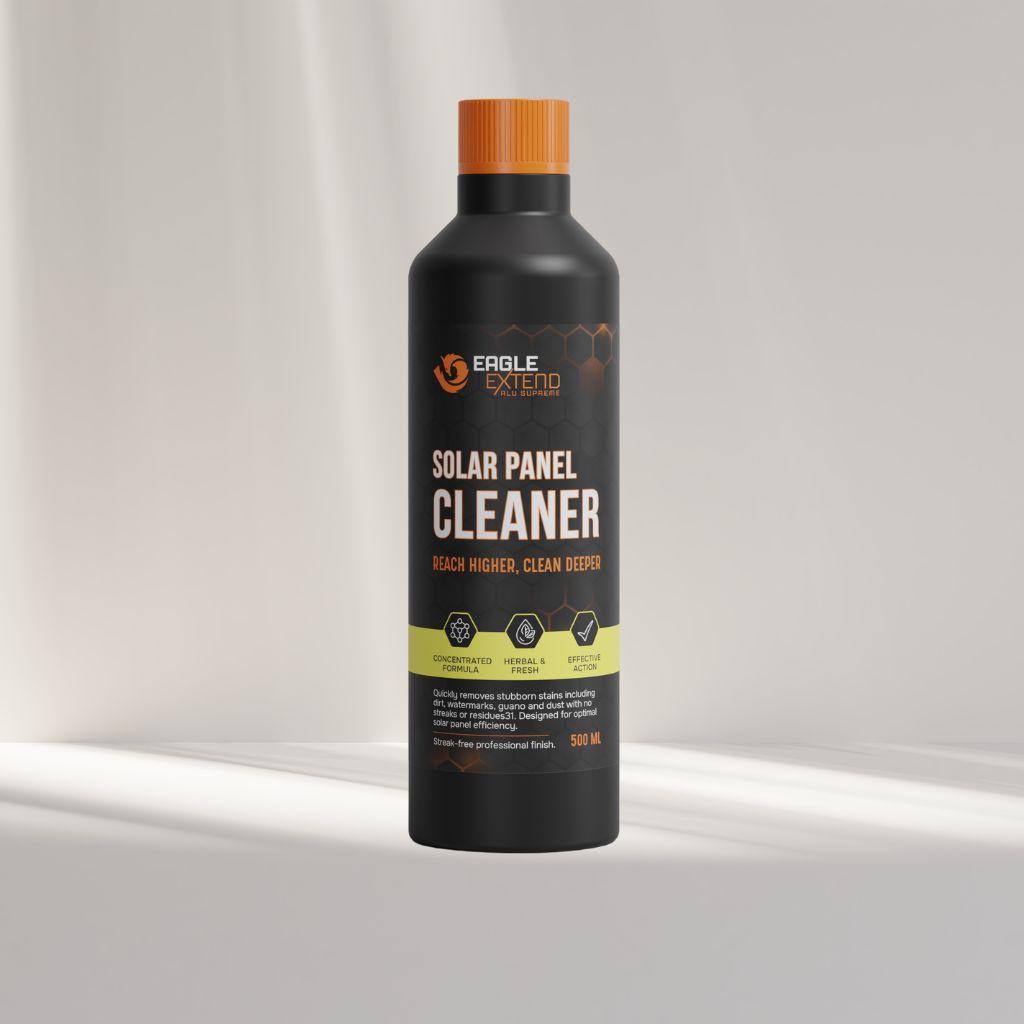
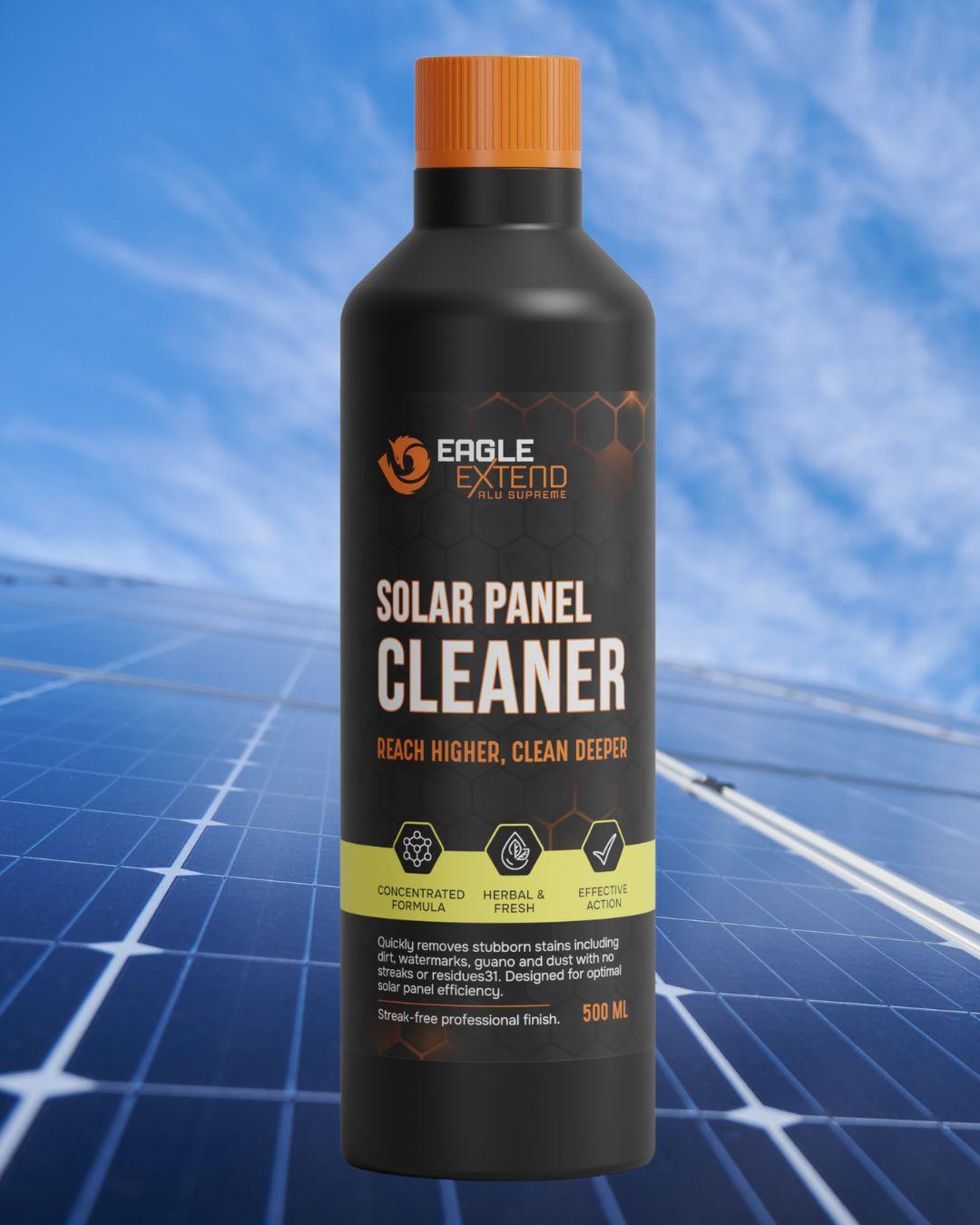
Solar Cleaner
A 500 ml concentrate developed specifically for solar panels. Removes dirt and deposits without damage, helps maintain output and goes a long way. Made to work with the SoapFlow soap dispenser.
Vinegar, methylated spirits and other home remedies
Vinegar for limescale, methylated spirits for a streak-free shine: a familiar recipe for indoor windows. On solar panels we advise against it. A panel isn’t an ordinary pane: the glass has an anti-reflective coating, surrounded by rubber seals and an aluminium frame. What acid or alcohol does to those parts over time is hard to say — and they weren’t designed for it.
The good news is that you don’t need them. Prevent limescale marks by rinsing with softened water or cleaning in the rain, and lift greasy dirt with a solar panel cleaner. Want to be sure what’s allowed on your panels? Check the manufacturer’s care instructions or ask your installer.
Why not use a pressure washer?
It’s already in the garage and it’s quick. Still, the answer is clear: never use high pressure on solar panels. A powerful jet can permanently damage the rubber seals and the glass, and water under high pressure can reach places it shouldn’t, such as the cabling and connectors underneath.
On top of that, many manufacturers and installers set their own conditions for maintenance. So check the terms for your panels or with your installer before using anything other than water and a soft brush. Ordinary mains pressure through a telescopic pole is safe and more than enough.
Brushes: soft and wet, never abrasive
Scratches rarely come from the brush itself, but from grit trapped between brush and glass. A scouring pad, steel wool or stiff brush drags those particles across the anti-reflective coating — and every scratch catches light. The same goes for a squeegee or cloth to dry off: just let the panels air-dry.
What does work: soft bristles and plenty of water. The water forms a gliding layer that carries grit away while the bristles loosen the dirt. For which brush suits which job, see choosing a water-fed pole brush.
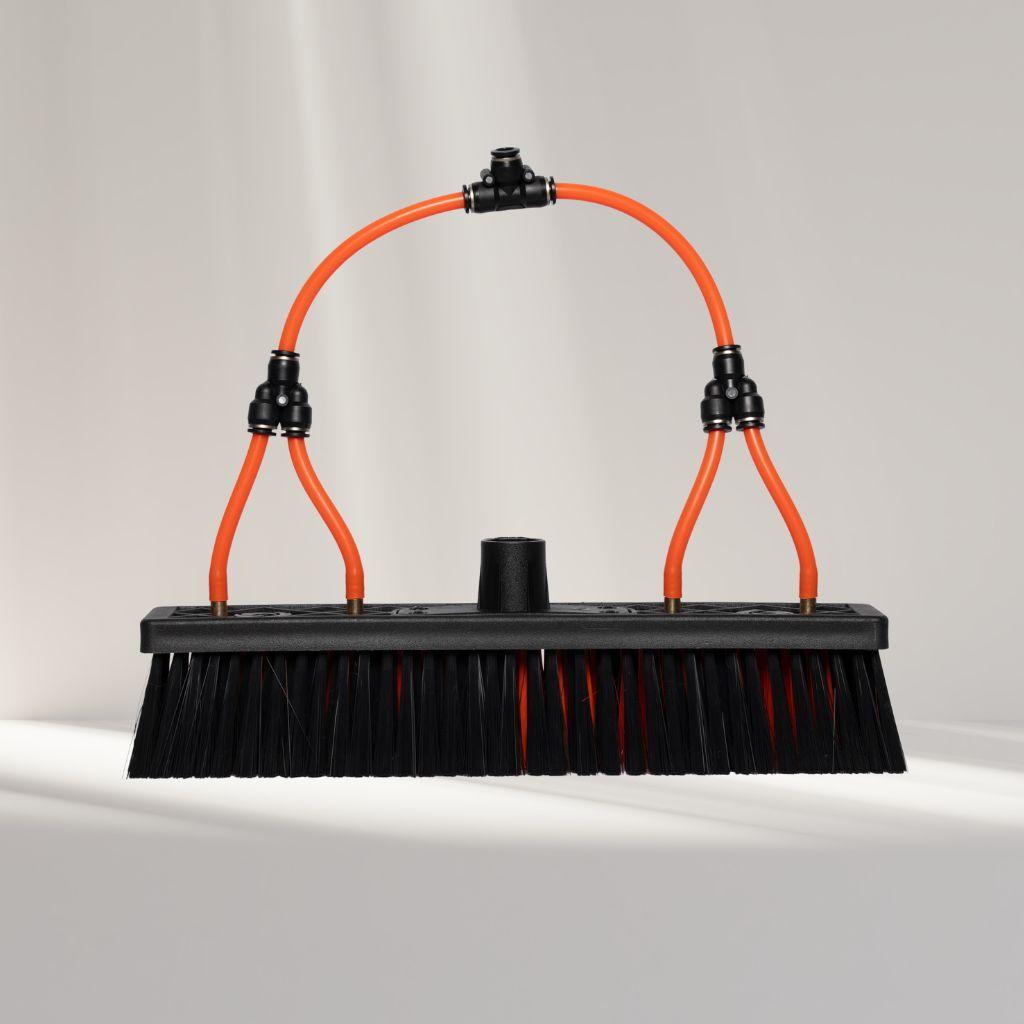
Soft 4-Jet Wash Brush 35 cm
Four jets spread water evenly across a 35 cm working width. Nylon bristles with memory spring back into shape and won’t scratch: ideal for solar panels, windows and uPVC. Clicks onto any Eagle Extend® pole with HexaLock® in one click.
Stubborn dirt: bird droppings, moss and Saharan dust
- Bird droppings: soak first Don’t scrub hard in one spot. Wet the droppings thoroughly with the brush and let the water soak in for a few minutes. After that the dirt usually wipes away easily. Still stuck? Let some Solar Cleaner soak in too.
- Moss and green growth along the edges Dirt and moisture collect along the bottom edge and the frame, and moss eventually takes hold there. Soak it with cleaner first, then brush it off with the soft brush. Never scrape the glass with a knife or metal scraper.
- Saharan dust: rinse first, then brush Saharan dust is abrasive. Rinse first with plenty of water through the pole to wash the grains away, and only then start brushing.
- Snow: no water, use foam Snow doesn’t come off with water and a brush. Read how to do it in removing snow from solar panels.
How to work: from the ground, on cool panels
The right product only helps if you use it properly. Two things make the difference: when you clean and where you stand.
Step by step
- 1Pick a cool moment
Clean early in the morning, in the evening or on an overcast day. On hot panels water and cleaner evaporate too quickly, before you can rinse, which leaves marks. And cold water on scorching glass can crack it through thermal shock.
- 2Stay on the ground
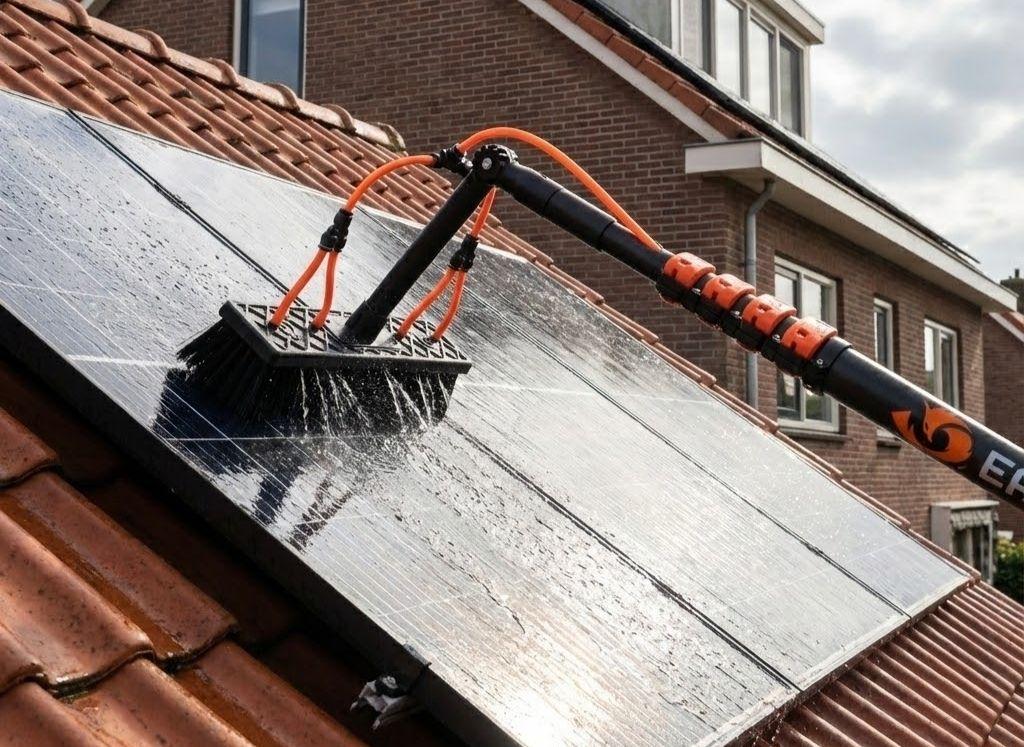
Walking on the roof is dangerous and leaning on panels damages them. Work from the ground with a telescopic pole and use an angle adapter to set the brush at the right angle to the sloping panel.
- 3Use the XXL angle adapter on long poles
From 9 m upwards, the pole flexes slightly. The XXL angle adapter keeps it clear of the glass so only the brush touches the panel. It’s designed for the Soft 4-Jet Wash Brush and comes as standard with poles from 9 m.
- 4Apply cleaner, brush, rinse
Set the SoapFlow to SOAP and brush calmly from top to bottom — no need to press hard. Then switch to WATER and rinse generously, ideally with softened water. Let the panels air-dry.
Starting out: the solar panel kit
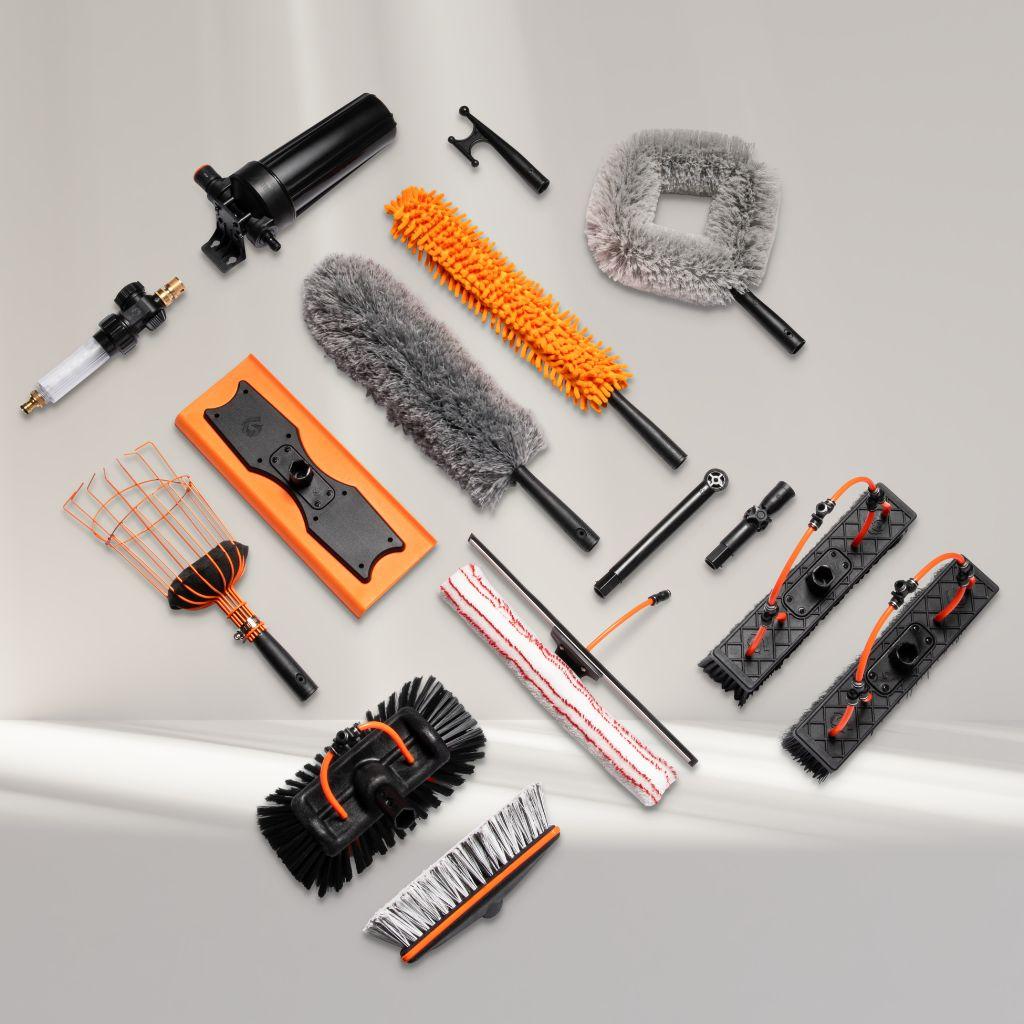
Are your panels high up or set back from the roof edge? Then you want a light, stiff pole that still lets you steer the top row with control. The Carbon Fiber Supreme solar kit pairs the pole with everything you need through the year. Unsure about length? The pole finder points you in the right direction, or browse all kits.
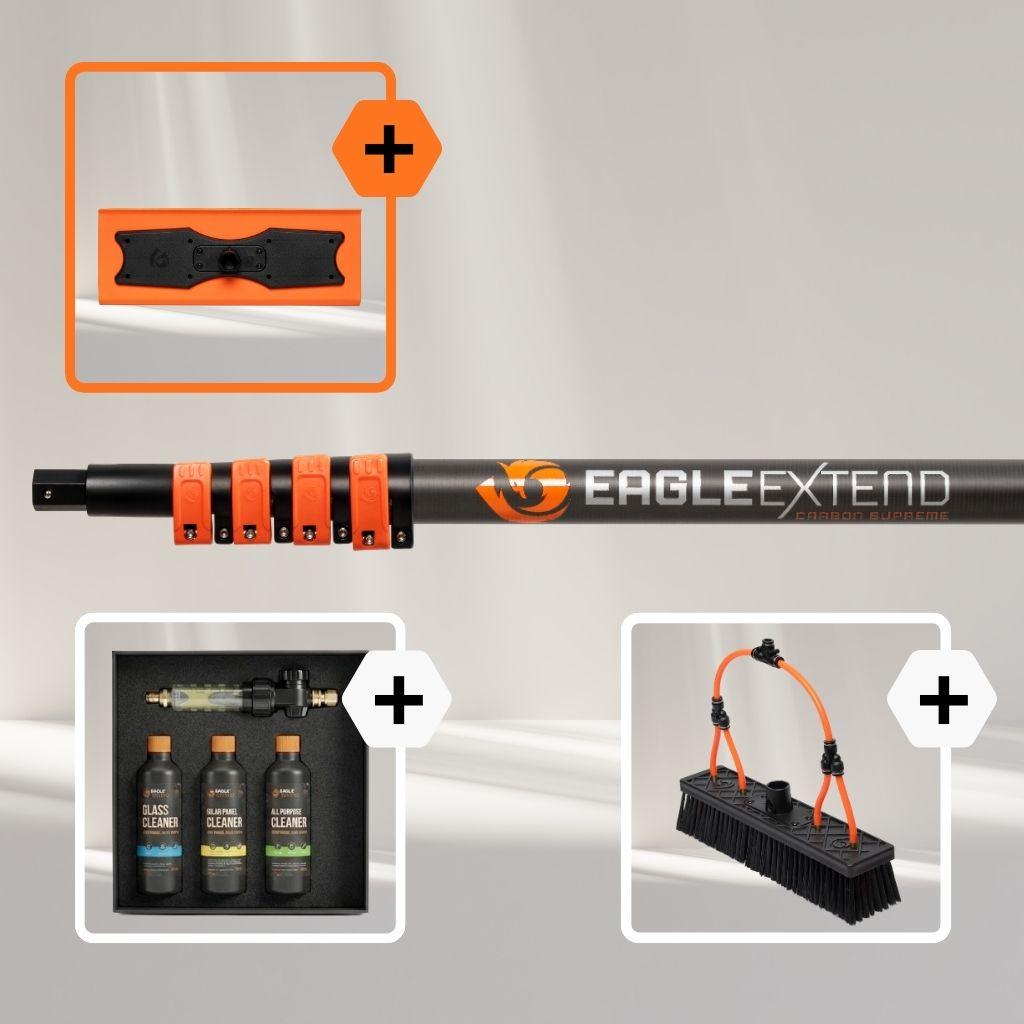
Carbon Fiber Supreme Solar Panel Kit
Carbon Fiber Supreme at 9, 10.2 or 12.05 m (working length 8.5 to 11.5 m) with the 4-Jet wash brush for cleaning and the SolarClear Snow Remover for winter. SureLock™ clamps, AlignTrack™ V-groove and a 5-year guarantee.
Solar panel cleaning from the ground
Rinse off bird droppings, dust and green algae without scratching — and get up to 20% more output from your panels.