Clean your solar panels at least two to three times a year, starting in April, just before the sunny season. Trees, a busy road, farmland, the coast or a flat roof mean you’ll need to clean them more often.
Does it make a difference? Panels do their job quietly — until one bright afternoon you check your inverter app and something doesn’t add up. Dust, bird droppings, pollen and Saharan dust form a film that blocks sunlight. Based on the figures we work with, that can cut output by 10 to 15%, depending on how dirty the panels are. So a clean soon pays for itself through your energy bill.
Below: the basic advice, when to clean more often, how to tell it’s time, and how to do it safely from the ground — no ladder, no scratches. The full step-by-step method is on solar panel cleaning.
The basic advice: two to three times a year
We recommend washing solar panels at least two to three times a year. The best time for the first clean is April, just before the sunny season: you remove the winter grime exactly when output starts to rise. If you live in a wooded area or close to a motorway, you may need to clean more often to keep output at its best.
That advice is a minimum, not a rule. Your surroundings and the pitch of your roof decide how quickly a new layer builds up. Use this table as a guide for your situation.
| Your situation | Guideline | Why |
|---|---|---|
| Pitched roof, open surroundings | 2× a year (April + autumn) | On a pitched roof, rain washes away some of the loose dust; the baked-on film stays. |
| Flat roof (panels at about 15 degrees) | 3× a year, check more often | The panels sit at a shallower angle, rainwater drains away less well and dirt collects along the bottom edge. |
| Trees or lots of birds nearby | 3× a year or more | Leaf debris and bird droppings bake on and block sunlight in one spot. |
| Near a motorway, farmland or the coast | 3× a year or more | Fine dust, salt and dust from farming form a stubborn film on the glass. |
| After a spell of Saharan dust | An extra clean, as soon as possible | Saharan dust can stick hard and is abrasive; the longer it stays, the harder it is to remove. |
| After snowfall | Clear the snow straight away | Even a thin layer of snow blocks almost 100% of sunlight, so the inverter switches off. |
Swipe sideways to see the whole table →
Doesn’t the rain clean solar panels?
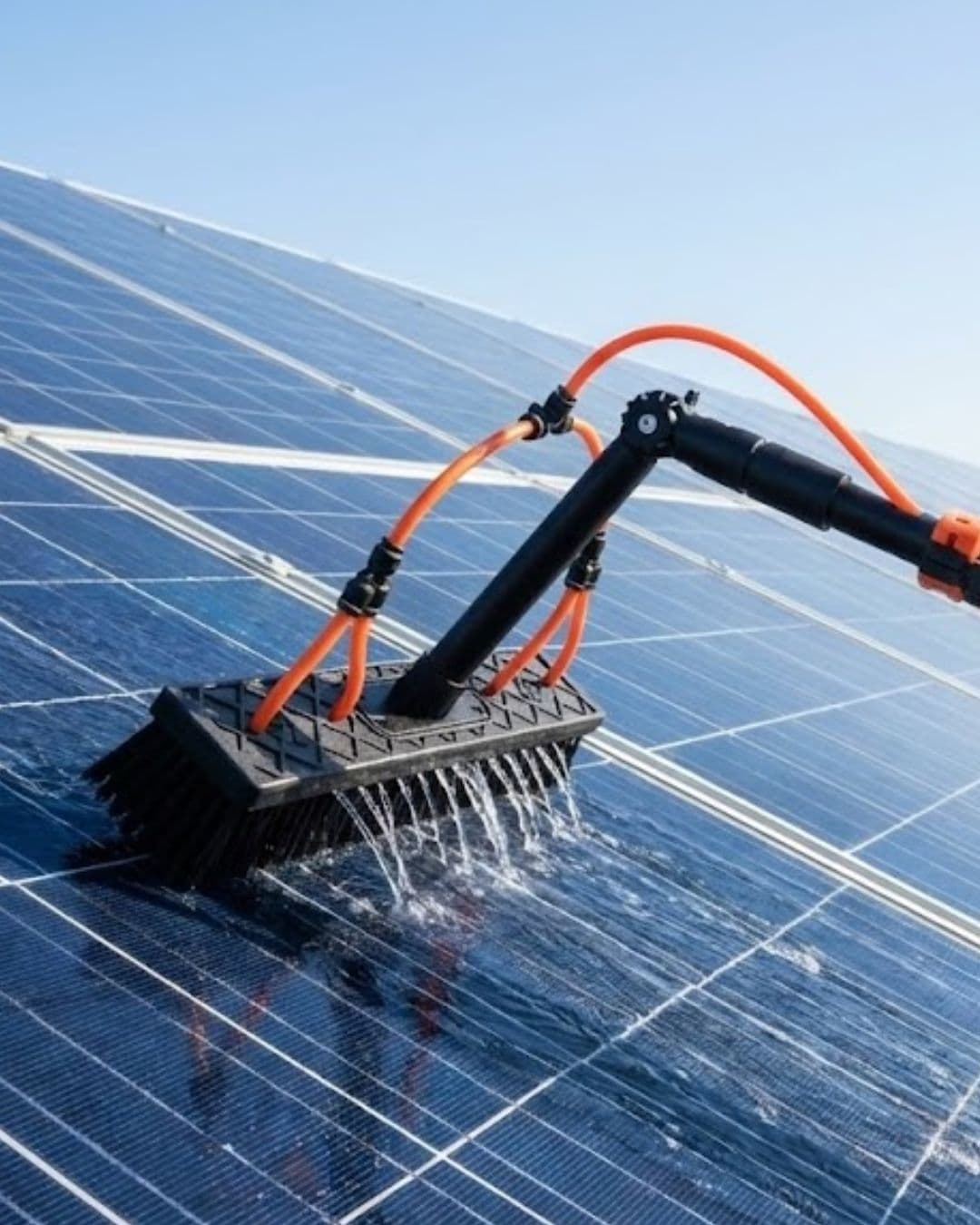
Not well enough. Think of your car windscreen: rain alone doesn’t get that clean either. Fine dust, pollen and bird droppings bake on into a layer that rainwater simply doesn’t loosen. A proper wash with a brush and water is needed to get the panels clear again.
On a flat roof the effect is even stronger. Panels on a flat roof usually sit at a shallower angle (around 15 degrees), so rainwater drains away less well and dirt collects along the bottom edge. That’s where a dark strip often appears after a year — and that shaded edge costs output across the whole row of cells above it.
How to tell it’s time
- Your output drops for no clear reason. In your inverter app, compare the same month with last year, or put two clear days side by side. If the peak stays lower in similar weather, dirt is the most likely cause.
- One panel or string lags behind. Can you see output per panel or per string in your app? A single panel that underperforms usually points to local dirt: bird droppings, a patch of leaf debris or growth around a mounting clamp.
- A dull sheen or a yellow haze. From the garden, look at the glass at an angle. Clean panels reflect sharply; a matt, milky or yellowish haze means a film of fine dust or Saharan dust.
- Visible marks and edges. White splashes of bird droppings, dark streaks along the bottom edge and green algae along the frame are all signs not to wait until April.
The best time: overcast, cool and early
Clean on an overcast day, early in the morning or late in the evening. On hot panels, water and cleaner evaporate too fast, before you can rinse — leaving spots and rings that block light. A cool panel gives you time to brush calmly and rinse properly.
What to avoid when cleaning solar panels
- No pressure washer. Never use high pressure. It can permanently damage the rubber seals and the glass. Tap pressure through a water-fed pole is safe and more than enough. Never aim water directly at the cables or connectors underneath, either — the glass itself is watertight and built to withstand rain.
- Don’t climb onto the roof. Walking on the roof is extremely dangerous and bad for your roof tiles. Leaning on panels also damages them. From the ground you work more safely and with more control — the same approach as for high windows.
- Don’t squeegee them dry. Never do this. Grains of sand catch behind the squeegee and cause scratches. Always let panels air-dry.
- No soap or all-purpose cleaner. Household products leave a greasy residue that lowers output and attracts new dirt faster. Clean, limescale-free water does a better job than washing-up liquid.
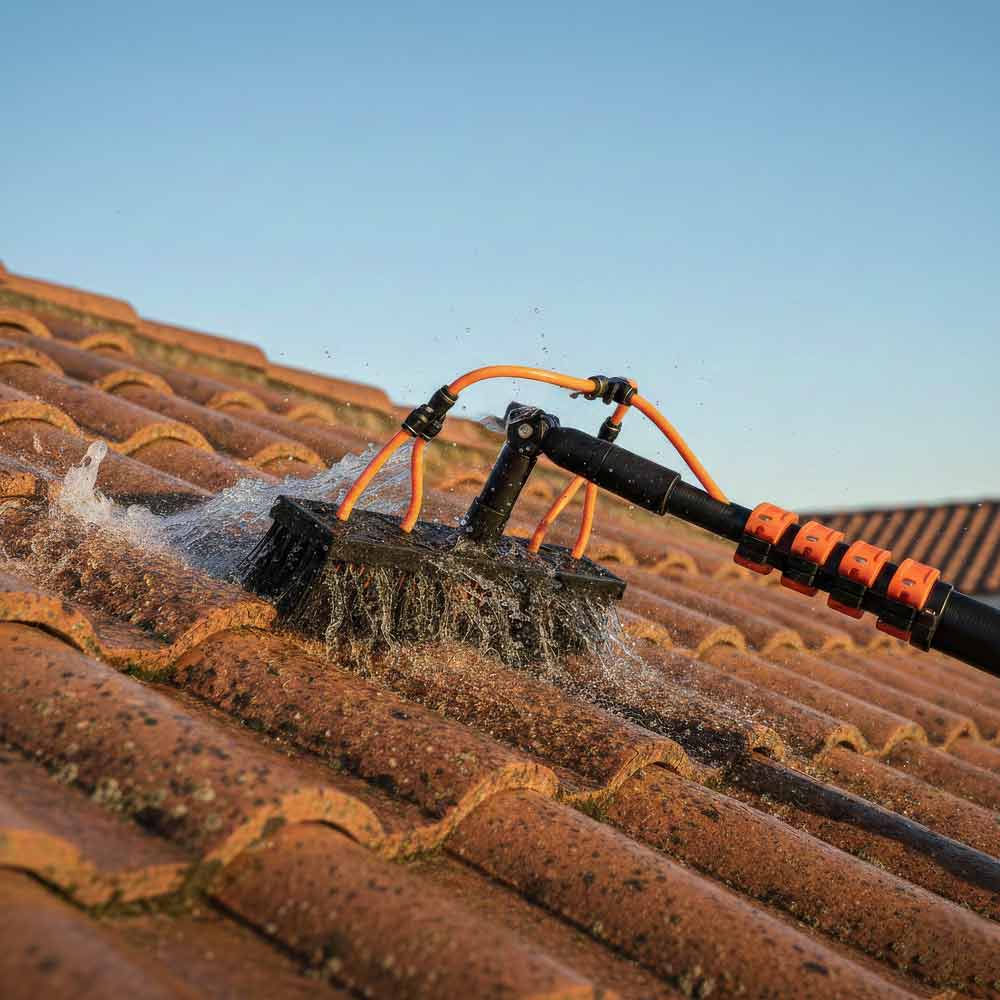
- No stiff or unsuitable brush. The 5-Sided Wash Brush is fine for woodwork and window frames, but not for solar panels. Not sure which head to use? Read which brush you need.
The best way to clean solar panels yourself
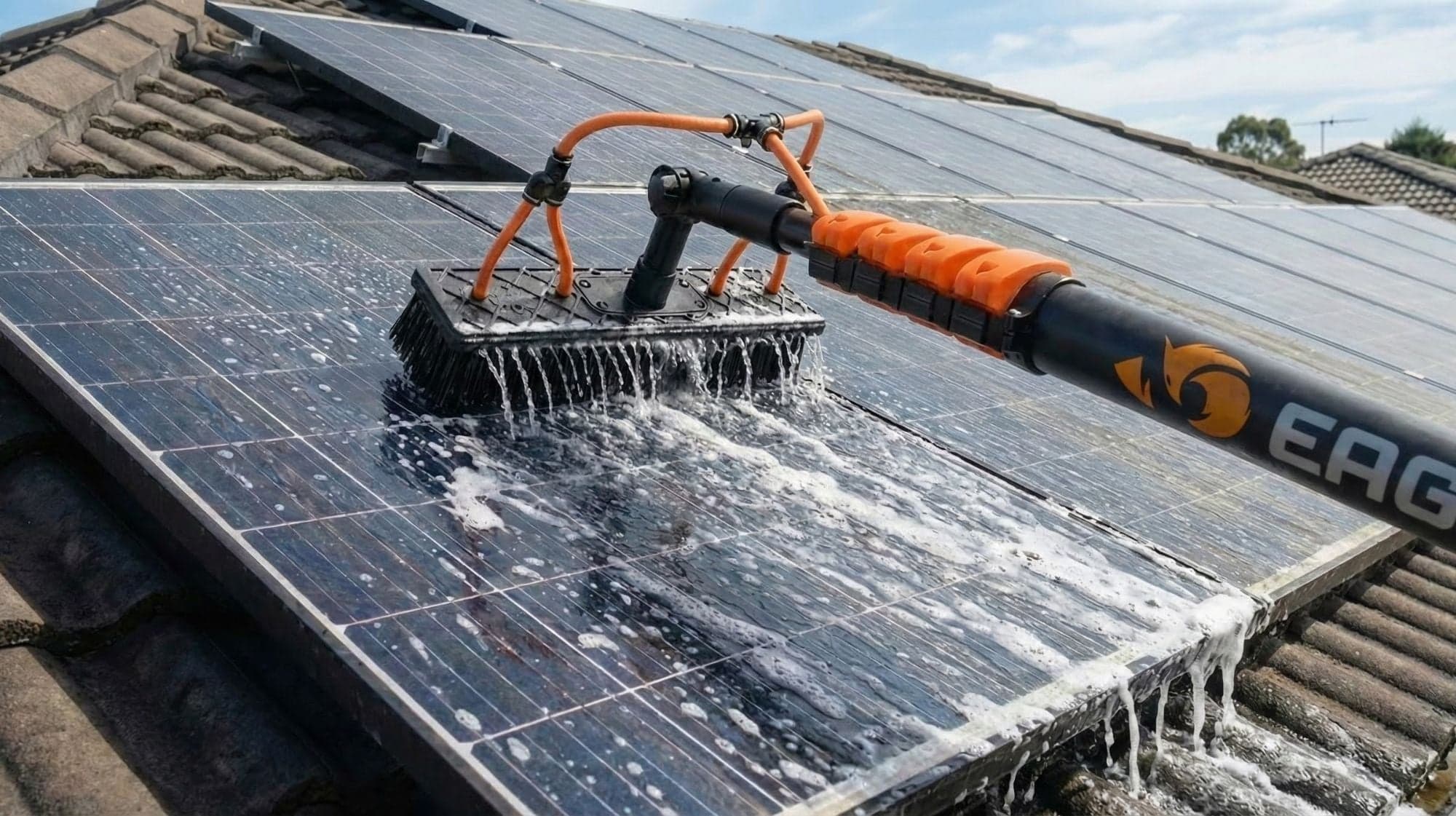
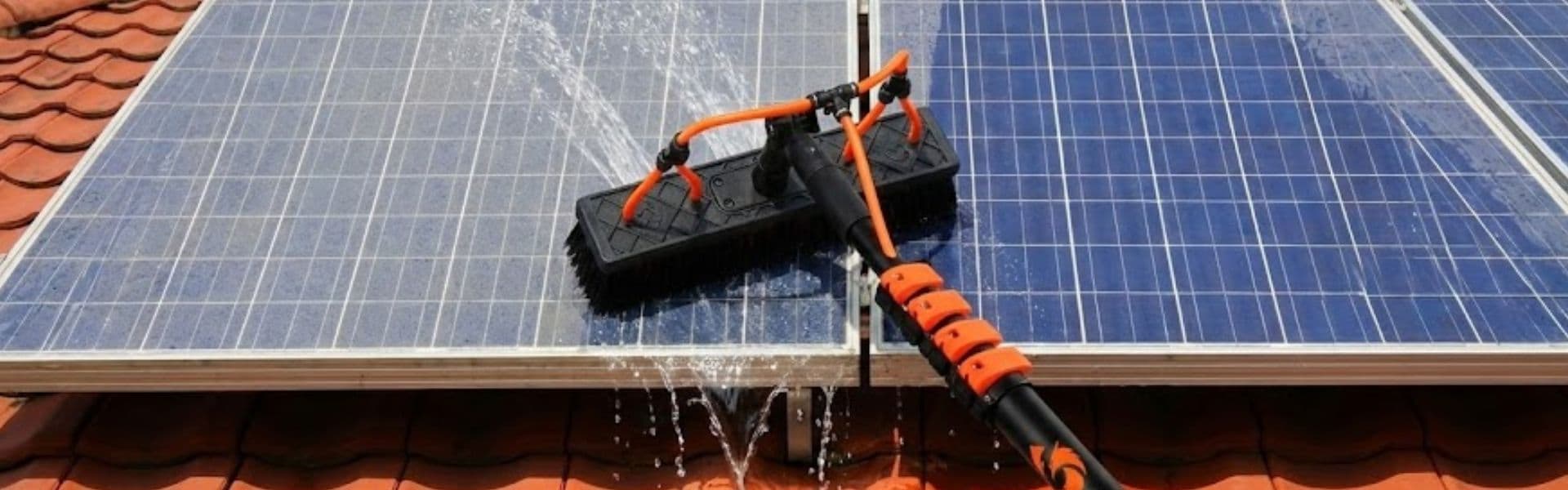
Yes, you can clean your own solar panels — from the ground, with the right tools. Scratches rarely come from the brush itself, but from sand caught between brush and glass. So it’s all about soft bristles and plenty of water: the water forms a gliding layer that carries the sand away. Our brushes are Solar Safe — soft bristles that remove dirt effectively without damaging the delicate anti-reflective coating, as long as you use enough water.
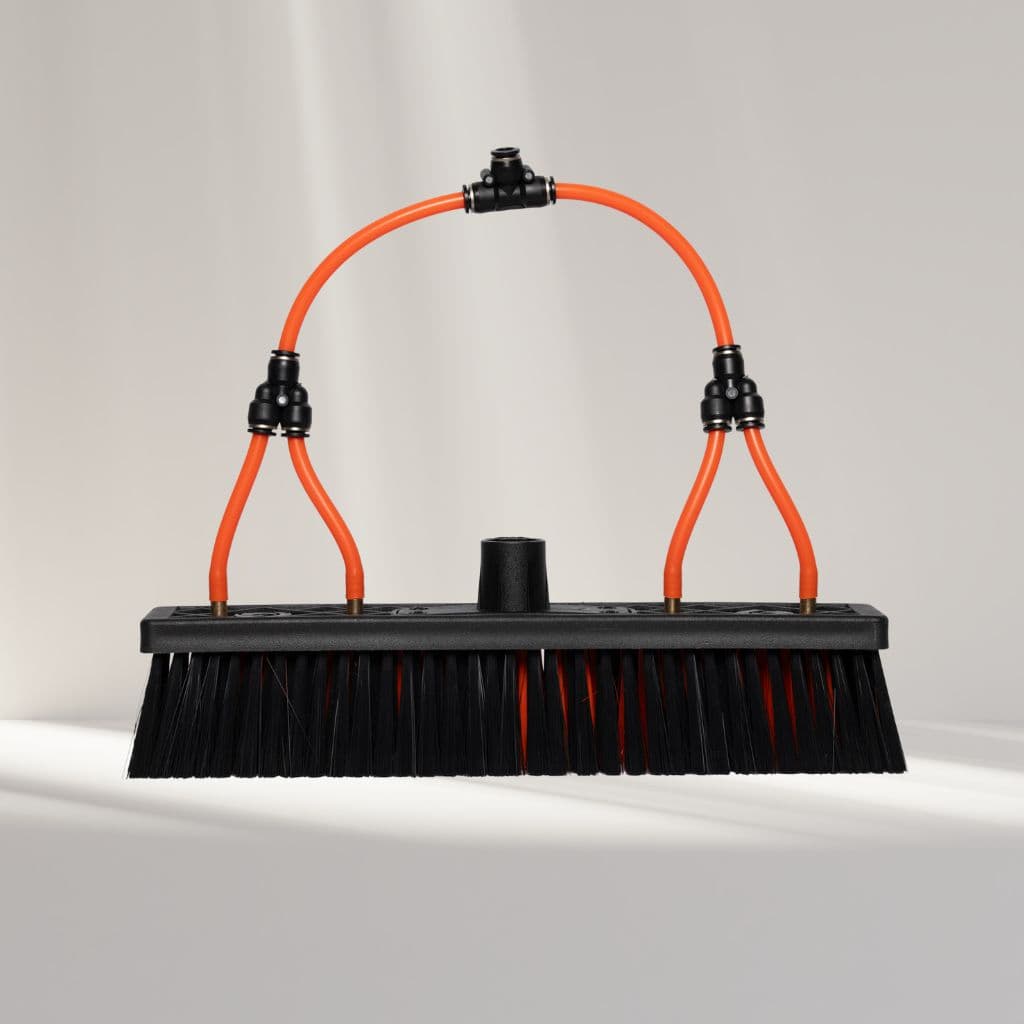
Soft 4-Jet Wash Brush 35 cm
35 cm wide with 4 water jets for even water distribution, and soft nylon bristles with memory: scratch-free, and they spring back into shape. Clicks onto any Eagle Extend® pole in one click with HexaLock®.
Pair it with a pole that doesn’t wobble. The Aluminum Supreme water-fed pole runs from 3.5 to 10.2 m (11.5–33.5 ft; working length 3.1–9.8 m, 1.7–3.9 kg) with 25 mm tubes. Want a light pole for working high up? Look at Carbon Fiber or 3K Full Carbon, from 1.6 kg. Orange SureLock™ clamps and the AlignTrack™ V-groove keep the sections in place, and every pole comes with a 5-year guarantee. Not sure which set you need? The Pole Finder suggests the right kit in two steps.
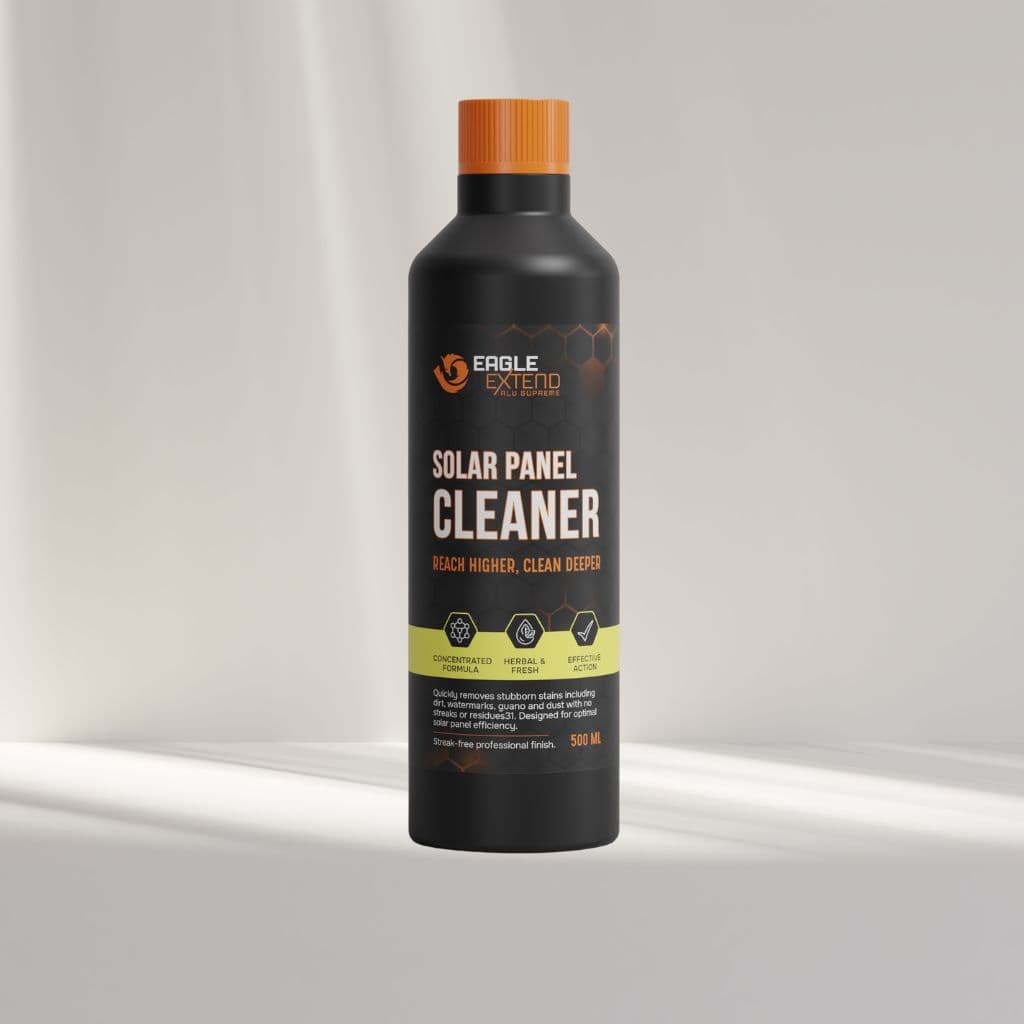
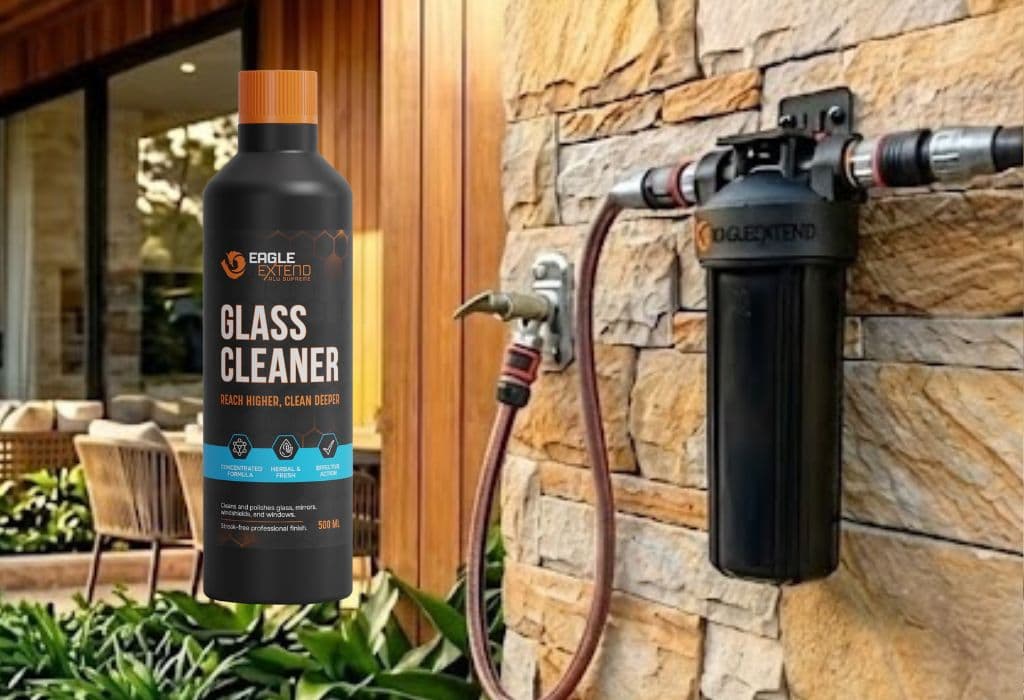
Solar Cleaner
A 500 ml concentrated cleaner developed specifically for solar panels: it removes dirt and deposits without damage and helps maintain output. You dose it straight into the water flow with the SoapFlow soap dispenser.
A seasonal routine that works
Your year in four moments
- 1April — the most important clean
Just before the sunny season, remove winter dust, pollen and green algae. Apply Solar Cleaner via the SoapFlow, brush gently from top to bottom — no need to press hard — and rinse thoroughly. With a PureFlow water softener, the softened water dries with far fewer limescale marks.
- 2Summer — check, don’t scrub
Glance at your output every month and look along the panels at an angle once. Bird droppings? Wet them thoroughly with the brush, let the water soak in for a few minutes, then wipe the dirt away. Don’t scrub hard in one spot.
- 3Autumn — after the leaves fall
Wait until the trees are bare, then do the second full clean. Don’t forget the bottom edge: that’s where dirt builds up, especially on a flat roof. Do the gutter and roof tiles at the same time, while you’re outside with the pole anyway.
- 4Winter — snow and Saharan dust
For soft snow, use the SolarClear Snow Remover. After a spell of Saharan dust, rinse first with plenty of water through the pole to wash the sand away, and only then start brushing. That stops the abrasive sand from scratching.
Two thorough cleans a year, an extra round if your surroundings call for it, and a quick check after snow or Saharan dust: that’s all it takes. A set is a one-off investment that pays for itself after a few cleans — see our water-fed poles or the good-value kits to get everything in one go.
Solar panel cleaning from the ground
Rinse off bird droppings, dust and green algae without scratching — and get up to 20% more output from your panels.