Start reading about streak-free window cleaning or solar panel cleaning and three terms soon crop up: pure water, deionised water and softened water. Professional window cleaners swear by one, DIYers by another, and online forums rarely agree. No wonder it gets confusing.
We’ve already covered why limescale in tap water leaves white marks in our guide to streak-free window cleaning. This article goes a step further: how the three types of water differ, what their honest pros and cons are, and how to keep an in-line water softener performing. Including the question we’re asked most often: how long does a cartridge last?
Reverse osmosis, deionised water and softened water: the difference
All three aim for the same result: water that dries after rinsing without leaving hard water spots. How they get there is very different, and so is what each one asks of you.
Reverse osmosis: as pure as water gets
A reverse osmosis (RO) system forces water through an extremely fine membrane. What comes out is pure water with almost all dissolved solids removed: not just limescale, but all minerals and salts. It’s the standard in professional window cleaning because that water genuinely leaves nothing behind. It does come at a cost, though. Part of the water goes down the drain as waste, the membrane produces water slowly, so many systems rely on a storage tank or pump, and both the purchase and the upkeep are considerably more expensive. A membrane is also vulnerable to frost.
Deionised water in containers
You can buy deionised water in containers. It’s virtually mineral-free too, so it dries clean. The problem is practical: a whole elevation or a roof full of solar panels needs a lot of water, and a container has no pressure. As with rainwater, you’ll need a pump or another pressure source to push it through the hose and pole. Fine for a single window, awkward for a whole house.
Softened water: limescale out, straight from the tap
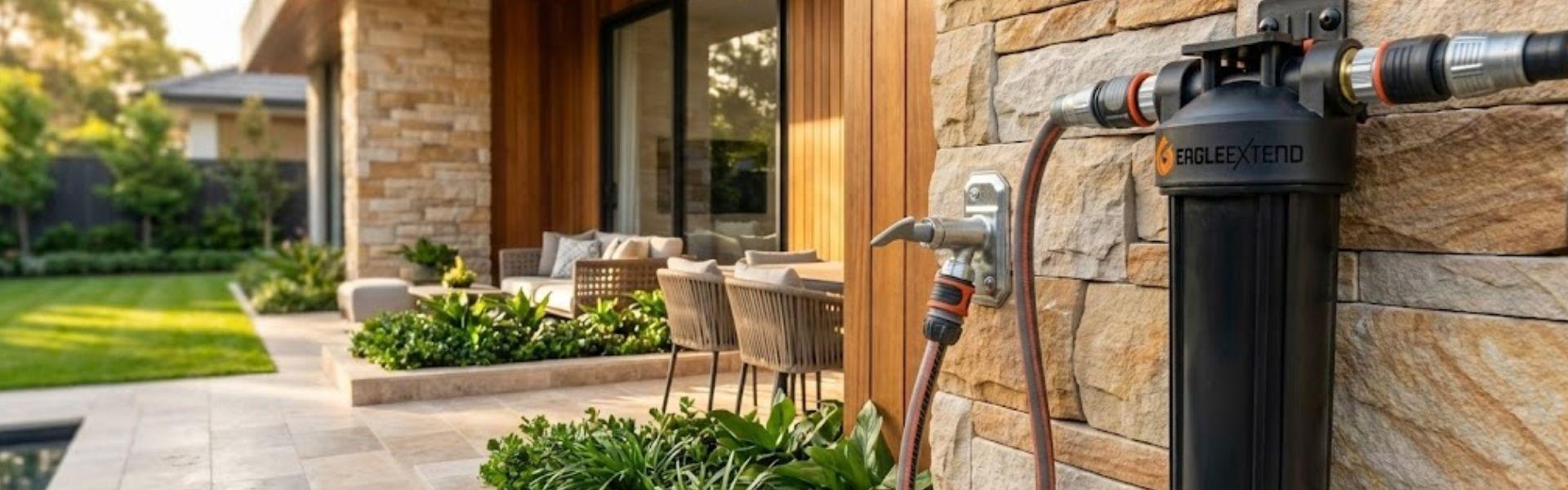
An in-line water softener such as PureFlow works differently. The filter housing holds a SoftResin cartridge, a resin cartridge that takes limescale and other minerals out of the water as it flows through. You connect it between your garden hose and telescopic pole with a standard Gardena-type connector and work on normal mains pressure. No power, no pump, no tank, no waste water.
To be clear: softened water is not the same as pure water. A softener targets limescale and minerals, the very things that cause white marks as water dries. On windows, solar panels and high-gloss surfaces, that’s the difference that matters: you rinse with limescale-free water and let it dry on its own, without a squeegee.
The three options side by side
| Feature | In-line water softener (PureFlow) | Reverse osmosis system | Deionised water in containers |
|---|---|---|---|
| What it removes | Limescale and other minerals | Almost all dissolved solids | Almost all dissolved solids |
| Connection | Between garden hose and pole, Gardena-type | Fixed set-up, often with tank or pump | Needs a pump or pressure source |
| Power needed | No, runs on mains pressure | Depends on the system | Usually, for the pump |
| Waste water | No | Yes | No |
| Speed | Instant, as fast as your tap delivers | Slow, often stored first | Limited by how much you carry |
| Upkeep | Replace the cartridge once it’s exhausted | Pre-filters and membrane | A steady supply of new containers |
| Best for | Homeowners and trades with windows and solar panels | Window cleaners using large volumes every day | The occasional small job |
Swipe sideways to see the whole table →
Water hardness: why some areas get more spots than others
How much limescale your tap water carries depends on where you live and on your water supplier. In some areas tap water dries fairly clean; in others every rinse leaves a white edge. Your supplier’s website will usually tell you how hard your water is.
Hardness affects two things. The harder your water, the more obvious the spots when you work without a softener. And the harder your water, the sooner the resin in a cartridge is used up. So two people with the same softener can have very different experiences of how long a cartridge lasts.
Single, Dual or Jumbo: which PureFlow suits you?
- [Single Unit](/products/pureflow-waterontharder-single-unit) One SoftResin cartridge, supplied with a wall bracket, connectors and a wrench. Hang it on the wall and click it in between hose and pole. Right for the windows and panels of one home.
- [Dual Unit](/products/pureflow-waterontharder-dual-unit) Two SoftResin cartridges, so more capacity and a longer service life per fill. Stands steadily on a floor stand with a sturdy handle and is built for intensive use.
- [Jumbo](/products/pureflow-waterontharder-jumbo) The largest model, mounted on a sack truck. It has a hardness display that shows you the water quality and can be set to the water hardness in your area. Made for professionals working full days.
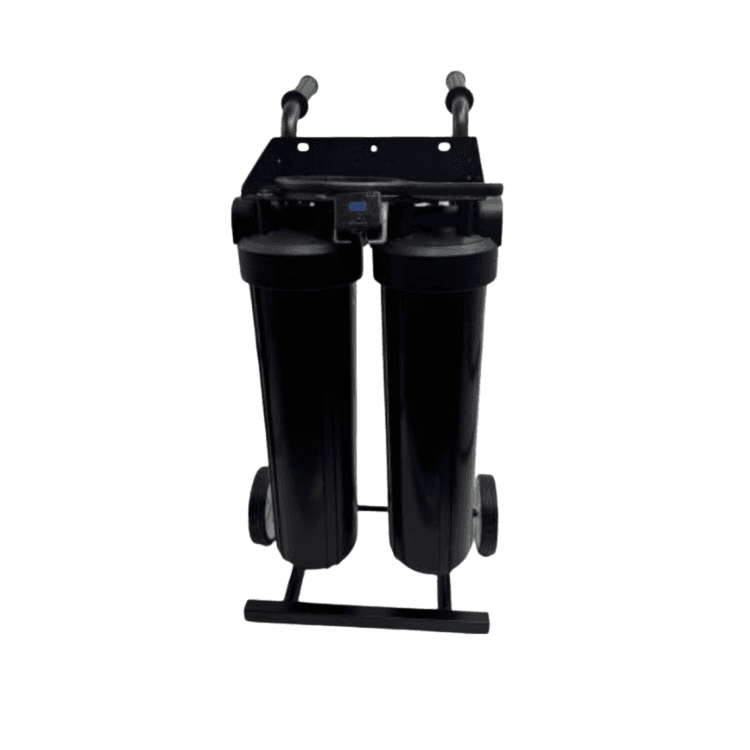
Torn between the Single and the Dual? Look at the surface area and your water. With lots of glass, a large array of solar panels or hard water, you’ll notice the Dual’s second cartridge straight away in how rarely you need a refill. For an average home with moderate water, the Single is often enough.
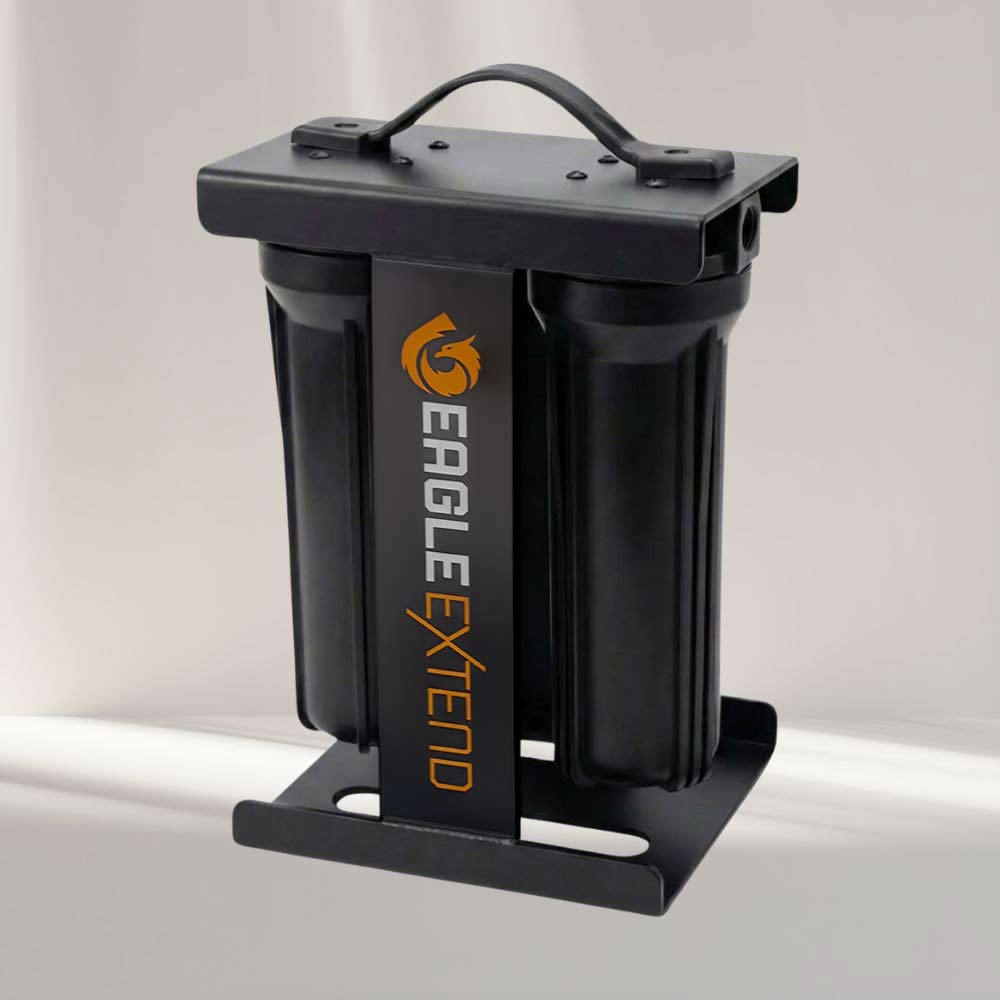
PureFlow Water Softener – Dual Unit
Two SoftResin cartridges for more capacity and a longer service life. With floor stand, handle, connectors and wrench. Plug and play on any Gardena-type connector.
How long does a cartridge last, and when should you replace it?
The honest answer: it depends on your situation. We can’t give you a fixed volume or number of months, because the resin is exhausted sooner the harder your water and the more you rinse. Someone who cleans the windows twice a year will get far more out of a cartridge than someone rinsing a roof full of panels every week. Thanks to its two cartridges, the Dual lasts longer than the Single.
You don’t have to guess, though. You’ll see the signal yourself: if windows or panels start showing limescale spots again after drying while you’re working exactly as before, the resin is becoming exhausted and it’s time for a new cartridge. On the Jumbo, the hardness display also helps you keep an eye on water quality.
How to replace the SoftResin cartridge
- 1Water off, pressure off
Turn off the tap and briefly open the valve at the pole so there’s no pressure left on the filter housing.
- 2Unscrew the cap
Unscrew the cap of the filter housing with the wrench supplied. Keep a bucket or cloth handy for the water left inside.
- 3Swap the cartridge
Take out the old cartridge and fit a new SoftResin refill cartridge. It fits both the Single and the Dual Unit; the Jumbo has its own 2-pack.
- 4Cap back on and flush
Screw the cap back on firmly, turn on the tap and flush briefly before you start. Ready to go.
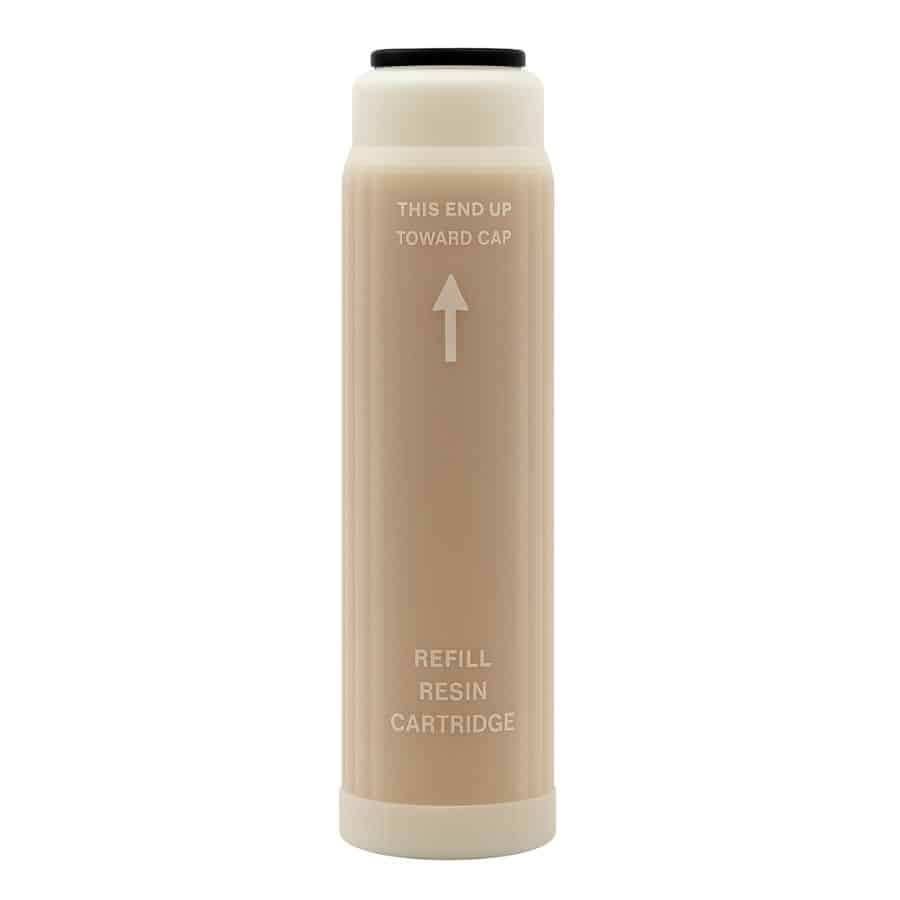
PureFlow SoftResin Refill Cartridge – Single and Dual Unit
Refill cartridge with SoftResin for the PureFlow Single and Dual Unit. Easy to replace yourself; also available as a value 2-pack.
Frost, storage and the connector set
A softener needs little maintenance, but there are two things to watch. The first is frost. Water left in the filter housing, connectors or hose expands as it freezes and can cause damage. The same goes for your pole and brush.
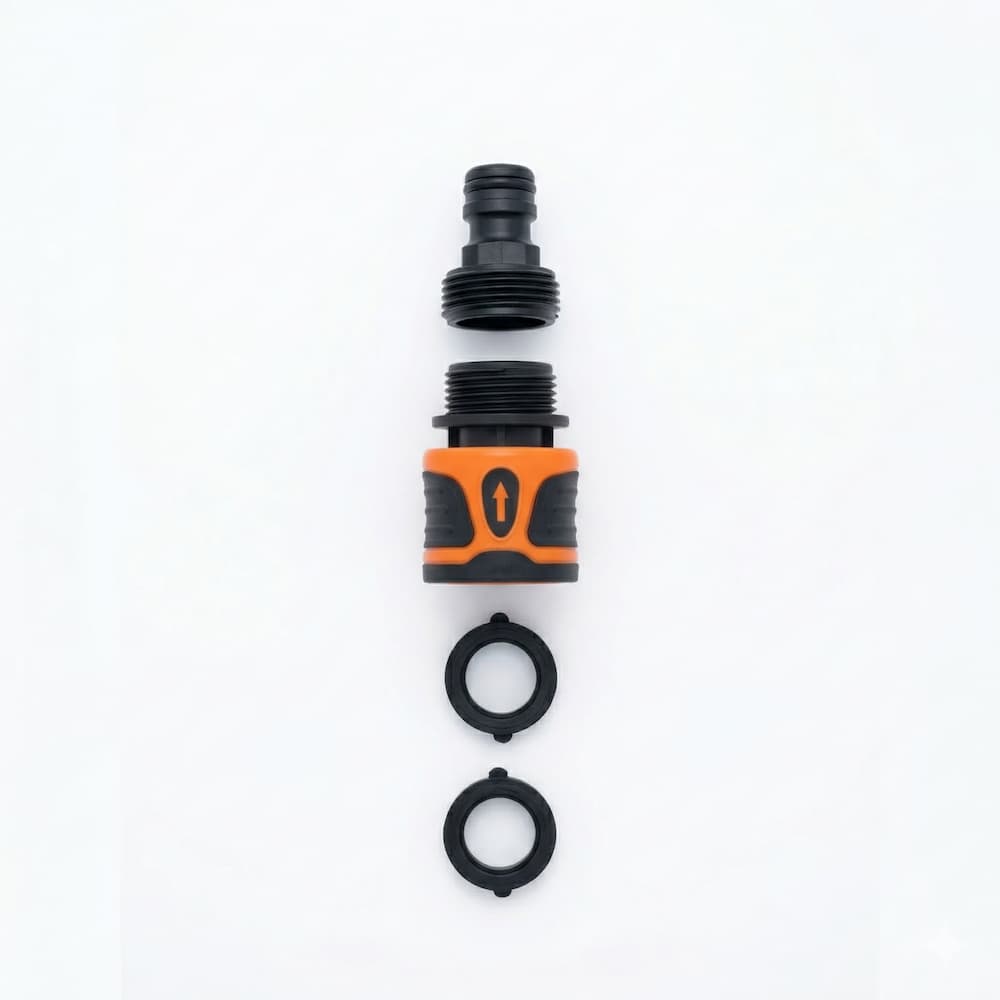
The second is the connectors. The rubber seals wear over time, and a dripping connector is usually the first sign. Click it back on first and check that the seal is present and clean. If that doesn’t help, there’s the PureFlow connector set: exactly the set supplied with the Single, Dual and Jumbo, with inlet and outlet fittings and two rubber sealing rings.
So, what do you need?
- Windows a few times a year Tap water and a squeegee will do, as long as you rinse thoroughly. A Single Unit makes life easier, especially on upstairs windows.
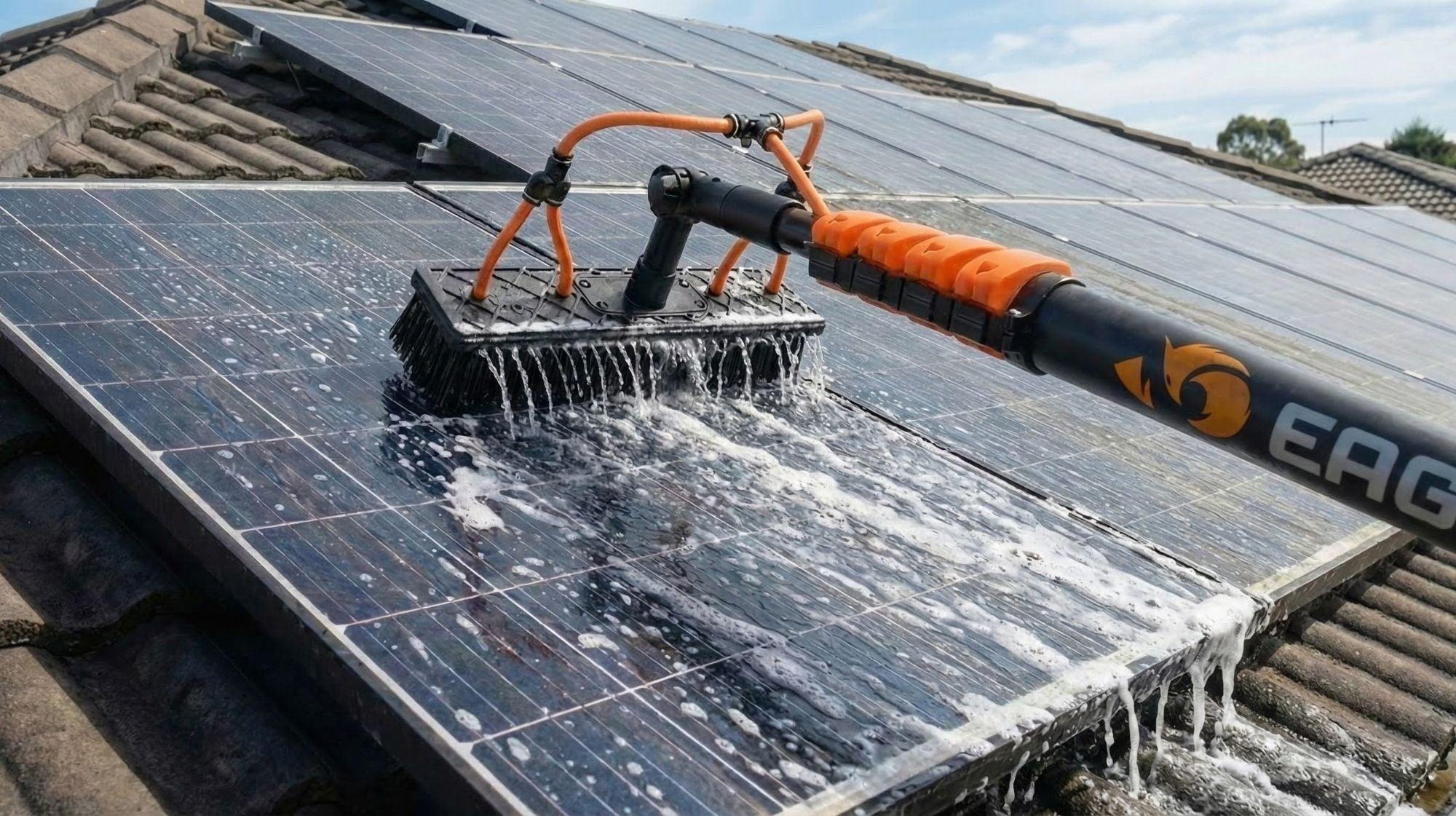
- Solar panels on the roof You don’t squeegee panels, so a limescale-free rinse is the tidy option. Tap water won’t harm your output if you rinse well, but a softener prevents white rings. For the right brush and pole, see solar panel cleaning: what to use.
- Lots of glass, big roofs or hard water Go for the Dual Unit: twin cartridges, longer working time per fill.
- Professionals out every day The Jumbo with its hardness display, or a reverse osmosis system if you need large volumes of genuinely pure water daily.
You’ll find all softeners, cartridges and cleaning products in our cleaning products collection. Not sure yet which water-fed pole and brush suit your job? Our buying guide points you in the right direction in a few questions.
Solar panel cleaning from the ground
Rinse off bird droppings, dust and green algae without scratching — and get up to 20% more output from your panels.