To clean high ceilings, work dry and from the top down: cobwebs first with a cobweb brush, then dust on beams, lights and wardrobes with a duster, and the floor last. A short telescopic pole lets you do all of it with both feet on the floor.
In autumn you suddenly see cobwebs everywhere: in the corner of the stairwell, along the beams and around the pendant light over the landing. Spiders tend to come indoors at this time of year, and they pick exactly the corners you rarely reach. Add the dust that settles on wardrobes, window frames and air vents, and it’s a job that’s easy to put off.
Below: which attachment suits which spot, why the order matters and what length you really need indoors. For warehouses, roof ridges and outside walls, see remove cobwebs and dust. This article is about your own home.
Where dust collects up high
Dust rises and settles on every flat surface above eye level. Spiders like quiet corners. Together, that gives you the same list of problem spots in almost every home:
- Double-height rooms, landings and stairwells The tallest walls in the house, often with a corner where two ceilings meet. That’s where most cobwebs hang, because nobody ever goes near them.
- High ceilings and beams With exposed beams, dust sits on top of every beam and cobwebs hang in the gaps between them. On a smooth ceiling you mainly see grey strands in the corners.
- Lights, chandeliers and spotlights Heat attracts dust, and a pendant over a stairwell is awkward to reach from any side. Delicate glass also needs a gentle touch.
- Ceiling fans The tops of the blades carry a thick layer of dust you can’t see from below — until the fan starts and throws it across the room.
- Tops of tall wardrobes and cupboards The classic forgotten surface. Dust is thickest here, because nobody ever looks.
- Indoor window frames and air vents The top of tall window frames, curtain rails and the slats of air-conditioning units and vents trap fine dust that’s best removed dry.
Cobweb brush, duster or microfibre duster?
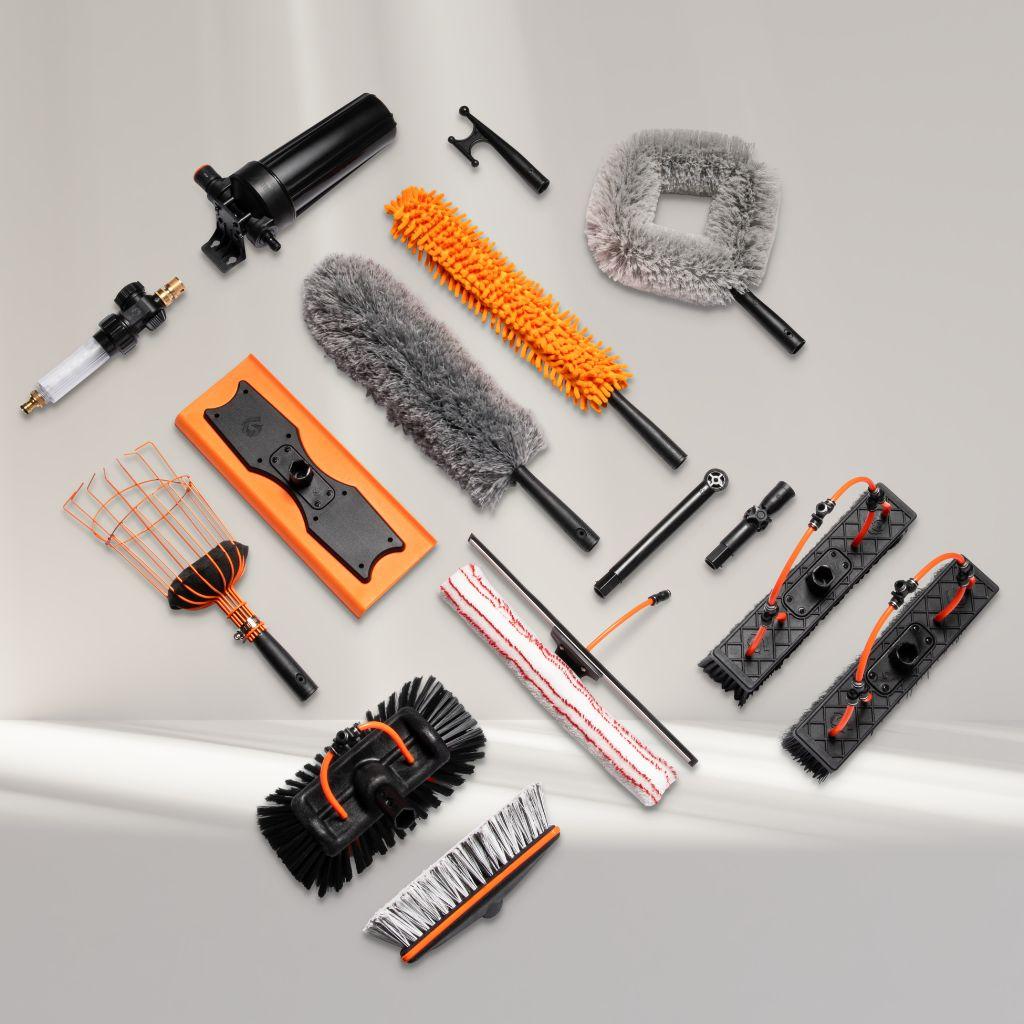
Indoors you work with three dry attachments. Each clicks on to the pole with HexaLock® in one move, so you swap between rough and fine work without tools. All three are bendable: angle the head and you can reach the top of a wardrobe or beam that isn’t directly above you.
| Attachment | Key feature | Best indoors for |
|---|---|---|
| Cobweb Brush Pro | Large head, firm bristles | Cobwebs in corners, ceilings, beams, rough walls and stairwells |
| Duster Pro | Soft fibres, head bends into shape | Around pipes and lights, over ledges, on top of tall furniture |
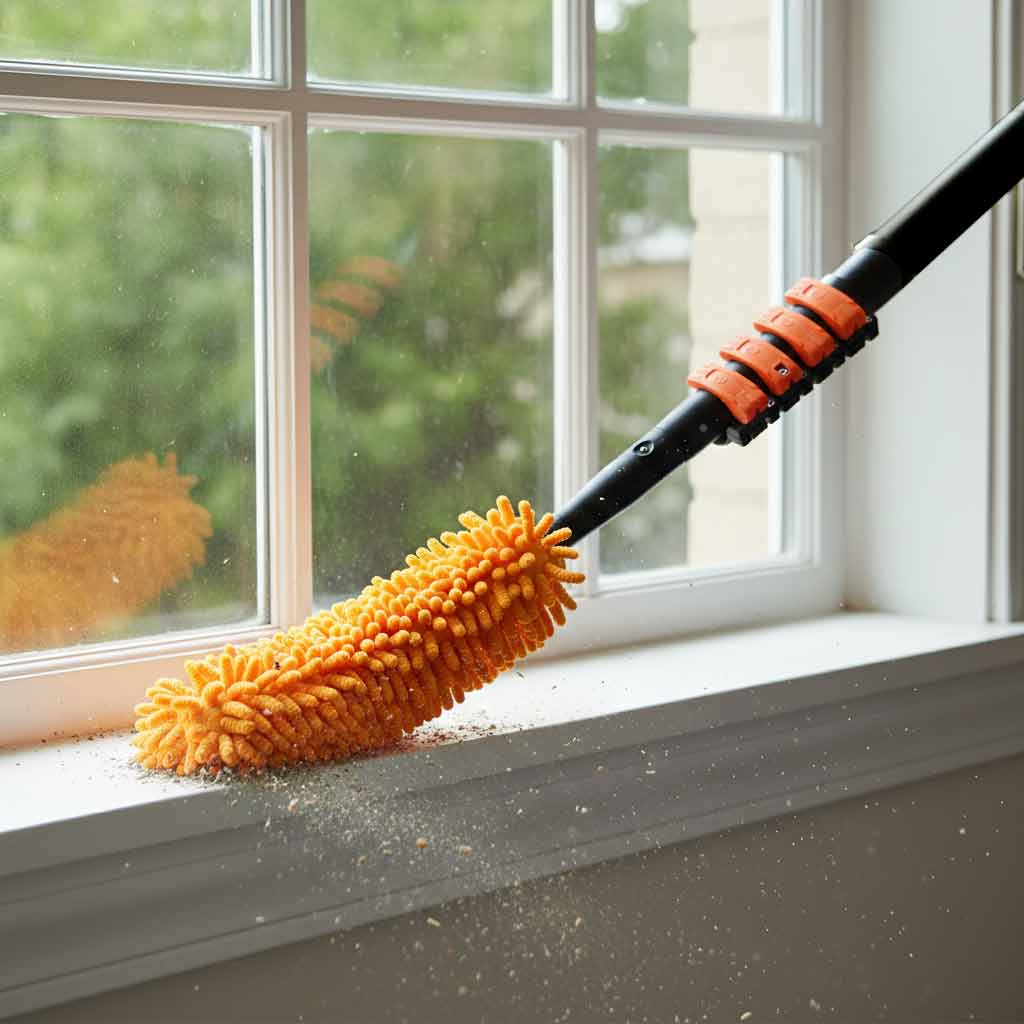
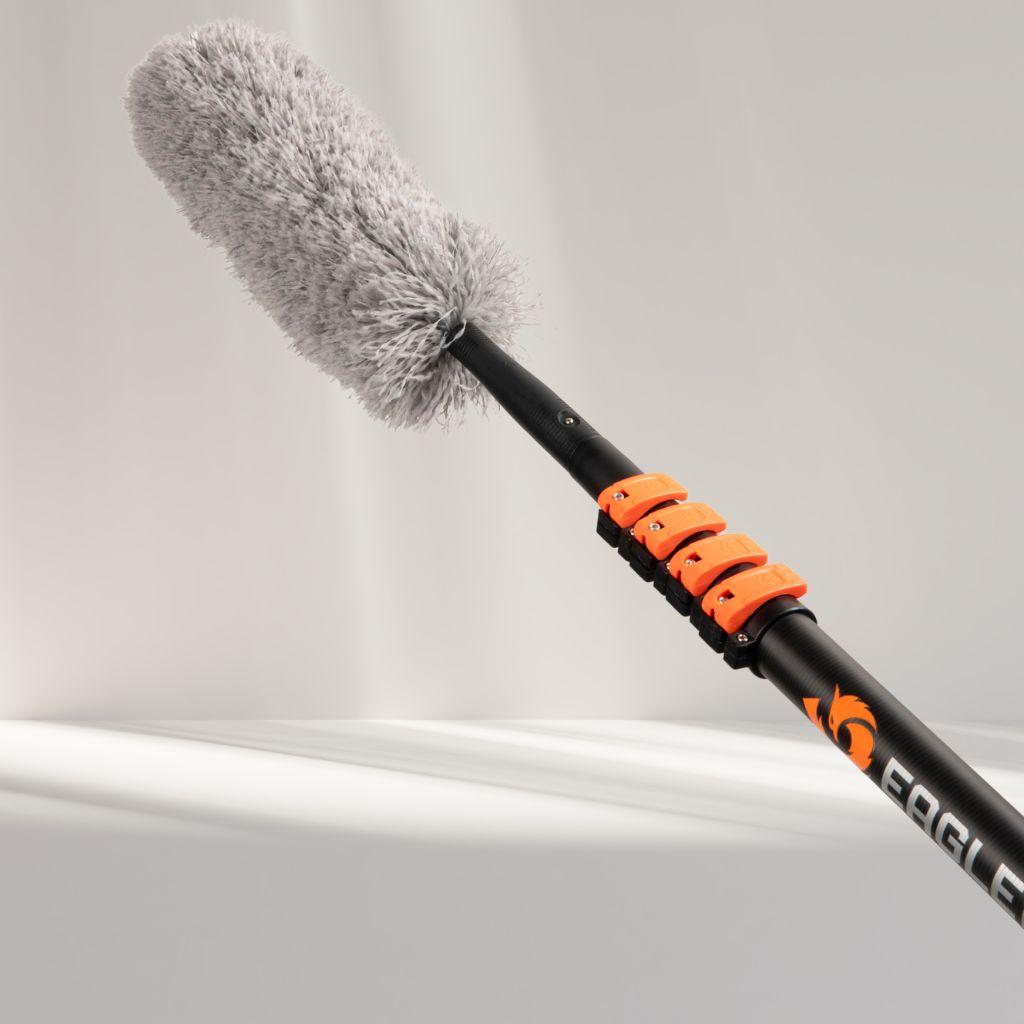
| Microfibre Duster Pro | Anti-static, washable and reusable | Fine dust on smooth surfaces: wardrobes, frames, air-con units, delicate lights |
Swipe sideways to see the whole table →
Rule of thumb: the Cobweb Brush Pro (a cobweb duster, as it’s often called in the US) for webs and large areas, the Duster Pro for spots with obstacles, and the Microfibre Duster Pro for fine dust you want to pick up rather than move around. Its anti-static fibres hold the dust, so it doesn’t float back into the room.
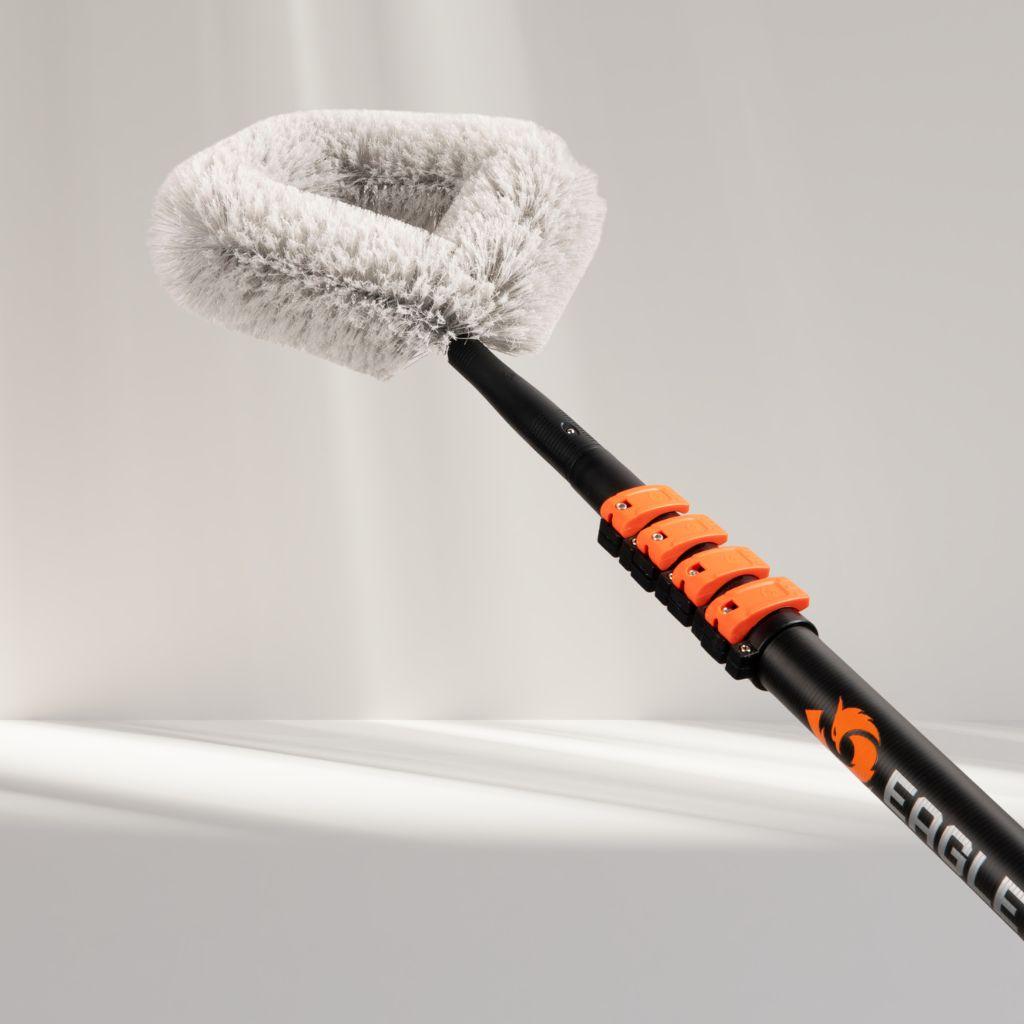
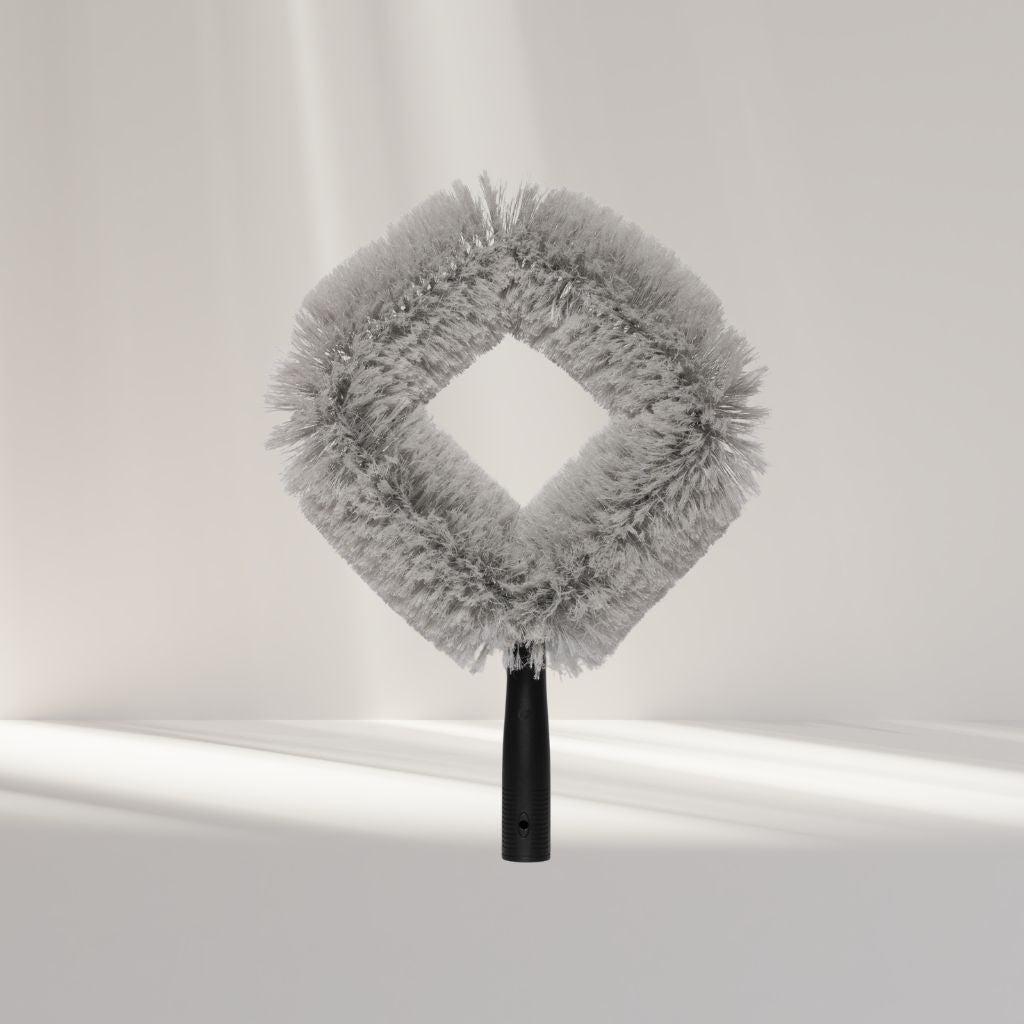
Cobweb Brush Pro – HexaLock®
Large, bendable cobweb brush for ceilings, walls and corners. Removes cobwebs and dust strands and clicks on to any Eagle Extend® telescopic pole with HexaLock®.
The order: dry, from top to bottom
Dust falls. Whatever you take off the ceiling lands on the wardrobe, the windowsill and finally the floor. Start low and you do the job twice. So always work from high to low, and hoover or mop the floor last.
How to tackle a room or stairwell
- 1Switch off fans and lights
Turn off ceiling fans and wait until the blades have stopped completely. Switch off lights and let them cool before you dust them. Close the windows so draughts don’t blow the dust around.
- 2Cover what’s underneath
Lay a sheet over the sofa or desk below. Cobwebs and dust fall straight down; the sheet catches them and you shake it out outside afterwards.
- 3Remove the cobwebs first
Start with the cobweb brush in the highest corners of the ceiling, landing and stairwell. Twist the brush as you go, so the web wraps around the bristles instead of dropping.
- 4Then dust the high surfaces
Switch to the duster or microfibre duster for beams, lights, fan blades and the tops of wardrobes. Bend the head so it lies flat, and draw the dust towards you in slow, long strokes.
- 5Include frames and vents
Next, do the tops of window frames, curtain rails and air vents. On vents, follow the direction of the slats.
- 6Shake out as you go, finish with the floor
Shake the attachment out outside regularly. Only when everything above eye level is done do you hoover the floor and the sheet.
Lights, chandeliers and ceiling fans
With delicate items, control matters more than force. Use the microfibre duster here: the head is soft and bendable, so you can dust glass shades and the arms of a chandelier without pushing. Keep your movements small. If a light hangs from a cable, don’t support it with the pole; just dust the top and the shade.
For fan blades, bend the head to a right angle, rest it on the blade and draw the dust towards the tip. That way most of it ends up in the duster rather than on your head. Anything that does fall lands on the sheet below.
What pole length you need indoors
Indoors, shorter is often better. A long pole is awkward in a living room and heavier to handle. Add your own reach to the working length: you hold the pole at chest height, not at floor level. With the Aluminum Supreme range, that gives you:
| Model | Working length | Collapsed | Weight | Suitable for |
|---|---|---|---|---|
| Aluminum Supreme 3.5 m (11.5 ft) | 3.1 m | 1.08 m | 1.7 kg | High ceilings, beams, lights and wardrobes in most homes |
| Aluminum Supreme 5.5 m (18 ft) | 5.1 m | 1.56 m | 2.2 kg | Double-height rooms and stairwells over two floors |
Swipe sideways to see the whole table →
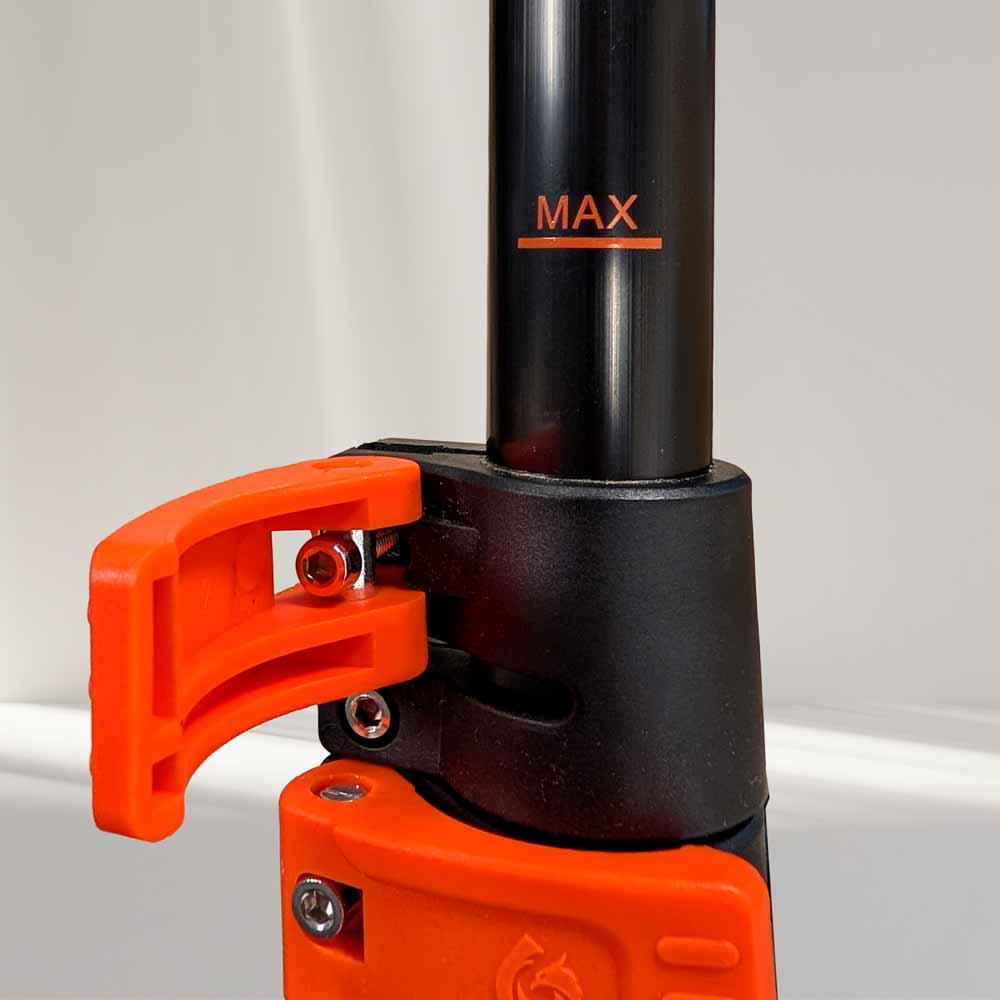
Collapsed, the 3.5 m pole is just 1.08 m long, so it fits in the utility room or under the stairs. You never have to extend a telescopic pole fully, either: with the 5.5 m version you use two sections in an ordinary room and extend further once you’re in the stairwell. Never go past the red MAX mark on a section. Not sure which length? Read what length telescopic pole you need or try the pole finder.
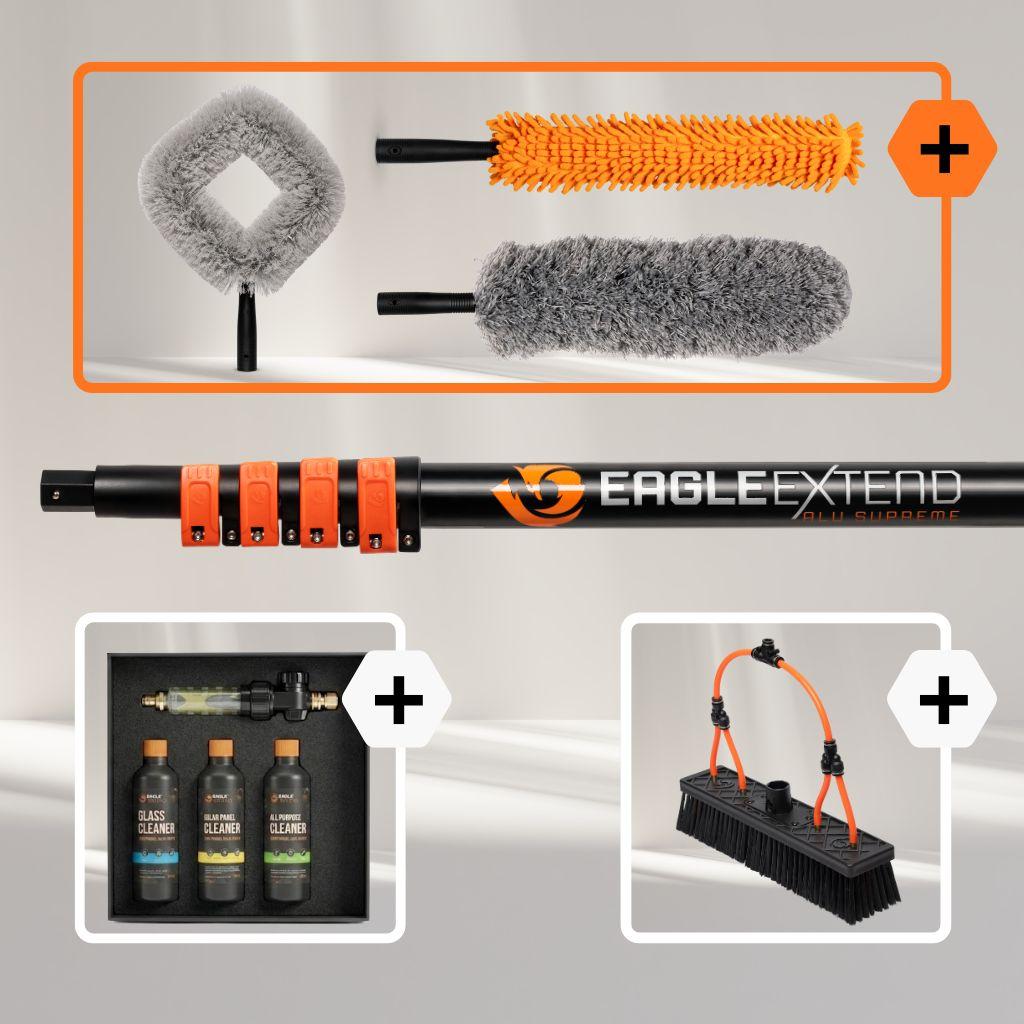
Aluminum Supreme Indoor Dusting Kit
Supreme pole with 4-Jet wash brush, plus the cobweb brush and both dusters for dust and cobwebs, indoors and out. Available from 3.5 to 10.2 m, with SureLock™ clamps, AlignTrack™ V-groove and a 5-year guarantee.
And outside? Cobwebs under the eaves
The same attachment works well outdoors: use the cobweb brush to clear webs under the eaves, around the front door and along window frames before you start washing. Always do this dry, or you’ll drag the web across the glass and paintwork with a wet brush. Roller shutters full of webs and green algae have their own guide at roller shutter cleaning. If you then want to wash frames and walls, which wash brush to choose helps you pick the right one.
Afterwards: keep attachments and pole clean
Shake the cobweb brush and duster out outside. The microfibre duster is washable and reusable: wash it once it’s full so it keeps its anti-static effect, and let it dry fully before using it again. Give the pole sections a quick wipe too; dust and grit between the sections make extending stiff. More in water-fed pole maintenance.
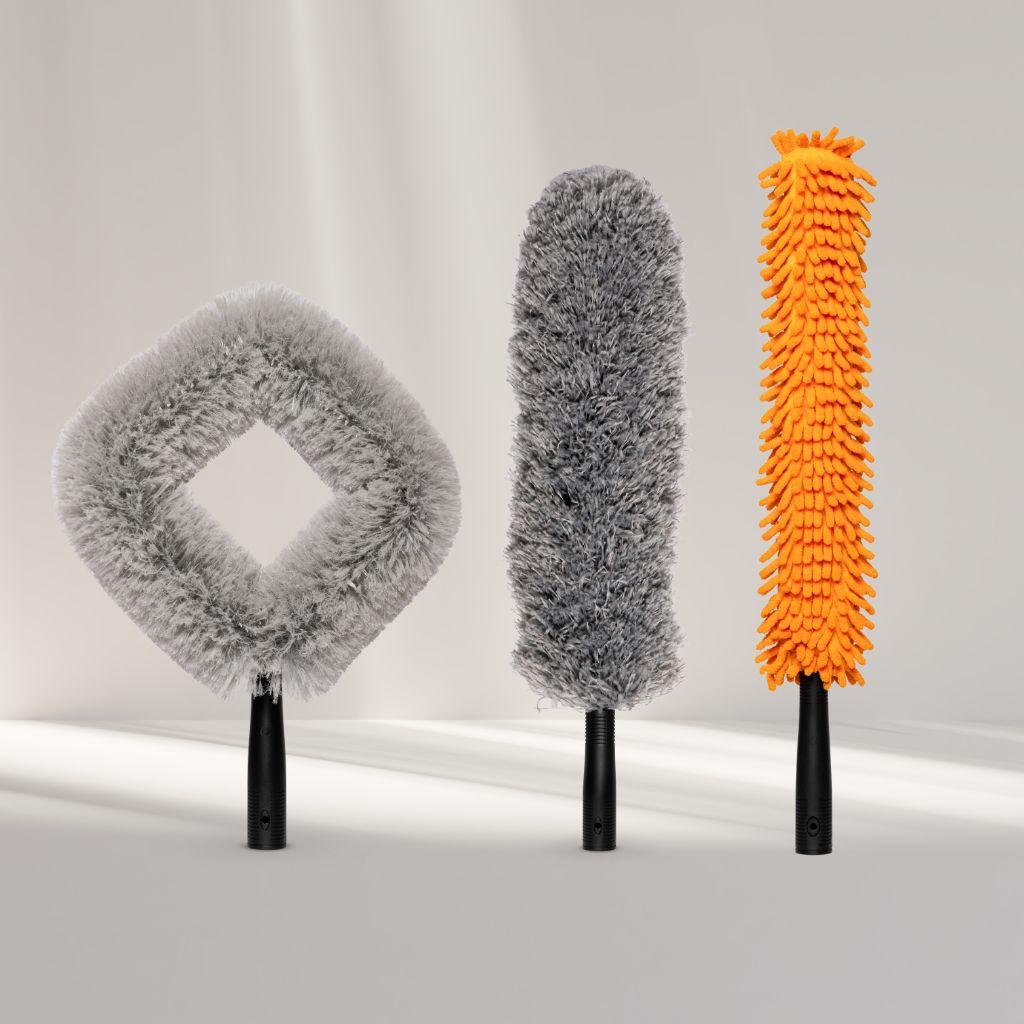
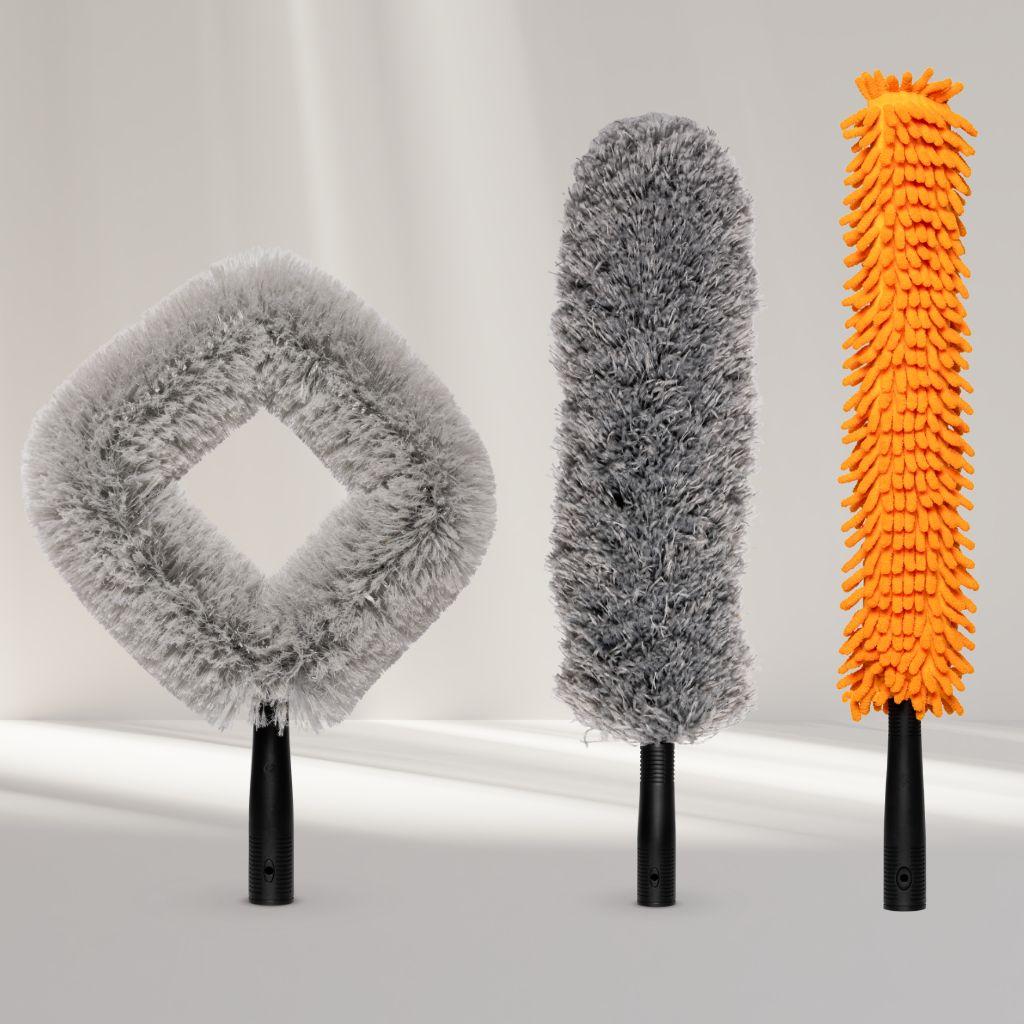
Indoor Dusting Attachment Set
Cobweb Brush Pro, Duster Pro and Microfibre Duster Pro in one set, all three bendable with a HexaLock® fitting. For anyone who already owns an Eagle Extend® telescopic pole, with a multi-buy discount.
Remove cobwebs and dust from high ceilings and walls
Clear dust and cobwebs from rafters, atriums and high-ceilinged halls — with a cobweb brush, duster or microfibre duster.