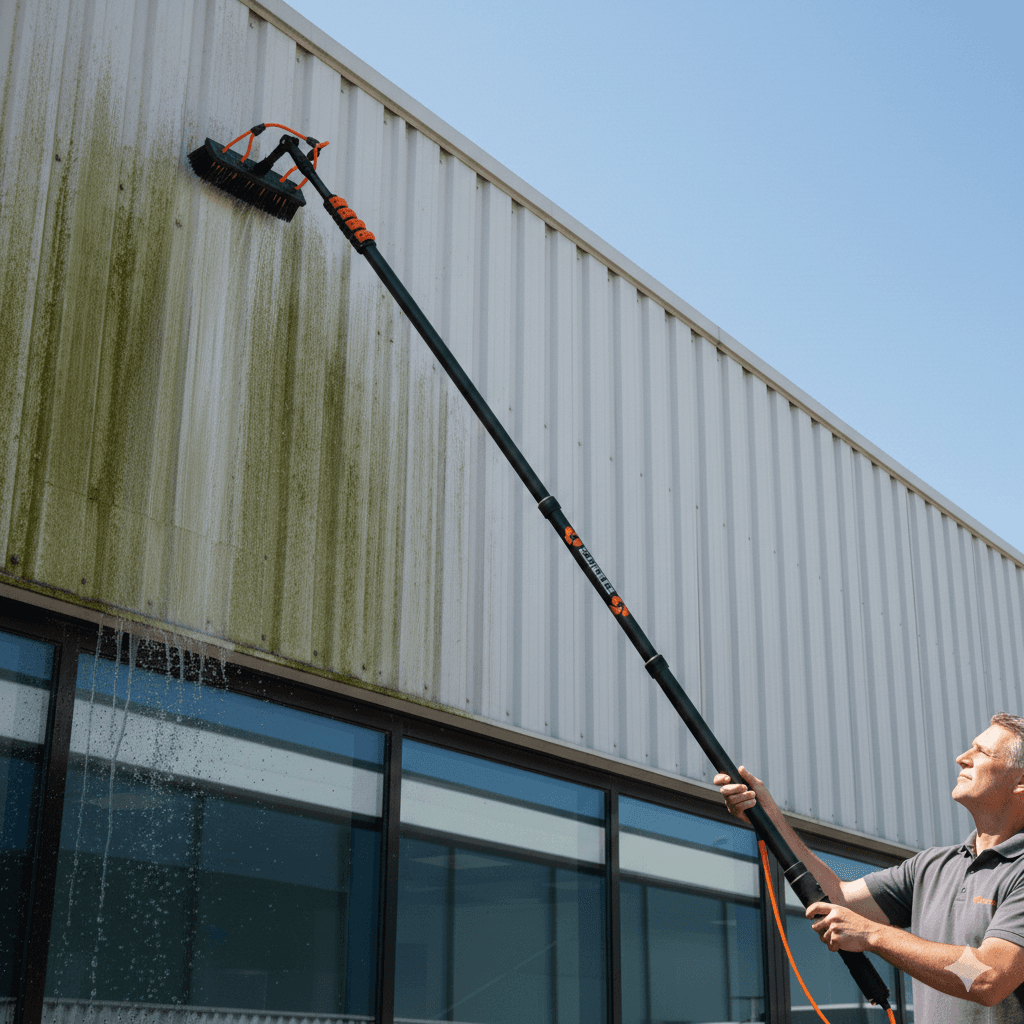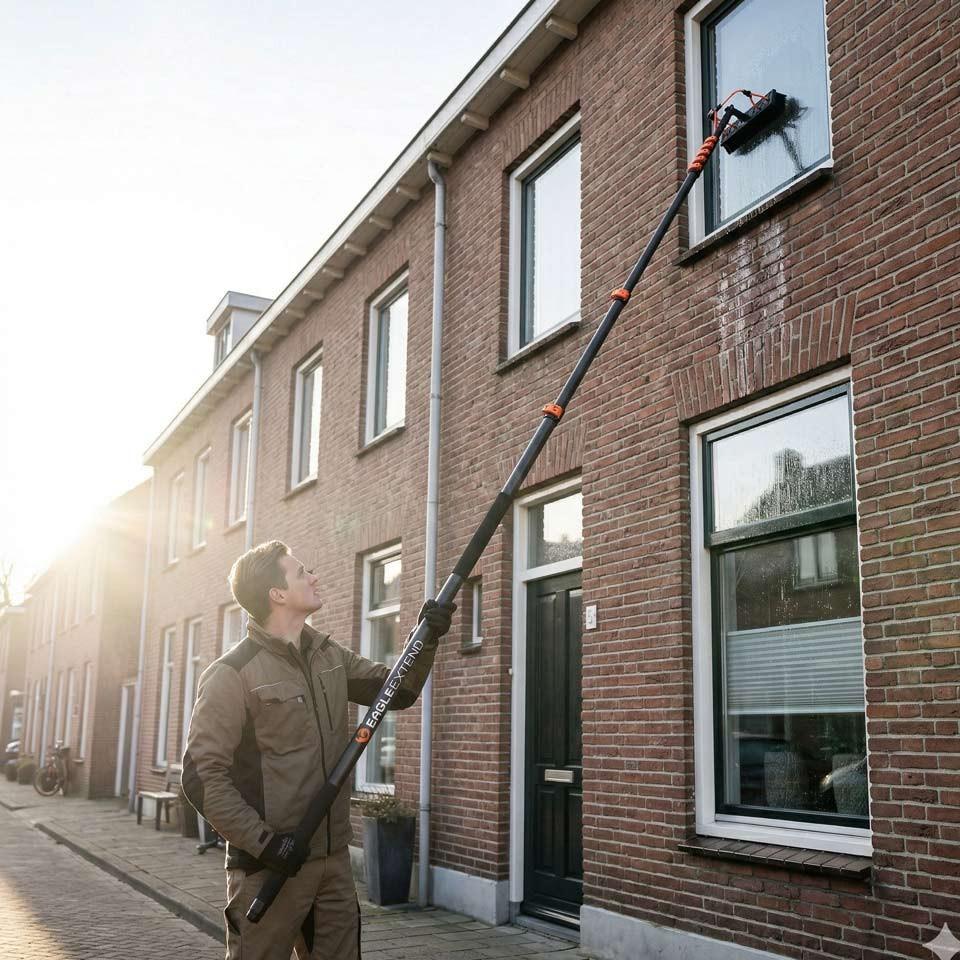
Watch a window cleaner at work for fifteen minutes. What stands out isn’t the speed but the calm: every window is done in the same order, the squeegee is always held at the same angle, and after every stroke the rubber gets wiped on a cloth. No polishing in circles, no second pass to chase streaks.
That skill doesn’t come from expensive kit. It comes from habits. In this article you’ll find ten tips from the trade that you can pick up straight away, whether you clean the windows of your own home or are thinking of doing it for a living. If the water itself is causing streaks, read streak-free windows with a water softener; this piece is all about technique.
Preparation: route and order
1. Work a fixed route around the house
A professional never walks back and forth. They start at one corner of the house and work round the walls in one direction, moving the bucket and pole along as they go. It saves steps, no window gets missed and at the end you can see at a glance that everything is done. Choose your starting point carefully: begin on the side that’s currently in shade and let the sun follow you round. That way you work on cool glass as much as possible.
2. Frames first, then glass — and always top to bottom
Dirt runs downhill. So clear cobwebs and loose dirt from the corners first, then clean the window frame and the head of the frame, and only then the glass. Do it the other way round and grit from the frame will wash over your clean pane. On the pane itself, work from top to bottom too: dirty water then always runs over glass you haven’t done yet.
Washing: enough water at the right moment
3. Your washer should be wet, not dripping
The washer is the fluffy side of your tool: it holds plenty of soapy water and loosens the dirt. The classic beginner’s mistake is lifting it out of the bucket soaking wet. The water then runs down the pole, over the frame and up your sleeves — and you have far more water to clear when you squeegee. Dunk the sleeve, tap it on the edge of the bucket and get going. If the window is very dirty, go over it twice rather than once with a dripping sleeve.
4. No soapy water in full sun
On warm glass, soapy water dries before your squeegee gets there, and dried-on soap shows up as marks and edges. So in the sun, finish one window at a time — wash and squeegee straight away — and never soap up three windows at once. Better still, leave that wall until later in the day. Frost brings the opposite problem; what to do differently then is covered in cleaning windows in winter.
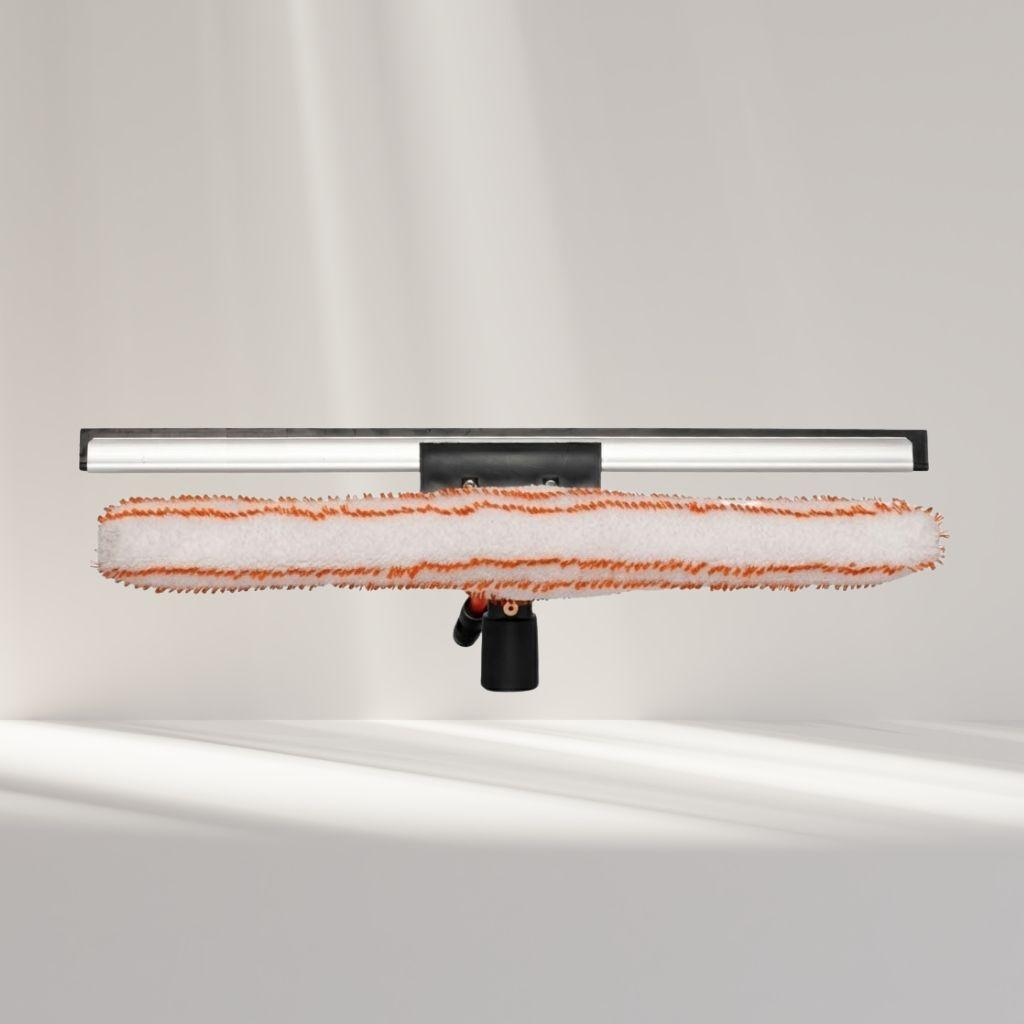
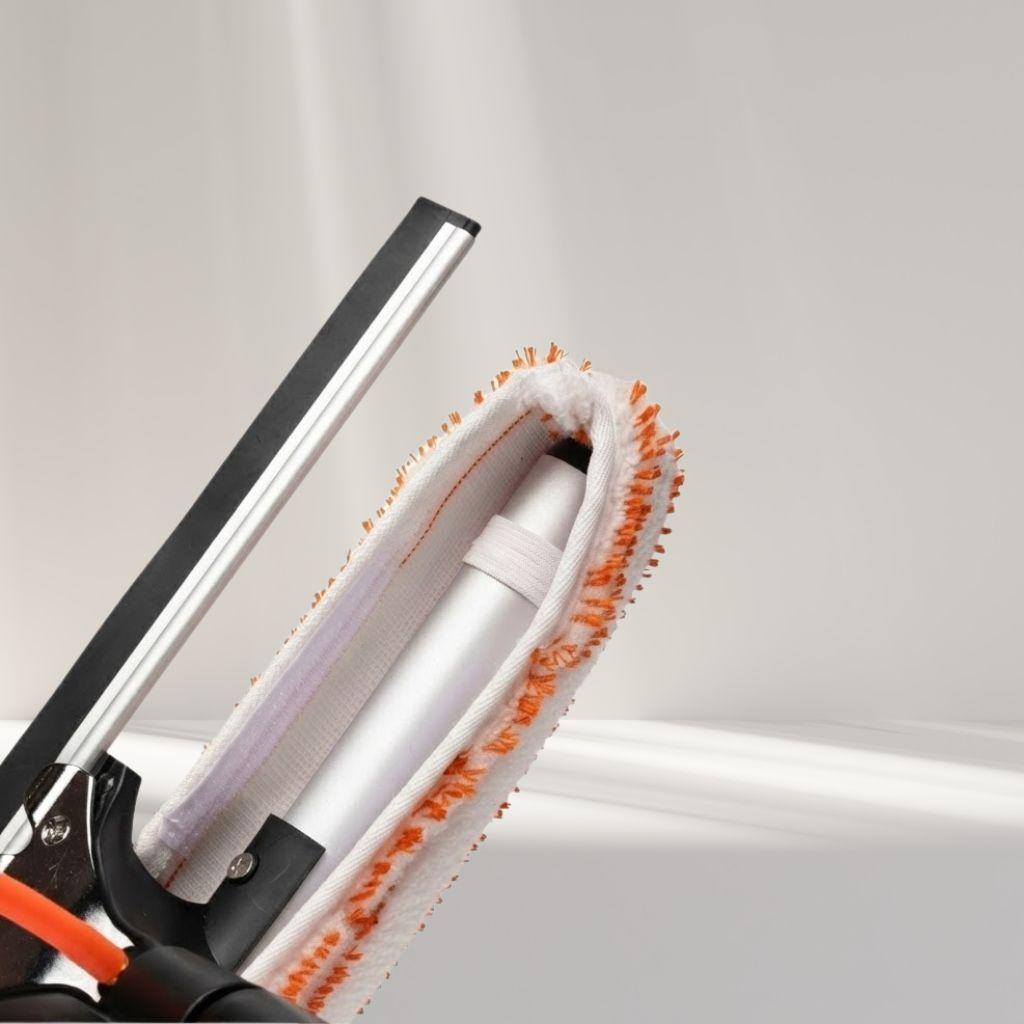
Window Washer & Squeegee Set Pro – HexaLock®
Washer and squeegee in one 40 cm attachment, with a microfibre washer sleeve. Wash the glass, give the pole half a turn and squeegee it dry. Fits any Eagle Extend® telescopic pole with the HexaLock® one-click connection.
Squeegeeing: where the craft really lies
5. Hold the squeegee at the right angle
A squeegee only works when the edge of the rubber touches the glass, not the flat side. So hold it at a slight angle, letting the rubber flex a little and push the water ahead of it. Too flat and the rubber skates over a film of water; too steep and it chatters and skips. Don’t press hard: light, even pressure across the full width works better than force.
At height that angle is harder to find, because your pole points upwards at a slant. That’s what the HexaLock® angle adapter is for — it comes as standard with every telescopic pole. It sets the squeegee and washer flat against the glass again while you stay on the ground. Poles from 9 m come with the extended XXL version.
6. Straight strokes on a pole, the S-technique by hand
Window cleaners using a hand squeegee often use the S-technique, or fanning: the squeegee stays on the glass and swings in curves from top to bottom. It’s quick, but it needs a loose wrist close to the pane. On a telescopic pole it rarely works well. There, you pull straight vertical strokes from top to bottom and let each new stroke overlap the previous one by a few centimetres. That way no thin wet strip is left between two strokes.
| Technique | Best for | Watch out for |
|---|---|---|
| Straight vertical strokes | Working with a telescopic pole, high windows, beginners | Overlap each stroke slightly; wipe the rubber after every stroke |
| Horizontal top stroke + vertical strokes | Wide windows, on a pole too | Pull a dry strip along the top edge first, then work down vertically |
| S-technique (fanning) | Hand squeegee, windows within reach, practised hands | Keep the squeegee on the glass; takes practice |
Swipe sideways to see the whole table →
Throughout, keep the pole close to your body. Let your lower hand carry the weight and steer with the upper one; move your feet rather than stretching your arms. How posture and pole material work together at greater heights is explained in cleaning high windows without a ladder.
7. Wipe the rubber dry after every single stroke
This may well be the most important habit of all. After a stroke, dirty water and a little grit sit on the rubber. Put the squeegee back on the glass like that and you draw the dirt as a streak across the next stroke. That’s why a professional wipes the rubber after every stroke on a clean cloth tucked into a belt or pocket. On a pole, simply bring the squeegee down towards you for a moment. Two seconds per stroke saves a whole second pass.
How to clean one window with a pole
- 1Frame and corners
Clear cobwebs and loose dirt and clean the frame, so nothing falls onto the glass later.
- 2Wash
Washer wet but not dripping; work the whole pane from top to bottom, paying extra attention to corners and edges.
- 3Turn the pole
Turn the pole half a turn in your hands so the squeegee faces the glass. With the 2-in-1 set there’s nothing to swap.
- 4Top edge
Pull a dry strip along the top edge of the pane first. That stops water running down over your strokes later.
- 5Vertical strokes
Pull straight strokes downwards, overlapping by a few centimetres each time. Wipe the rubber after every stroke.
- 6Bottom edge
Finally, clear the water that gathers along the bottom of the pane, then check the glass with the light falling across it.
Finishing: edges and rinsing
8. Finish the edges with a cloth afterwards
A thin line of water almost always stays along the rebate. That isn’t a flaw in your technique: a squeegee simply can’t reach right into the corner of the frame. Within reach, wipe that edge away in one movement with a dry, lint-free cloth or scrim. Only do this once the whole pane is finished, and don’t touch the dry glass itself again — fingers and cloths leave a smear more easily than you’d think.
9. Rinse with limescale-free water and the 4-Jet brush where squeegeeing won’t work
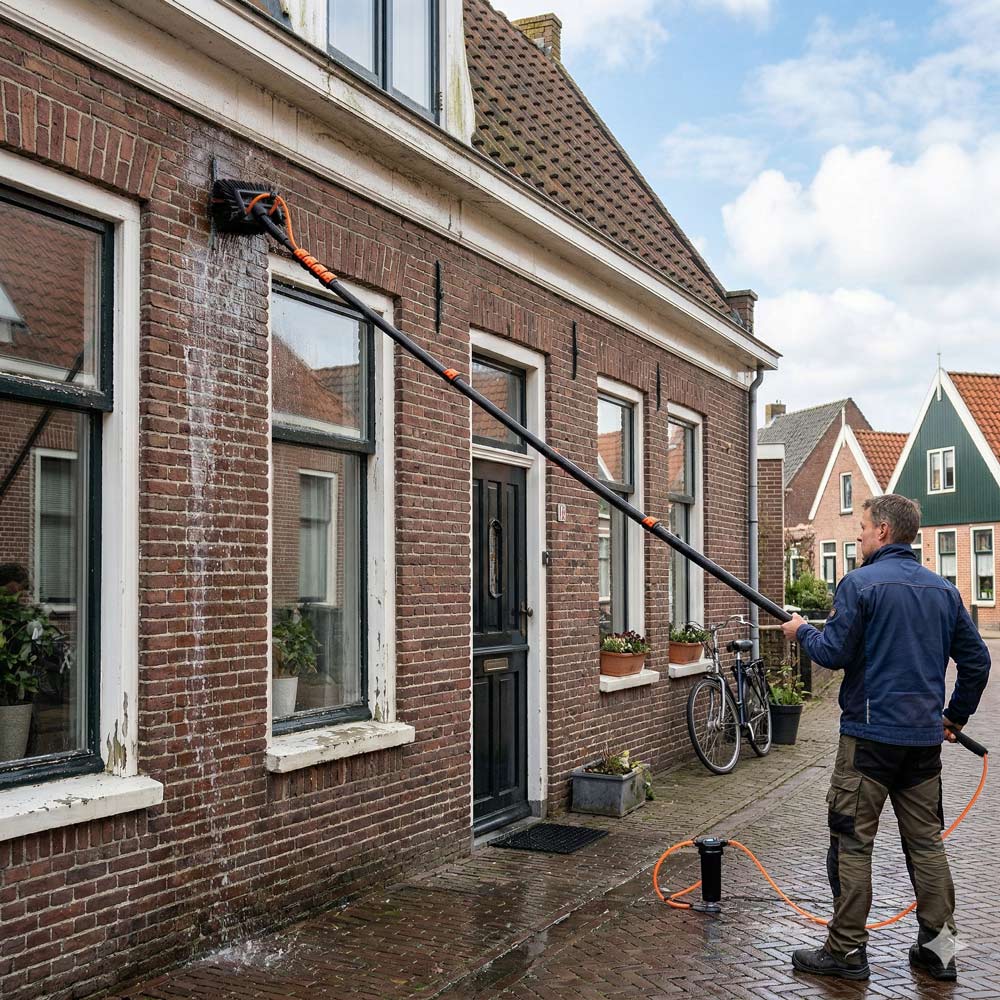
On the second floor, at a dormer or behind an extension, you can’t reach the edges with a cloth, and squeegeeing can be plain awkward too. That’s when you switch to the water-fed method: the Soft 4-Jet Wash Brush connects to the garden hose, you scrub and rinse at the same time and let the water dry. This only works well with limescale-free water, for example from the PureFlow water softener. When rinsing, lift the brush slightly off the glass and rinse generously from top to bottom, so no soap or loose dirt is left behind.
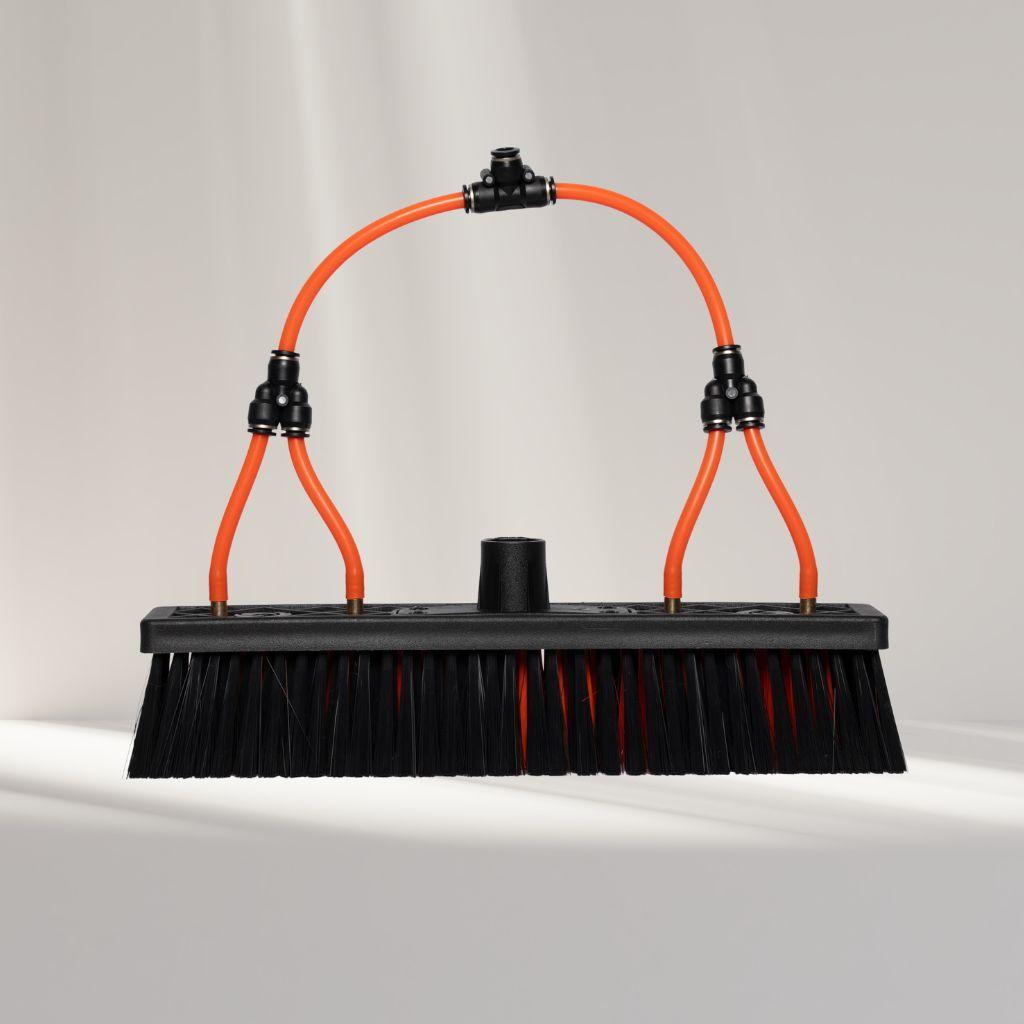
Soft 4-Jet Wash Brush 35 cm – HexaLock®
Soft nylon bristles with memory that spring back and won’t scratch, a 35 cm working width and four water jets for even water distribution. For windows, solar panels and uPVC frames.
Care: your kit is your result
10. Keep your kit clean and replace the sleeve and rubber in time
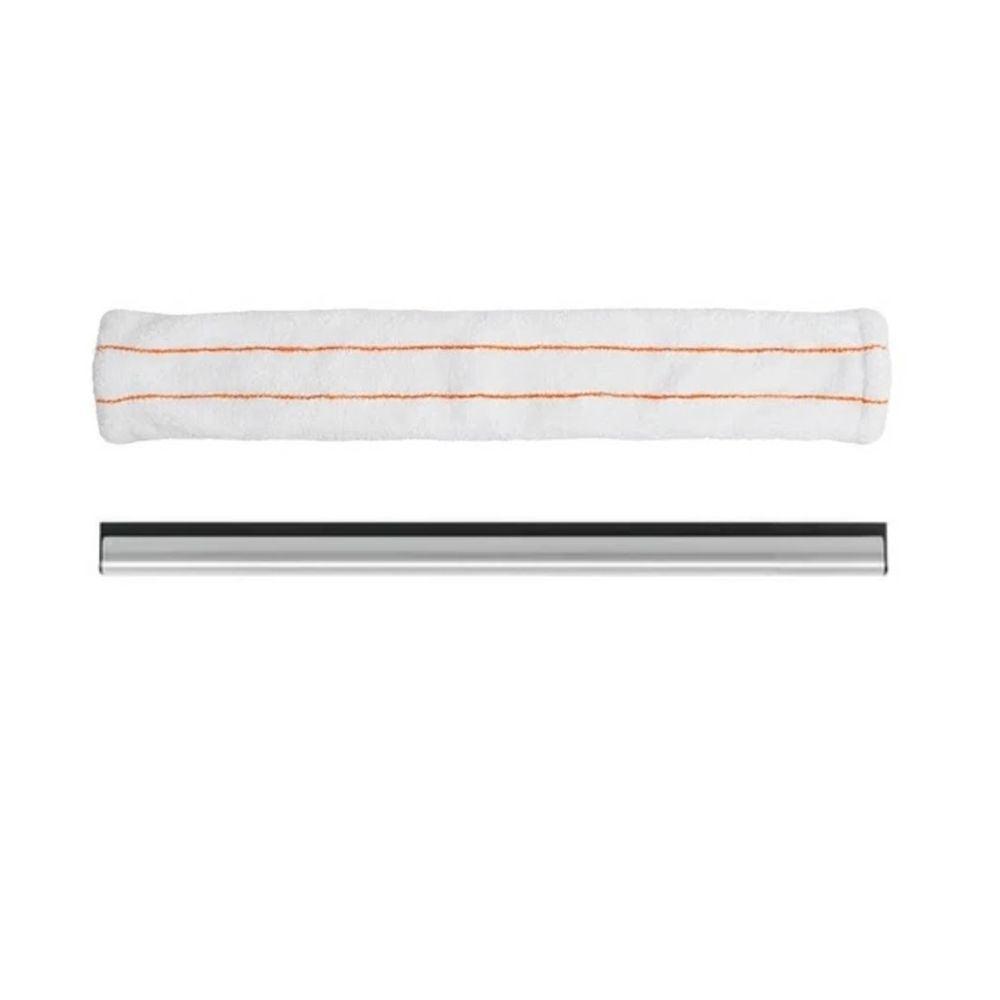
A professional starts every day with clean kit. Rinse the washer sleeve after use, wash it regularly without fabric softener (which makes microfibre less absorbent) and let it dry before putting it away. Rinse the squeegee with clean water and store it so the rubber isn’t resting on anything.
Rubber wears out. If you see a streak in exactly the same place on every stroke, the rubber has a nick or a worn spot — and no technique will get rid of it. Time to replace it. With the Microfibre Sleeve & Replacement Squeegee Rubber, your Window Washer & Squeegee Set Pro is as good as new in one go. If you clean a lot, keep a spare set to hand.
| What you see | Likely cause | Tip |
|---|---|---|
| A streak in the same place every time | Damaged or worn rubber | 10 |
| Thin wet strips between strokes | Not enough overlap | 6 |
| Grey smears across the whole pane | Rubber not wiped or a dirty sleeve | 7 and 10 |
| Dried-on soap marks | Worked in the sun or soaped too many windows at once | 4 |
| Water running down over your strokes | Top edge not cleared first, or frame cleaned afterwards | 2 and 6 |
| White rings after drying | Limescale in the rinse water | 9 |
Swipe sideways to see the whole table →
You’ll find every attachment for glass, from washer to brush, in the brushes and attachments collection. Thinking of turning it into a business? Read starting out as a window cleaner: the kit you need as well. And to see which pole length suits your home, take a look at high window cleaning.
Clean high and upstairs windows from the ground
Get upstairs and dormer windows streak-free — without a window cleaner or a ladder.